

Chestnut Forest Rail vs Chestnut-breasted Munia
Rallicula rubra contro Lonchura castaneothorax
Fai un quiz con Chestnut Forest Rail e Chestnut-breasted Munia
 Chestnut Forest Rail
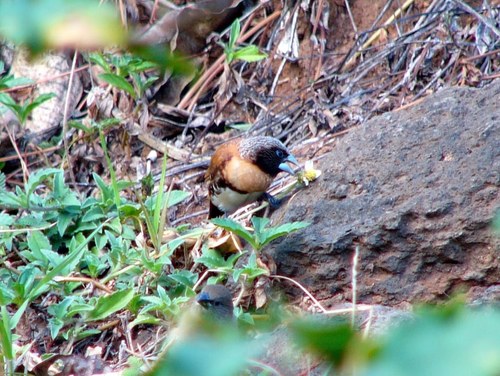 Chestnut-breasted Munia
In breve
Il Chestnut Forest Rail e il Chestnut-breasted Munia sono entrambi piccoli uccelli di tonalità castagna della Nuova Guinea, ma differiscono notevolmente in struttura, comportamento e piumaggio. Il rail è un uccello segreto, terrestre, di foreste montane dense, mentre il munia è un piccolo fringillide granivoro spesso visto in gruppi e in aree aperte. Il rail ha un corpo molto più robusto e arrotondato e zampe più lunghe, mentre il munia è compatto e con una coda corta e un becco conico. I munia mostrano un volto nero netto e una pancia bianca contrastante, mentre il rail è più uniformemente castano. Se vedi un uccello appollaiato in un'area aperta o che si nutre di semi d'erba, è quasi certamente un munia; un uccello furtivo nel fitto sottobosco della foresta indica il rail.
Consigli di identificazione
- Head pattern: Il munia mostra sempre un volto e una gola neri netti con una pancia chiara o bianca e una ricca fascia petto castagna. Il rail è uniformemente castano o marrone-rossiccio senza forti contrasti o un volto nero.
- Bill shape: Il munia ha un becco corto, spesso e conico, adattato per mangiare semi. Il becco del rail è più lungo, più snello e leggermente ricurvo, tipico dei rail.
- Legs and posture: I rail hanno zampe lunghe e forti e camminano con una postura orizzontale. I munia hanno zampe corte e si appollaiano eretti su steli d'erba o fili.
- Body shape: I rail sono robusti e arrotondati, con una corporatura più pesante e massiccia. I munia sono compatti, snelli e simili a passeri.
- Tail: I munia hanno una coda corta e quadrata. La coda del rail è meno prominente, spesso nascosta, e non è un segno distintivo.
- Plumage contrasts: Il munia mostra un piumaggio nitido e contrastante con un volto nero, una fascia petto castagna e una pancia chiara. Il rail è più uniforme nel colore, privo di forti contrasti.
- Sex/age variation: Le femmine e i munia immaturi mantengono il motivo del volto e del petto, anche se a volte più opaco. Non sono descritte forti differenze di età o sesso per il rail.
- Habitat: I munia si trovano in praterie aperte, campi e margini, spesso in gruppi. I rail sono uccelli strettamente forestali, solitari o in coppie, e raramente visti in aree aperte.
- Behavior: I munia si nutrono di semi in aree aperte, spesso appollaiandosi in modo evidente. I rail cercano cibo a terra, nascosti in vegetazione densa.
- Flight: I munia hanno un volo saltellante e ondulato tipico dei piccoli fringillidi. I rail sono riluttanti a volare, di solito corrono o camminano via quando disturbati.
- Flocking: I munia sono altamente sociali, spesso in gruppi. I rail sono segreti e solitari.
- Geographic context: Se visti nelle Montagne Arfak o nelle foreste montane, considera il rail. In aree di pianura o disturbate, specialmente in Australia o nella Nuova Guinea aperta, è quasi sempre un munia.
- Upperwing/flight marks: Non sono descritti modelli distintivi giovanili o di volo per nessuna delle due specie; fare riferimento al piumaggio e alla struttura.
- Vocalization: Non descritto nelle note; non utilizzare per la separazione qui.
- Size impression: I rail appaiono più pesanti e robusti; i munia sono delicati e leggeri.
Taglia
Il Chestnut-breasted Munia è un piccolo fringillide, con una massa corporea di circa 13 grammi [wikidata], tipica dei piccoli estrildidi. La massa del Chestnut Forest Rail non è specificata, ma come rail, è probabile che sia notevolmente più pesante e massiccio rispetto al delicato munia. Il corpo del rail è più robusto, con zampe più lunghe e un profilo meno compatto, mentre il munia è minuto e con zampe corte. Sul campo, il rail apparirà molto più arrotondato e robusto rispetto al snello munia simile a un passero.
Piumaggio
Non sono notati segni di volo o modelli di ali specifici per età per nessuna delle due specie. Per gli adulti, il Chestnut-breasted Munia è straordinariamente decorato: ha un volto e una gola neri, una ricca fascia petto castagna e una pancia bianca o chiara, con parti superiori marroni e una corona e nuca grigiastre. Alcune sottospecie mostrano toni grigi chiari o arancioni sulla testa e sulle copritrici della coda, e una leggera scallopatura sulla nuca o sui fianchi. Il Chestnut Forest Rail, al contrario, è più uniformemente castano o marrone-rossiccio nel complesso, privo dei forti contrasti bianco e nero del munia. Il rail non mostra il volto nero, la pancia chiara o la fascia petto nitida che sono diagnostiche per il munia. I piumaggi giovanili e immaturi non sono descritti per nessuna delle due specie, ma il forte motivo di testa e petto del munia è presente anche nelle femmine ed è un segno di campo affidabile.
Comportamento
I Chestnut Forest Rails sono uccelli segreti e terrestri che si nascondono nel fitto sottobosco delle foreste montane. Sono raramente visti in aree aperte e si muovono silenziosamente attraverso il fogliame. Al contrario, i Chestnut-breasted Munias sono altamente sociali, spesso visti in gruppi, e si nutrono apertamente di semi d'erba in campi, margini e a volte giardini. I munia sono attivi, frequentemente appollaiandosi su steli d'erba o fili, e sono molto più probabili da osservare in habitat aperti o semi-aperti. Il comportamento del rail è più furtivo e terrestre, mentre il munia è evidente e aereo.
Habitat
Il Chestnut Forest Rail è ristretto a foreste montane umide subtropicali o tropicali nelle Montagne Arfak e nelle Highlands della Nuova Guinea occidentale e centrale [wikipedia]. È un uccello degli interni di foreste dense e umide. Il Chestnut-breasted Munia, d'altra parte, occupa un'area molto più ampia, inclusi paesaggi aperti, praterie, campi agricoli e a volte margini forestali in Australia, Indonesia e Papua Nuova Guinea. Se l'uccello è visto in una fitta foresta ad alta elevazione, è più probabile che sia un rail; in habitat aperti o disturbati, specialmente in gruppi, è quasi certamente un munia.
Chestnut Forest Rail · Chestnut-breasted Munia · I miei uccelli difficili