

Motmot

Corriere asiatico vs Corriere di Leschenault

Anarhynchus asiaticus contro Anarhynchus leschenaultii

Fai un quiz con Corriere asiatico e Corriere di Leschenault
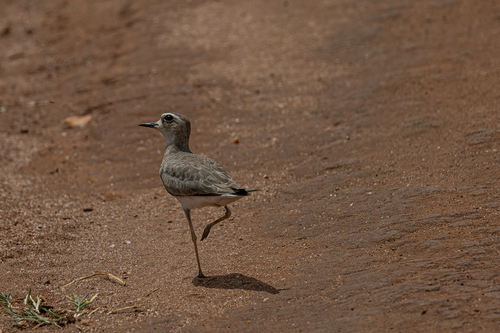
Corriere asiatico (Anarhynchus asiaticus) Corriere asiatico
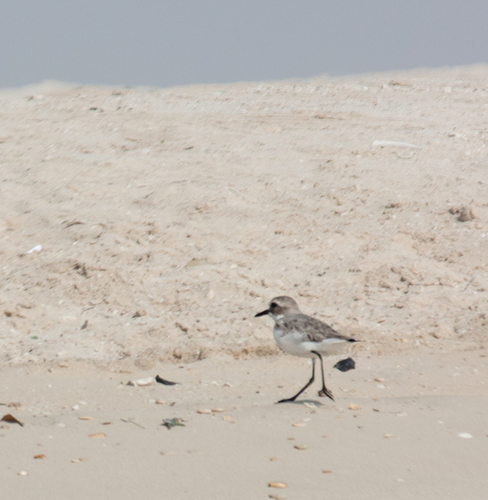
Corriere di Leschenault (Anarhynchus leschenaultii) Corriere di Leschenault

Media

Caricamento…

In breve

The most reliable field mark for separating Caspian Plover from Greater Sand Plover is structure: Caspian is slimmer, longer-legged, and has a noticeably longer, thinner bill, while Greater Sand Plover is chunkier and thick-billed. In breeding plumage, Caspian males show a strong white supercilium and a sharply defined chestnut breast bordered below by black, whereas Greater Sand Plover males have a sandy-buff back, orange breast band, and a black eye mask. Non-breeding and immature birds are trickier, but Caspian Plover remains more elegant and long-legged, with a strong supercilium and paler, less saturated tones. Both species can be confused in mixed-age or non-breeding flocks, but careful attention to structure and facial pattern is key.

Consigli di identificazione

  1. Structure is key: Caspian Plover is slimmer, longer-legged, and has a longer, thinner bill than Greater Sand Plover. This is often the most reliable mark, especially at a distance or in poor light.
  2. Bill shape: Caspian's bill is noticeably finer and longer; Greater Sand Plover's is short, thick, and blunt-tipped. This holds for all ages and seasons.
  3. Supercilium: Caspian Plover always shows a strong, white supercilium (eyebrow), much more prominent than in Greater Sand Plover, which has a less distinct supercilium and, in breeding plumage, a black eye mask.
  4. Breast band (breeding males): Caspian Plover has a sharply defined chestnut breast bordered by black below; Greater Sand Plover has an orange breast band, which can vary in intensity and is not bordered by black.
  5. Face pattern (breeding males): Caspian Plover shows a white face; Greater Sand Plover has an orange forehead and nape, and a black eye mask.
  6. Non-breeding/immature plumage: Both become duller and browner, but Caspian Plover remains paler, with a strong supercilium and a paler breast band (sometimes with a hint of chestnut in females); Greater Sand Plover is browner above and may show a faint rufous wash on the head.
  7. Wing pattern in flight: Neither species shows a strong wing bar or white tail sides, but Caspian Plover's wing bar is weaker and it lacks white tail sides entirely. This can be useful in flight views, but is subtle.
  8. Leg color: Greater Sand Plover has greenish-yellow legs; Caspian Plover's leg color is less distinctive and not a primary field mark.
  9. Jizz in the field: Caspian Plover stands taller and more upright, with a more elegant, delicate look. Greater Sand Plover looks chunkier, lower to the ground, and more robust.
  10. Habitat context: On dry inland grassland or steppe, Caspian Plover is more likely; on sandy coastal beaches or mudflats, Greater Sand Plover is more likely, though both can overlap in migration.
  11. Group composition: Caspian Plover often occurs in loose groups; Greater Sand Plover may be in tighter flocks, especially on coasts.
  12. Voice: Caspian Plover gives a sharp 'chip'; Greater Sand Plover's call is not distinctive in the provided notes.
  13. Sex and age pitfalls: Female and immature Caspian Plovers may lack strong chestnut, resembling duller sandplovers, but structure and supercilium still help. Young Greater Sand Plovers are browner but still chunky and thick-billed.
  14. Direct comparison: When both species are present, the differences in structure and facial pattern become much more obvious. Lone birds are harder, so use a combination of marks.
  15. Beware of overlap with other sandplovers: Both species are similar to Lesser and Siberian Sand Plovers, but Caspian Plover's structure and supercilium are distinctive in this pair.

Taglia

Both species are slightly larger than Common Ringed Plover, but Greater Sand Plover is the chunkier of the two, with a more robust build and thicker bill. Caspian Plover is slimmer and longer-legged, giving it a more upright and elegant appearance. While both are long-legged for plovers, the difference is most obvious when birds are standing side by side or in direct comparison. Bill thickness is a strong point: Caspian's bill is long and fine, while Greater Sand Plover's is shorter and stouter.

Piumaggio

Juvenile and non-breeding birds of both species are generally brown above and pale below, but Caspian Plover shows a much stronger white supercilium and a paler, less saturated look overall. In flight, neither species shows a strong wing bar or white tail sides, but Caspian Plover's wing bar is weaker still, and it lacks the white tail sides that some sandplovers show. Breeding male Caspian Plover has a striking chestnut breast bordered below by black, a white face, and a strong supercilium, while Greater Sand Plover males have an orange breast band, orange on forehead and nape, and a black eye mask. Females and non-breeding birds are duller, but Caspian Plover may retain a hint of chestnut, while Greater Sand Plover becomes browner with a faint rufous wash on the head. Leg color is greenish-yellow in Greater Sand Plover, less distinctive in Caspian.

Comportamento

Both species feed by picking prey from the ground in open habitats, but Caspian Plover's longer legs and slimmer build give it a more upright, elegant gait. Greater Sand Plover appears more robust and purposeful in its movements. Caspian Plover may appear more restless and is often found in looser groups, while Greater Sand Plover can be seen in tighter flocks, especially on migration or wintering grounds.

Habitat

Caspian Plover breeds on open grassland, steppes, and desert fringes with sparse vegetation, and winters in dry grassland, saltmarsh, and floodplains. Greater Sand Plover is more coastal in winter, favoring sandy beaches and mudflats, but both can occur in similar open habitats on migration. If seen inland on dry steppe or saline flats, Caspian Plover is more likely; on a coastal beach, Greater Sand Plover is the default, though both can overlap in some regions.

Voce

Caspian Plover gives a sharp 'chip' call, but vocalizations are not a strong field mark for separation, as Greater Sand Plover's calls are not described in detail in the provided notes.

Invia una descrizione migliore

Usa le stesse sezioni del confronto. Il testo viene pubblicato subito.

The most reliable field mark for separating Caspian Plover from Greater Sand Plover is structure: Caspian is slimmer, longer-legged, and has a noticeably longer, thinner bill, while Greater Sand Plover is chunkier and thick-billed. In breeding plumage, Caspian males show a strong white supercilium and a sharply defined chestnut breast bordered below by black, whereas Greater Sand Plover males have a sandy-buff back, orange breast band, and a black eye mask. Non-breeding and immature birds are trickier, but Caspian Plover remains more elegant and long-legged, with a strong supercilium and paler, less saturated tones. Both species can be confused in mixed-age or non-breeding flocks, but careful attention to structure and facial pattern is key.

  1. Structure is key: Caspian Plover is slimmer, longer-legged, and has a longer, thinner bill than Greater Sand Plover. This is often the most reliable mark, especially at a distance or in poor light.
  2. Bill shape: Caspian's bill is noticeably finer and longer; Greater Sand Plover's is short, thick, and blunt-tipped. This holds for all ages and seasons.
  3. Supercilium: Caspian Plover always shows a strong, white supercilium (eyebrow), much more prominent than in Greater Sand Plover, which has a less distinct supercilium and, in breeding plumage, a black eye mask.
  4. Breast band (breeding males): Caspian Plover has a sharply defined chestnut breast bordered by black below; Greater Sand Plover has an orange breast band, which can vary in intensity and is not bordered by black.
  5. Face pattern (breeding males): Caspian Plover shows a white face; Greater Sand Plover has an orange forehead and nape, and a black eye mask.
  6. Non-breeding/immature plumage: Both become duller and browner, but Caspian Plover remains paler, with a strong supercilium and a paler breast band (sometimes with a hint of chestnut in females); Greater Sand Plover is browner above and may show a faint rufous wash on the head.
  7. Wing pattern in flight: Neither species shows a strong wing bar or white tail sides, but Caspian Plover's wing bar is weaker and it lacks white tail sides entirely. This can be useful in flight views, but is subtle.
  8. Leg color: Greater Sand Plover has greenish-yellow legs; Caspian Plover's leg color is less distinctive and not a primary field mark.
  9. Jizz in the field: Caspian Plover stands taller and more upright, with a more elegant, delicate look. Greater Sand Plover looks chunkier, lower to the ground, and more robust.
  10. Habitat context: On dry inland grassland or steppe, Caspian Plover is more likely; on sandy coastal beaches or mudflats, Greater Sand Plover is more likely, though both can overlap in migration.
  11. Group composition: Caspian Plover often occurs in loose groups; Greater Sand Plover may be in tighter flocks, especially on coasts.
  12. Voice: Caspian Plover gives a sharp 'chip'; Greater Sand Plover's call is not distinctive in the provided notes.
  13. Sex and age pitfalls: Female and immature Caspian Plovers may lack strong chestnut, resembling duller sandplovers, but structure and supercilium still help. Young Greater Sand Plovers are browner but still chunky and thick-billed.
  14. Direct comparison: When both species are present, the differences in structure and facial pattern become much more obvious. Lone birds are harder, so use a combination of marks.
  15. Beware of overlap with other sandplovers: Both species are similar to Lesser and Siberian Sand Plovers, but Caspian Plover's structure and supercilium are distinctive in this pair.

Both species are slightly larger than Common Ringed Plover, but Greater Sand Plover is the chunkier of the two, with a more robust build and thicker bill. Caspian Plover is slimmer and longer-legged, giving it a more upright and elegant appearance. While both are long-legged for plovers, the difference is most obvious when birds are standing side by side or in direct comparison. Bill thickness is a strong point: Caspian's bill is long and fine, while Greater Sand Plover's is shorter and stouter.

Juvenile and non-breeding birds of both species are generally brown above and pale below, but Caspian Plover shows a much stronger white supercilium and a paler, less saturated look overall. In flight, neither species shows a strong wing bar or white tail sides, but Caspian Plover's wing bar is weaker still, and it lacks the white tail sides that some sandplovers show. Breeding male Caspian Plover has a striking chestnut breast bordered below by black, a white face, and a strong supercilium, while Greater Sand Plover males have an orange breast band, orange on forehead and nape, and a black eye mask. Females and non-breeding birds are duller, but Caspian Plover may retain a hint of chestnut, while Greater Sand Plover becomes browner with a faint rufous wash on the head. Leg color is greenish-yellow in Greater Sand Plover, less distinctive in Caspian.

Both species feed by picking prey from the ground in open habitats, but Caspian Plover's longer legs and slimmer build give it a more upright, elegant gait. Greater Sand Plover appears more robust and purposeful in its movements. Caspian Plover may appear more restless and is often found in looser groups, while Greater Sand Plover can be seen in tighter flocks, especially on migration or wintering grounds.

Caspian Plover breeds on open grassland, steppes, and desert fringes with sparse vegetation, and winters in dry grassland, saltmarsh, and floodplains. Greater Sand Plover is more coastal in winter, favoring sandy beaches and mudflats, but both can occur in similar open habitats on migration. If seen inland on dry steppe or saline flats, Caspian Plover is more likely; on a coastal beach, Greater Sand Plover is the default, though both can overlap in some regions.

Caspian Plover gives a sharp 'chip' call, but vocalizations are not a strong field mark for separation, as Greater Sand Plover's calls are not described in detail in the provided notes.

Scartare le modifiche?

Hai modifiche non salvate. Se esci ora, andranno perse.

Corriere asiatico · Corriere di Leschenault · I miei uccelli difficili