

Carunculated Caracara vs Fox Kestrel
Daptrius carunculatus contro Falco alopex
Fai un quiz con Carunculated Caracara e Fox Kestrel
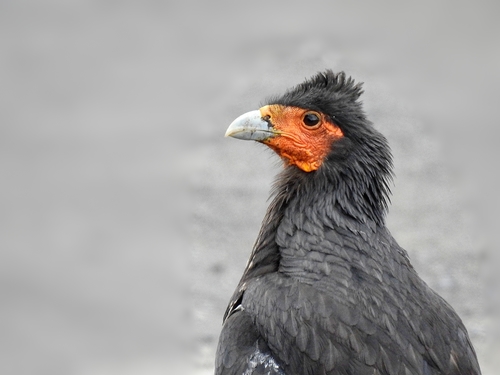 Carunculated Caracara
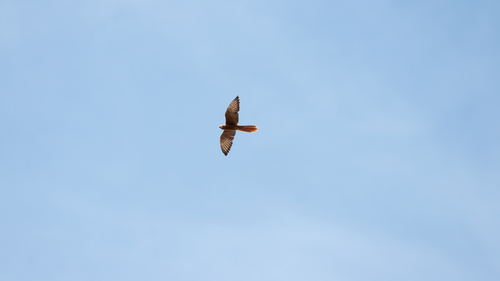 Fox Kestrel
In breve
The most reliable separation between Carunculated Caracara and Fox Kestrel is overall color and underwing pattern: Carunculated Caracara (adult) shows a striking contrast of glossy black with bold white streaks and pure white underwing coverts and flight feather tips, while Fox Kestrel is rich rufous above and below with dark, unbarred flight feathers and pale underwings. Juvenile Carunculated Caracara is mottled brown and white, never rufous, and Fox Kestrel juveniles are heavily streaked rufous with a barred tail. Structure also differs: Carunculated Caracara is much larger and bulkier, with a heavy bill and bare orange-red facial skin, compared to the slender, long-winged, long-tailed Fox Kestrel. Habitat is a strong secondary clue: Carunculated Caracara is high Andean, Fox Kestrel is African and arid-country.
Consigli di identificazione
- Juvenile plumage: Juvenile Carunculated Caracara is brown with white mottling, never rufous or heavily streaked; Fox Kestrel juveniles are rich rufous with heavy streaks and a clearly barred tail. Use this for young birds in flight or perched.
- Adult underwing pattern: Carunculated Caracara adults show pure white underwing coverts and flight feather tips, creating a bold contrast with the black body. Fox Kestrel has pale underwings but not pure white, and the rest of the plumage is rufous.
- Overall color: Carunculated Caracara is glossy black with white streaks and white lower parts; Fox Kestrel is uniformly rufous above and below with black streaks.
- Facial skin: Carunculated Caracara has bare, wrinkled orange to deep red skin on the face and throat, visible even at a distance. Fox Kestrel lacks bare facial skin, with a feathered face and yellow-brown eye.
- Bill and legs: Carunculated Caracara has a heavy bill and bright yellow legs/feet (adults), while Fox Kestrel has a more slender bill and legs that are not described as bright yellow.
- Tail pattern: Fox Kestrel (all ages) has a narrowly barred black tail; Carunculated Caracara has white-tipped tail feathers in adults, and juveniles lack the rufous and barring of Fox Kestrel.
- Flight shape: Carunculated Caracara is broad-winged and heavy-bodied in flight, often with slow, deep wingbeats. Fox Kestrel is slender, with long, narrow wings and tail, and a more buoyant, kestrel-like flight.
- Perched posture: Carunculated Caracara perches upright, often on rocks or the ground, looking robust and stocky. Fox Kestrel perches more horizontally, appearing slim and elongated.
- Habitat: If seen in high Andean grasslands or páramo, it is Carunculated Caracara. If in arid, open African country, it is Fox Kestrel. They do not overlap.
- Size impression: Carunculated Caracara is much larger and bulkier than Fox Kestrel; size alone can separate them if seen together or with scale.
- Sex differences: Both species show little sexual dimorphism in plumage; Fox Kestrel females are slightly larger, but this is not a field mark.
- Voice: Fox Kestrel may give a high, screeching call during breeding; Carunculated Caracara's voice is not described, so do not rely on this.
- Leg color in juveniles: Juvenile Carunculated Caracara has dusky legs/feet, not yellow as in adults; Fox Kestrel's leg color is not diagnostic.
- Context: Carunculated Caracara is often seen in pairs or small groups on the ground; Fox Kestrel is typically solitary or in pairs, often hunting from the air.
- Common pitfalls: Do not confuse the white underwing and tail tips of Caracara for pale underwings of kestrels; check for overall color (black/white vs rufous) and facial skin.
Taglia
Carunculated Caracara is substantially larger and heavier than Fox Kestrel. While the Caracara reaches 50–56 cm in length with a wingspan of 112–119 cm, Fox Kestrel is much smaller at 32–38 cm long and a 76–88 cm wingspan. The Fox Kestrel's average mass is about 275 g, whereas Caracara's mass is not given but is clearly much greater based on length and wingspan. In the field, Caracara appears stocky and robust, while Fox Kestrel is slim and elongated.
Piumaggio
- Juvenile/immature: Juvenile Carunculated Caracara is tawny to dark brown with white mottling on the head, rump, and underparts, and dusky legs/feet. Juvenile Fox Kestrel is rich rufous with heavy dark streaking and clearer black barring on the tail. Caracara juveniles never show the rufous tones or tail barring of Fox Kestrel.
- Adult: Adult Carunculated Caracara is glossy black overall with bold white streaks on the breast, pure white lower belly, undertail coverts, underwing coverts, and tips of flight/tail feathers. The face and throat are bare and bright orange to deep red, with wrinkled skin. Adult Fox Kestrel is dark rufous above and below with black streaks, a narrowly barred black tail, dark unbarred flight feathers, and pale underwings. The eye is yellow-brown. Caracara's underwings are white and strikingly contrast with the rest of the plumage, while Fox Kestrel's are pale but not white, and the body is always rufous.
Comportamento
Carunculated Caracara is typically seen walking or striding on the ground, often in open highland grasslands or perched on rocks and cliffs. It has a heavy, deliberate movement. Fox Kestrel is more aerial, often seen soaring or hovering with long, narrow wings and tail, and is less likely to be seen walking. Its flight is agile and kestrel-like, with a tendency to perch on exposed branches or rocks in open country.
Habitat
Carunculated Caracara is restricted to high-altitude grasslands and páramo in the Andes of Colombia and Ecuador. It is never found in arid African habitats. Fox Kestrel is found in arid, open country in the northern part of Sub-Saharan Africa, often in rocky or savanna landscapes. The two species do not overlap geographically or ecologically.
Voce
Fox Kestrel has a high, screeching call but is usually silent outside the breeding season. No vocalization information is provided for Carunculated Caracara, so voice is not a reliable separator in the field.
Carunculated Caracara · Fox Kestrel · I miei uccelli difficili