

Caribbean Elaenia vs Eastern Wood-Pewee
Elaenia martinica contro Contopus virens
Fai un quiz con Caribbean Elaenia e Eastern Wood-Pewee
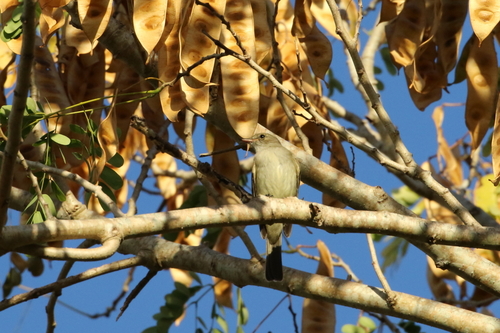 Caribbean Elaenia
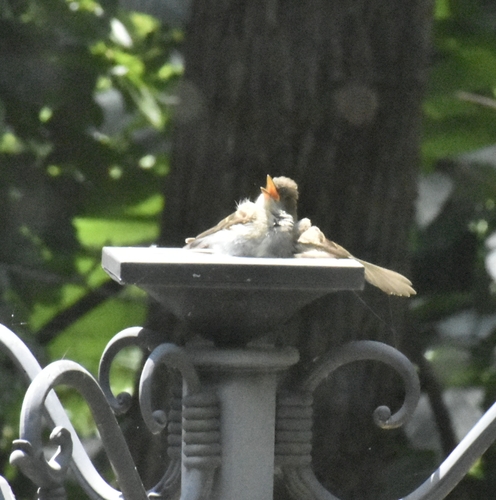 Eastern Wood-Pewee
In breve
Il segno distintivo più affidabile tra Caribbean Elaenia e Eastern Wood-Pewee è la cresta cespugliosa della Caribbean Elaenia con una striscia centrale chiara, che l'Eastern Wood-Pewee, dal profilo più snello e con la testa piatta, manca sempre. Entrambe le specie mostrano due barre alari chiare, ma le ali del Pewee sono più lunghe e appuntite, specialmente in volo, mentre quelle dell'Elaenia sono più corte e arrotondate. Il Pewee è più snello, con una proiezione primaria più lunga e un becco distintamente bicolore, mentre l'Elaenia è più robusta con un becco scuro e una base rosata. Se vedi un catturatore di insetti con una cresta cespugliosa e striata e un aspetto robusto, è l'Elaenia; se è snello, con ali appuntite e testa piatta, è il Pewee.
Consigli di identificazione
- Crest shape: Caribbean Elaenia ha una cresta cespugliosa, spesso sollevata, con una striscia centrale chiara; Eastern Wood-Pewee ha una corona piatta e liscia senza cresta o striscia. Questo è il controllo sul campo più veloce.
- Bill color: Il Pewee mostra un becco bicolore (scuro sopra, giallastro sotto); il becco dell'Elaenia è nero con una base rosa scura alla mandibola, ma appare per lo più scuro sul campo.
- Head and face pattern: L'Elaenia ha un anello oculare biancastro e lore più chiari, dando un volto più decorato; il volto del Pewee è più semplice, privo di forte contrasto o anello oculare.
- Wing shape and projection: Le ali del Pewee sono più lunghe e appuntite, con una proiezione primaria pronunciata oltre le terziarie, facendo apparire l'uccello snello e con ali lunghe. Le ali dell'Elaenia sono più corte e arrotondate, con meno proiezione.
- Wingbars: Entrambe le specie hanno due barre alari chiare, ma sul Pewee possono apparire più nette e contrastanti rispetto all'ala più scura; sull'Elaenia, le barre alari possono essere più diffuse e giallastre o biancastre.
- Body shape: L'Elaenia è più robusta e arrotondata, spesso apparendo con una testa grande e un collo spesso. Il Pewee è più snello, con una postura più eretta ed allungata.
- Tail: La coda del Pewee è più lunga e più squadrata; la coda dell'Elaenia è scura e proporzionalmente più corta.
- Underparts color: Le parti inferiori dell'Elaenia sono grigie chiare a giallastre, con copritrici della coda giallastre. Le parti inferiori del Pewee sono chiare con una sfumatura olivastra sul petto, ma mai giallastre.
- Behavior: Il Pewee spesso si posa immobile e dritto su rami esposti, lanciandosi per insetti e tornando nello stesso punto. L'Elaenia è più attiva, muovendo ali e coda, e si sposta attraverso il fogliame.
- Habitat: Il Pewee preferisce boschi maturi, bordi forestali e piantagioni di pino; l'Elaenia è più spesso in habitat cespugliosi, giardini e crescita secondaria.
- Voice: Se senti un chiaro richiamo 'pee-a'wee' o 'pe-wee', è il Pewee. Le vocalizzazioni dell'Elaenia non sono descritte qui, quindi il silenzio non è diagnostico.
- Geography and season: Nei Caraibi, l'Elaenia è residente e comune negli habitat appropriati; il Pewee è presente solo come migrante o invernante, e di solito in boschi maturi.
- Sex and age: Entrambe le specie sono sessualmente monomorfiche (maschi e femmine si somigliano). Non sono descritte differenze di pattern alare specifiche per età, quindi questi segni funzionano per tutte le età.
- Plumage pitfalls: Entrambi possono apparire opachi e grigio-olivastri, specialmente in scarsa luce. Concentrati su cresta, becco e forma dell'ala per la separazione.
- When in doubt: Se vedi una cresta cespugliosa e una striscia centrale chiara, è sempre l'Elaenia. Se l'uccello è snello, con testa piatta, un becco bicolore e ali appuntite, è il Pewee.
Taglia
Caribbean Elaenia è leggermente più grande e pesante, con una massa corporea media di 21,3 g [wikidata], e misura 14–18 cm di lunghezza. Eastern Wood-Pewee è un po' più piccolo e leggero, con una lunghezza di 13,5–15 cm e circa 14 g di peso. Sul campo, l'Elaenia appare spesso più robusta e arrotondata, mentre il Pewee è più snello e allungato, specialmente quando è posato o in volo.
Piumaggio
Non sono notate differenze di pattern alare specifiche per età per immaturi o giovani in entrambe le specie, quindi ci si concentra sul piumaggio adulto. Gli adulti di Caribbean Elaenia hanno una corona di un olivastro opaco a marrone oliva con una striscia bianca distintiva lungo il centro della loro cresta cespugliosa, un anello oculare biancastro e bordi delle piume alari giallastri a biancastri che formano due barre alari. Le loro parti inferiori sono grigie chiare a giallastre, con copritrici della coda giallastre. Gli adulti di Eastern Wood-Pewee sono grigio-olivastri sopra con parti inferiori chiare e una sottile sfumatura olivastra sul petto. Hanno anche due barre alari chiare, ma le loro ali sono più lunghe e appuntite, e il loro becco è bicolore (scuro sopra, giallastro sotto). Il Pewee non ha alcuna cresta o striscia coronale, e il suo volto è più semplice, senza un forte anello oculare o lore contrastanti. Entrambe le specie hanno code scure, ma la coda del Pewee è tipicamente più lunga e più squadrata.
Comportamento
Eastern Wood-Pewee è spesso visto lanciarsi da posatoi alti ed esposti, tornando nello stesso punto dopo aver catturato insetti, e tende a rimanere eretto e immobile per lunghi periodi. Caribbean Elaenia è più attiva e irrequieta, spesso muovendo le ali e la coda e spostandosi attraverso il fogliame a livelli medi. La cresta dell'Elaenia è frequentemente sollevata, dandole un aspetto di testa cespugliosa, mentre la testa del Pewee rimane piatta e liscia. I Pewee sono più propensi a essere visti in boschi aperti o ai bordi delle foreste, mentre le Elaenia preferiscono habitat più densi e cespugliosi.
Habitat
Caribbean Elaenia si trova nelle Indie Occidentali, in alcune parti dell'America Centrale e nelle isole vicine al nord del Sud America, preferendo aree cespugliose, bordi forestali e giardini. Eastern Wood-Pewee nidifica in foreste decidue e miste dell'America del Nord orientale e migra in America Centrale e nei Caraibi per l'inverno. Nelle zone di sovrapposizione, i Pewee sono più propensi a trovarsi in boschi maturi o piantagioni di pino, mentre le Elaenia si attengono a crescita cespugliosa, bordi o crescita secondaria. La sovrapposizione dell'areale è minima, eccetto durante la migrazione o su alcune isole caraibiche.
Voce
Eastern Wood-Pewee emette un distintivo e lamentoso fischio 'pee-a'wee' o 'pe-wee' con una fine in salita, che è un segno distintivo chiave in stagione. Le vocalizzazioni della Caribbean Elaenia non sono descritte nelle note fornite, quindi la voce è solo diagnostica per il Pewee se senti la sua canzone caratteristica.
Caribbean Elaenia · Eastern Wood-Pewee · I miei uccelli difficili