

Cabanis's Wren vs White-breasted Wood-Wren
Cantorchilus modestus contro Henicorhina leucosticta
Fai un quiz con Cabanis's Wren e White-breasted Wood-Wren
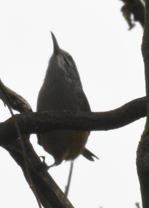 Cabanis's Wren
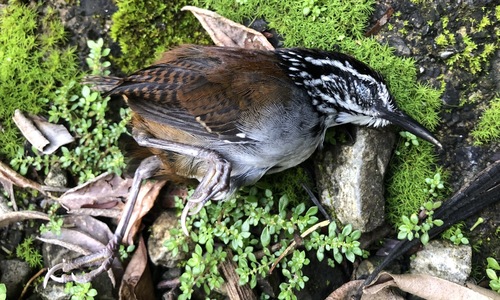 White-breasted Wood-Wren
In breve
Il segno distintivo più affidabile per separare Cabanis's Wren da White-breasted Wood-Wren è la colorazione delle parti inferiori: Cabanis's Wren mostra una gola bianca, un petto grigio-buff pallido e un ventre bianco-buffy con fianchi arancione-buffy, mentre White-breasted Wood-Wren ha parti inferiori bianche pulite che diventano solo buff sul ventre inferiore. Inoltre, Cabanis's Wren è più grande e ha una coda più lunga, con un dorso bruno-rossiccio e un sottocoda arancione-rossiccio, in contrasto con le parti superiori marrone castagna del Wood-Wren e la coda molto più corta. Entrambe le specie hanno un supercilio pallido, ma il volto del Wood-Wren è più audacemente segnato con strisce bianche e nere. Gli immaturi di entrambe le specie sono più opachi, ma il giovane Wood-Wren è particolarmente grigio sotto. Queste differenze sono visibili sia in posizione per lo più che in brevi visioni in volo.
Consigli di identificazione
- Colore delle parti inferiori: Cabanis's Wren mostra una gola bianca, un petto grigio-buff pallido e un ventre bianco-buffy con fianchi arancione-buffy; White-breasted Wood-Wren ha parti inferiori bianche pulite, che diventano solo buff sul ventre inferiore. Questo è visibile in tutte le età ma è più affidabile negli adulti.
- Lunghezza e forma della coda: Cabanis's Wren ha una coda bruno-rossiccia visibilmente più lunga con barre scure strette, mentre White-breasted Wood-Wren ha una coda molto corta barrata di nero. Sul campo, il Wood-Wren spesso appare quasi senza coda.
- Colore del dorso e del sottocoda: Cabanis's Wren ha un dorso bruno-rossiccio e un sottocoda arancione-rossiccio, in contrasto con le parti superiori marrone castagna del Wood-Wren e la corona più scura. Il colore del sottocoda è un buon controllo quando visto bene.
- Schema facciale: Entrambi hanno un supercilio pallido, ma White-breasted Wood-Wren ha lati della testa e del collo striati di bianco e nero, dando un volto più audacemente segnato. Cabanis's Wren ha un supercilio bianco, una striscia grigio-bruna dietro l'occhio e guance grigio-brune e grigio-bianche macchiate.
- Dimensione e struttura: Cabanis's Wren è più grande e più lungo (12,5–14 cm) rispetto al compatto e corto White-breasted Wood-Wren (10 cm). Questo è meglio giudicato quando entrambe le specie sono viste nella stessa area, ma può essere fuorviante se è presente solo una.
- Piumaggio giovanile/immaturo: Il giovane White-breasted Wood-Wren è particolarmente grigio sotto, privo delle tonalità calde buffy degli immaturi di Cabanis's Wren. Se vedi un giovane wren opaco e grigiastro con una coda corta, sospetta Wood-Wren.
- Barratura della coda: Entrambe le specie hanno code barrate, ma la coda del Wood-Wren è più corta e più fortemente barrata di nero; la coda di Cabanis's Wren è più lunga, bruno-rossiccia e più sottilmente barrata.
- Supercilio: Entrambe le specie mostrano un supercilio pallido, ma è più evidente su Cabanis's Wren a causa del contrasto con la sua corona più scura e il volto meno audacemente segnato.
- Schema delle guance: Cabanis's Wren ha guance grigio-brune e grigio-bianche macchiate, mentre le guance del Wood-Wren sono più nettamente striate di bianco e nero.
- Colore del sottocoda: Il sottocoda arancione-rossiccio di Cabanis's Wren è distintivo se visto, specialmente rispetto alle parti superiori marrone castagna più uniformi del Wood-Wren.
- Colore dei fianchi: I fianchi arancione-buffy sono una caratteristica di Cabanis's Wren, mentre i fianchi del Wood-Wren non sono colorati in modo così distintivo.
- Gamma geografica: Entrambe le specie si sovrappongono in America Centrale, ma se ti trovi al di fuori di quest'area, controlla le mappe di distribuzione per la probabilità locale.
- Habitat: Entrambe le specie utilizzano sottoboschi densi e bordi forestali; l'habitat da solo non è un forte separatore nelle aree di sovrapposizione.
- Comportamento: Entrambi sono wrens schivi, ma Cabanis's Wren può apparire più allungato e con una coda più lunga in movimento.
- Voce: Non sono fornite differenze vocali diagnostiche nelle fonti; utilizza piumaggio e struttura per la separazione.
Taglia
Cabanis's Wren è nettamente più grande, misurando 12,5–14 cm di lunghezza e pesando 16–19 g, mentre White-breasted Wood-Wren è più piccolo a 10 cm e circa 16 g. La differenza di dimensione è più evidente nella lunghezza, con Cabanis's Wren che appare visibilmente più lungo e con una coda più lunga. Sul campo, Cabanis's Wren può sembrare più robusto e più allungato, mentre il Wood-Wren è compatto e con una coda corta.
Piumaggio
- Giovanili/immaturi: Entrambe le specie sono più opache degli adulti, ma il giovane White-breasted Wood-Wren è particolarmente grigio sulle parti inferiori, privo delle tonalità calde buffy di Cabanis's Wren. Gli immaturi di Cabanis's Wren sono una versione più opaca dell'adulto, ma mostrano ancora il motivo di base di gola bianca e fianchi arancione-buffy.
- Adulti: Cabanis's Wren ha una corona grigio-bruna scura, un dorso bruno-rossiccio, un sottocoda arancione-rossiccio e una coda bruno-rossiccia con barre scure strette. Le sue parti inferiori sono bianche alla gola, grigio-buff pallido sul petto e bianche-buffy sul ventre, con fianchi arancione-buffy. White-breasted Wood-Wren ha parti superiori marrone castagna, una corona più scura e una coda molto corta barrata di nero. Le sue parti inferiori sono bianche pulite, diventando buff solo sul ventre inferiore. Il volto del Wood-Wren è più audacemente segnato con strisce bianche e nere sui lati della testa e del collo, mentre Cabanis's Wren ha un supercilio bianco e guance grigio-brune e grigio-bianche macchiate.
Comportamento
Non vengono evidenziate differenze comportamentali significative nelle fonti disponibili. Entrambe le specie sono wrens tipici, spesso schivi nella vegetazione densa e si muovono con movimenti rapidi e veloci. Cabanis's Wren può apparire più allungato e con una coda più lunga quando si muove, mentre White-breasted Wood-Wren è più compatto e con una coda corta.
Habitat
Entrambe le specie si sovrappongono in America Centrale, ma Cabanis's Wren si trova dal sud del Messico attraverso l'America Centrale fino alla Costa Rica, mentre White-breasted Wood-Wren si estende dal Messico centrale a sud fino al Perù nordorientale e al Suriname. Entrambi si trovano in foreste e bordi di pianura e di collina, ma l'abbondanza locale può differire. Nelle aree di sovrapposizione, l'habitat da solo non è diagnostico.
Cabanis's Wren · White-breasted Wood-Wren · I miei uccelli difficili