

Burchell's Courser vs Temminck's Courser
Cursorius rufus contro Cursorius temminckii
Fai un quiz con Burchell's Courser e Temminck's Courser
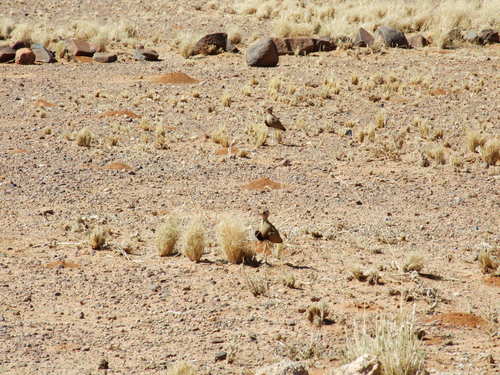 Burchell's Courser
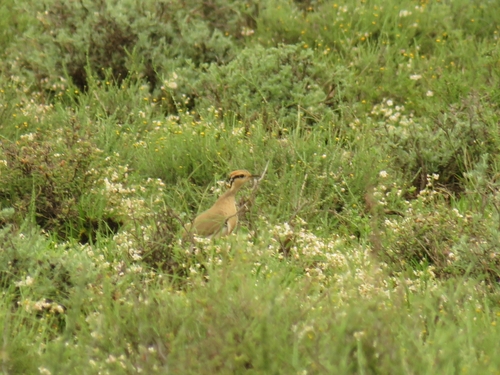 Temminck's Courser
In breve
Il segno distintivo più affidabile per separare Burchell's Courser da Temminck's Courser è la corona posteriore blu-grigia su Burchell's, che Temminck's non ha. Il Burchell's adulto mostra anche una colorazione rufous pallida più pronunciata e una banda nera orizzontale attraverso il petto inferiore, che mette in risalto un ventre bianco. Entrambe le specie hanno costruzioni simili, erette e slanciate, e schemi facciali, ma le differenze nella testa e nelle parti inferiori sono fondamentali. I giovani Burchell's mancano delle tonalità rufous e delle strisce facciali degli adulti, apparendo maculati e barrati, il che può causare confusione con Temminck's, specialmente a distanza o in condizioni di scarsa illuminazione.
Consigli di identificazione
- Corona posteriore blu-grigia (solo adulto Burchell's): Cerca una macchia blu-grigia distintiva sulla corona posteriore di Burchell's Courser; Temminck's Courser non ha questa caratteristica. Questo è il segno distintivo più affidabile per gli adulti.
- Banda nera orizzontale sul petto: Burchell's mostra una netta banda nera orizzontale che separa il ventre bianco dal petto rufous; Temminck's Courser non ha questa forte demarcazione.
- Colorazione rufous generale: Il Burchell's adulto è più chiaro e più rufous nel complesso, mentre Temminck's tende ad essere meno rufous e più uniforme.
- Schema facciale: Entrambi hanno supercili bianchi sopra le linee oculari nere, ma in Burchell's queste linee e le supercili formano una doppia V alla nuca, accentuata dalla corona blu-grigia. In Temminck's, lo schema della testa è simile ma manca del blu-grigio e può apparire meno definito.
- Confusione giovanile: Il giovane Burchell's Courser manca delle tonalità rufous e delle strisce facciali dell'adulto, apparendo maculato con barrature nere e beige. Questo può sembrare simile a Temminck's Courser, specialmente a distanza. Se vedi un courser maculato, meno distintamente marcato nell'habitat giusto, considera l'età oltre alla specie.
- Schema delle ali inferiori (adulti): Burchell's Courser ha per lo più secondarie bianche, ali inferiori nere e copritrici marroni o grigie. Lo schema delle ali inferiori per Temminck's non è descritto, quindi usalo con cautela.
- Colore delle gambe: Burchell's Courser ha gambe bianche crema, che possono contrastare con il terreno. Il colore delle gambe per Temminck's non è specificato ma è probabilmente simile; usalo solo come segno di supporto.
- Forma del becco: Entrambi hanno becchi lunghi e leggermente ricurvi, non utili per la separazione.
- Proiezione dei piedi in volo: I piedi di Burchell's Courser si estendono oltre la coda in volo, tipico per i courser e probabilmente non diagnostico tra questi due.
- Contesto dell'habitat: In semi-deserti aridi e ghiaiosi o in prati aperti sovrapascolati, Burchell's è più probabile. Nella savana recentemente bruciata, specialmente dove possono essere trovate uova scure, Temminck's è favorito.
- Gamma geografica: Burchell's è più ristretto all'Africa meridionale (Sudafrica, Namibia, SW Angola, Botswana), mentre Temminck's è diffuso nell'Africa subsahariana.
- Comportamento: Entrambe le specie corrono per catturare insetti e possono essere solitarie o in piccoli gruppi; il comportamento non è diagnostico.
- Differenze sessuali: Maschi e femmine sono simili in entrambe le specie; non usare il sesso per la separazione.
- Dimensioni: Entrambi sono simili in dimensioni e struttura; non fare affidamento sulle dimensioni per l'identificazione.
- Vocalizzazioni: Non sono descritte chiamate o canti distintivi nelle fonti disponibili.
Taglia
Entrambe le specie sono molto simili in dimensioni, con Burchell's Courser che pesa in media 75 g e Temminck's Courser leggermente più leggero a 71 g [wikidata]. Sul campo, questa differenza è trascurabile e improbabile che sia utile per la separazione. Entrambi hanno gambe lunghe e una postura elegante e eretta tipica dei courser.
Piumaggio
Per gli adulti, Burchell's Courser si distingue per la sua corona posteriore blu-grigia, una caratteristica assente in Temminck's. Burchell's mostra anche una banda nera orizzontale che separa un ventre bianco dal resto del suo corpo rufous pallido, mentre Temminck's manca di questa netta demarcazione. Il volto di Burchell's è contrassegnato da supercili bianchi sopra le linee oculari nere, formando una doppia V alla nuca; Temminck's ha strisce facciali simili ma senza la corona blu-grigia. Il giovane Burchell's Courser è notevolmente diverso dagli adulti: manca delle tonalità rufous e delle strisce facciali, ed è invece maculato con barrature nere e beige, che possono superficialmente assomigliare a Temminck's, specialmente in condizioni di visione scadenti. Lo schema delle ali inferiori è descritto per Burchell's come per lo più secondarie bianche con ali inferiori nere e copritrici marroni o grigie; l'ali inferiori di Temminck's non sono dettagliate nelle fonti, quindi questo potrebbe non essere affidabile per la separazione.
Comportamento
Entrambe le specie sono diurne, terrestri e corrono per catturare prede insetti. Burchell's Courser è descritto come localmente nomade, spesso solitario o in piccoli gruppi, e cerca cibo correndo e scavando con il suo lungo becco. Temminck's Courser è anche un abitante del suolo e un cercatore di cibo, con abitudini simili. In volo, i piedi di Burchell's Courser si estendono oltre la coda, una caratteristica tipica dei courser e probabilmente condivisa con Temminck's.
Habitat
Burchell's Courser predilige regioni calde e secche nell'Africa meridionale, specialmente deserti o semi-deserti con ghiaia, prati aperti con erba corta e aree con vegetazione scarsa, bruciata o sovrapascolata. La sua gamma è principalmente in Sudafrica, Namibia, Angola sud-occidentale e Botswana (Bacino del Kalahari). Temminck's Courser è più diffuso nell'Africa subsahariana ed è particolarmente noto per la riproduzione nelle savane bruciate, dove depone uova scure tra la vegetazione bruciata. Anche se le loro gamme possono sovrapporsi, Burchell's è più legato a habitat aridi e ghiaiosi, mentre Temminck's si trova spesso in prati recentemente bruciati.
Burchell's Courser · Temminck's Courser · I miei uccelli difficili