

Broad-tailed Grassbird vs Striated Grassbird
Schoenicola platyurus contro Megalurus palustris
Fai un quiz con Broad-tailed Grassbird e Striated Grassbird
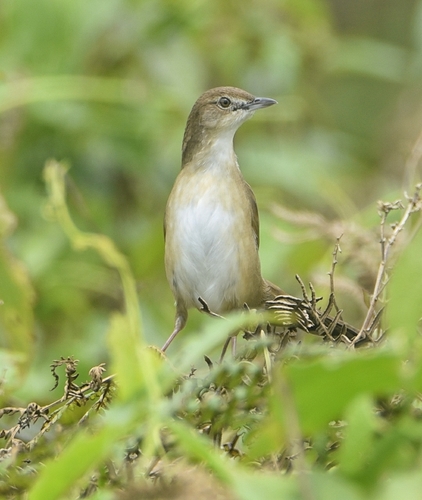 Broad-tailed Grassbird
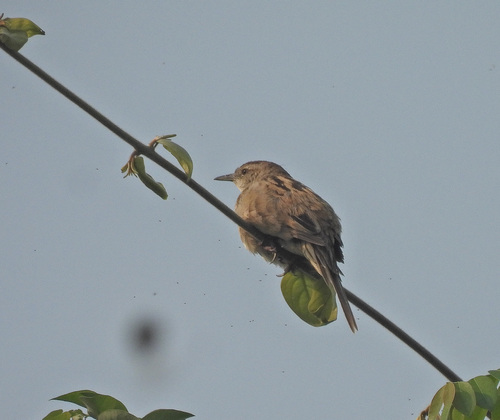 Striated Grassbird
In breve
Il segno distintivo più affidabile per separare il Broad-tailed Grassbird dallo Striated Grassbird è la coda: il Broad-tailed ha una coda larga, arrotondata e distintamente graduata con sottili barre scure e punte bianche sotto, mentre la coda dello Striated Grassbird è più lunga e più appuntita. Il Broad-tailed è un piccolo, per lo più marrone, che si nasconde nelle praterie ad alta quota dei Western Ghats, con un supercilio color buff e parti superiori marroni uniformi. Lo Striated Grassbird è più grande e pesante, con un aspetto striato e una preferenza per praterie più aperte o umide. Se vedi un grassbird con una coda larga e arrotondata e parti superiori marroni uniformi, specialmente nei Western Ghats, è probabile che sia un Broad-tailed; un uccello più grande e striato con una coda lunga e appuntita è uno Striated.
Consigli di identificazione
- Forma e struttura della coda: Il Broad-tailed Grassbird ha una coda larga, arrotondata e distintamente graduata con sottili barre scure e punte bianche sotto. La coda dello Striated Grassbird è più lunga, più appuntita e non così ovviamente graduata. Questo è il segno distintivo più consistente per gli adulti di entrambi i sessi.
- Dimensioni e struttura generale: Lo Striated Grassbird è molto più grande e pesante (45 g) rispetto al Broad-tailed, che è piccolo e più delicato. Se l'uccello appare ingombrante e con una coda lunga, sospetta che sia uno Striated.
- Parti superiori e striature: Il Broad-tailed è marrone uniforme sopra, privo di striature. Lo Striated Grassbird è striato sopra e sotto, dando un aspetto molto più patternato. Se vedi striature chiare, non è un Broad-tailed.
- Supercilio: Il Broad-tailed ha un supercilio color buff, che può essere meno distintivo nello Striated, ma questo è solo un segno di supporto.
- Colore dei fianchi: Nei Broad-tailed, gli uccelli settentrionali hanno fianchi color sabbia-marrone, mentre gli uccelli meridionali sono più rufous con un buff brillante sul petto e sui fianchi. Lo Striated è striato e manca di questa variazione regionale.
- Schema della coda inferiore: La coda del Broad-tailed è molto scura sotto con punte bianche sulle piume; questo non è descritto per lo Striated.
- Struttura del becco: Il Broad-tailed ha un becco corto e robusto con un culmine leggermente curvo e due setole rictali. Il becco dello Striated non è descritto in dettaglio ma è generalmente più lungo e più snello nel genere Megalurus.
- Zampe/tarsi: Il Broad-tailed ha un tarso proporzionalmente lungo per le sue dimensioni, ma questo è sottile e utile solo in viste ravvicinate.
- Comportamento: Il Broad-tailed è un uccello che si nasconde, raramente si posa in aperto tranne durante i voli di corteggiamento. Lo Striated è più probabile che venga visto in aperto, posato su erba alta o canne.
- Volo di corteggiamento: Se vedi un uccello che esegue un volo di corteggiamento fluttuante, simile a un allodola, con una coda aperta e un canto trillante, è un Broad-tailed. Lo Striated non si esibisce in questo modo.
- Habitat: Il Broad-tailed è limitato alle praterie ad alta quota nei Western Ghats; lo Striated si trova in praterie più diffuse, aperte o paludose, spesso a quote più basse.
- Vocalizzazione: Solo il canto di corteggiamento del Broad-tailed è descritto: un trill ripetuto, simile a quello di un allodola. Se senti questo, è diagnostico.
- Sesso e età: Entrambi i sessi sono simili nel Broad-tailed; non sono state notate differenze sessuali per lo Striated. Non sono stati descritti segni specifici per giovani/immaturi per nessuna delle due specie.
- Contesto geografico: Se sei nei Western Ghats ad alta quota, è più probabile che sia un Broad-tailed. In praterie aperte o paludose altrove, ci si aspetta lo Striated.
- Trappole: La principale confusione deriva dal colore marrone generale e dall'habitat di prateria. Controlla sempre la forma della coda (larga e arrotondata contro lunga e appuntita) e la presenza o assenza di striature.
Taglia
Lo Striated Grassbird è significativamente più pesante, con una massa adulta di circa 45 g [wikidata], mentre il Broad-tailed Grassbird è più piccolo e leggero (non è stata fornita una massa esatta, ma è descritto come piccolo). Lo Striated appare anche più grande e ingombrante sul campo, con una coda più lunga e un aspetto più robusto. Il Broad-tailed è compatto, con un tarso proporzionalmente lungo per le sue dimensioni, ma nel complesso è più delicato dello Striated.
Piumaggio
- Schema dell'ala superiore giovanile/immaturo: Non sono stati descritti segni specifici per l'ala superiore o il pattern di volo per nessuna delle due specie nelle fonti, quindi questo non è un punto di separazione affidabile in volo per i giovani uccelli.
- Adulti: Il Broad-tailed Grassbird è marrone uniforme sopra, con una coda larga, arrotondata e graduata che mostra sottili barre scure e punte bianche sotto. Ha un supercilio color buff e fianchi color sabbia o marrone rufous a seconda della regione (gli uccelli settentrionali sono più chiari/grigi, gli uccelli meridionali sono più scuri e rufous e più buff sotto). Lo Striated Grassbird, al contrario, è striato sopra e sotto, dando un aspetto molto più patternato, e manca della coda larga e arrotondata del Broad-tailed. La coda dello Striated è più lunga, più appuntita e non così ovviamente graduata o con punte larghe. Entrambi i sessi sono simili nel Broad-tailed; non sono state notate differenze sessuali per lo Striated.
Comportamento
Il Broad-tailed Grassbird è un uccello che si nasconde, muovendosi rapidamente attraverso erba densa e canne, di solito rimanendo basso e nascosto tranne durante la stagione degli amori quando i maschi eseguono voli di corteggiamento fluttuanti con code aperte. Lo Striated Grassbird è più probabile che venga visto posato in aperto o su steli d'erba alti, ed è meno legato a coperture dense. Il volo di corteggiamento del Broad-tailed è distintivo, con un trill simile a quello di un allodola e coda aperta, mentre lo Striated è più spesso visto cantare da posatoi esposti.
Habitat
Il Broad-tailed Grassbird è limitato a colline erbose umide ad alta quota nei Western Ghats del sud dell'India, raramente allontanandosi da questo habitat. Lo Striated Grassbird è più diffuso e favorisce praterie aperte, paludi e canneti, spesso a quote più basse e in aree più umide. Se ti trovi in una collina erbosa alta nei Western Ghats, è probabile che sia un Broad-tailed; in praterie aperte o paludose a bassa quota, specialmente al di fuori dei Ghats, ci si aspetta lo Striated.
Voce
Il canto di corteggiamento del Broad-tailed Grassbird è un trill ripetuto, simile a quello di un allodola, spesso eseguito in volo, accompagnato da una coda aperta e un volo fluttuante. Altri richiami includono una nota 'chack' e una nota 'zink'. Non sono forniti dettagli vocali per lo Striated Grassbird nelle fonti, quindi la vocalizzazione è solo un separatore affidabile se senti il distintivo canto di corteggiamento del Broad-tailed.
Broad-tailed Grassbird · Striated Grassbird · I miei uccelli difficili