

Blue-headed Parrot vs Silver-beaked Tanager
Pionus menstruus contro Ramphocelus carbo
Fai un quiz con Blue-headed Parrot e Silver-beaked Tanager
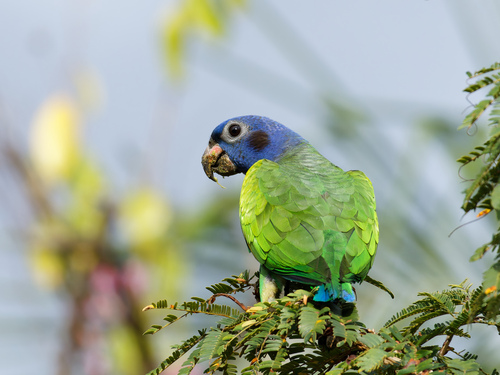 Blue-headed Parrot
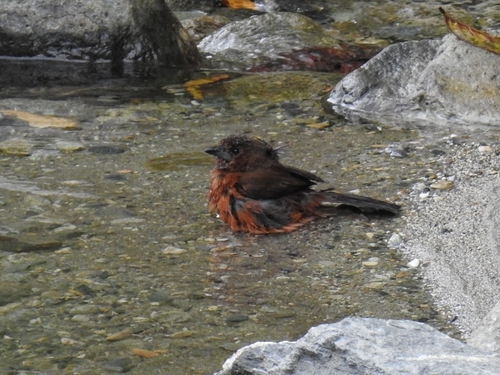 Silver-beaked Tanager
In breve
Il segno distintivo più affidabile che separa il Blue-headed Parrot dal Silver-beaked Tanager è la testa e il collo blu del pappagallo che contrastano con il suo corpo verde e le copritail rosse, rispetto al piumaggio profondo carminio o vellutato nerastro del tordo e al suo becco pesante e chiaro. I giovani del pappagallo possono mostrare meno blu e un po' di rossastro attorno al cere, ma mai i toni rossi o nerastri uniformi e morbidi del tordo. Anche la struttura è un indizio: il Blue-headed Parrot è un uccello massiccio, con una coda corta e ali larghe, dotato di un forte becco ricurvo, mentre il Silver-beaked Tanager è più piccolo, più snello e ha un becco dritto e spesso. Se vedi un uccello per lo più verde con una testa blu, è il pappagallo; se vedi un uccello morbido, di un rosso profondo o nerastro con un becco pesante e chiaro, è il tordo.
Consigli di identificazione
- Head color: Il Blue-headed Parrot mostra sempre una testa e un collo blu (meno nei giovani, ma comunque bluastro), mai eguagliato dal Silver-beaked Tanager di qualsiasi età o sesso.
- Body color: Il pappagallo ha un corpo principalmente verde con copritail rosse; il tordo è di un carminio profondo, vellutato nerastro o marrone rossastro, mai verde.
- Bill shape and color: Il pappagallo ha un forte becco ricurvo, per lo più nero, con lati rossastri; il tordo ha un becco spesso e dritto con una mandibola inferiore bianca argentata (nei maschi) o completamente scura (nelle femmine), mai ricurvo.
- Size and structure: Il pappagallo è molto più grande e massiccio, con una coda corta e ali larghe; il tordo è più piccolo, più snello e più delicato.
- Juvenile plumage: I giovani pappagalli hanno meno blu sulla testa e un po' di rossastro attorno al cere, ma mostrano comunque corpi verdi e copritail rosse. I tordi immaturi somigliano alle femmine adulte (marrone rossastro), mai verdi o blu.
- Wing and tail pattern: Le ali del pappagallo sono verdi con un po' di giallastro sulle copritail; le ali del tordo sono nerastre con bordi marroni o rufescenti (femmine/immaturi). Non ci sono pannelli distintivi sulle ali superiori o segni di volo in entrambi, ma il colore complessivo è diagnostico.
- Undertail coverts: Il pappagallo ha copritail rosse brillanti; quelle del tordo sono nere con una sfumatura cremisi (maschio) o marrone (femmina/immatura), mai rosse brillanti.
- Sexual dimorphism: I sessi del pappagallo sono simili; i maschi del tordo sono molto più brillanti (carminio profondo o nerastro) rispetto alle femmine (marrone rossastro). Se vedi un uccello morbido, vellutato nerastro o rosso profondo, è un maschio del tordo; se entrambi i sessi sembrano uguali, considera il pappagallo.
- Iris and legs: Il tordo ha un'iride marrone rossastra e zampe grigio scuro; il colore degli occhi e delle zampe del pappagallo è meno distintivo nel campo.
- Behavior: I pappagalli sono spesso visti in gruppi rumorosi o nei dormitori, volando con forza e posandosi in posizione eretta; i tordi sono più solitari o in piccoli gruppi, foraggiando più in basso e meno in modo appariscente.
- Habitat: I pappagalli sono più probabili in foreste umide/semi-umide o aree semi-aperte; i tordi sono comuni in habitat di margine, secondari e disturbati.
- Voice: Il 'sweenk' acuto del pappagallo è distintivo; i richiami del tordo non sono striduli o acuti.
- Range overlap: Entrambi possono verificarsi a Trinidad e in gran parte dell'America del Sud tropicale, quindi l'area di distribuzione da sola non è diagnostica.
- Pitfall: I pappagalli immaturi con blu ridotto possono sembrare meno ovvi, ma non si avvicinano mai all'aspetto morbido e uniforme del rosso o nerastro del tordo. I tordi femmine/immaturi possono sembrare più opachi, ma mai verdi o blu.
- In flight: La massa, la testa blu e il corpo verde del pappagallo sono visibili anche in volo; il tordo è più piccolo, con toni scuri o rossastri uniformi e senza blu o verde.
Taglia
Il Blue-headed Parrot è significativamente più grande, con una lunghezza di circa 27–28 cm e un peso di 245 g [wikipedia][avonet], con una corporatura robusta e massiccia. Il Silver-beaked Tanager è molto più piccolo, con 16–17 cm e 21–37,5 g [wikipedia]. Sul campo, il pappagallo appare più massiccio e potente, mentre il tordo è visibilmente più leggero e più delicato.
Piumaggio
I giovani Blue-headed Parrots hanno meno blu sulla testa e possono mostrare piume rosse o rosate attorno al cere, ma hanno comunque un corpo principalmente verde e copritail rosse. Questi uccelli acquisiscono gradualmente il cappuccio blu completo in 8–24 mesi. Tutte le età del Blue-headed Parrot mostrano un corpo verde, testa/collo blu e copritail rosse, con un po' di giallastro sulle copritail. Al contrario, i maschi del Silver-beaked Tanager sono di un carminio profondo o vellutato nerastro con un aspetto morbido, e le femmine/immaturi sono di un ricco rosso ruggine scuro a marrone rossastro, privi di qualsiasi verde o blu. Le penne di volo e la coda del tordo sono nerastre, e entrambi i sessi hanno un becco pesante e chiaro (bianco argentato sulla mandibola inferiore nei maschi). Nessuna età del tordo mostra una testa blu o un corpo verde. I tordi femmine e immaturi sono più marroni ma mancano comunque di qualsiasi verde o blu, e le loro ali sono nerastre con bordi rufescenti. La variazione subspecifica nei maschi del tordo può influenzare la tonalità di rosso o nero, ma non si avvicina mai alla colorazione del pappagallo.
Comportamento
I Blue-headed Parrots sono rumorosi, spesso visti in gruppi, e possono essere osservati mentre si riposano in modo comunitario in palme o grandi alberi, a volte in gran numero all'alba e al tramonto. Hanno un volo forte e diretto e si posano in posizione eretta, spesso in spazi aperti. I Silver-beaked Tanagers sono più propensi a essere visti singolarmente o in piccoli gruppi, foraggiando in habitat arbustivi o di margine, e tendono a essere meno appariscenti in volo. I loro movimenti sono più saltellanti e si posano più in basso o a livello medio nella vegetazione.
Habitat
Il Blue-headed Parrot predilige foreste umide o semi-umide e terreni semi-aperti, comprese le aree coltivate, ma è in gran parte limitato a regioni più umide (anche se può estendersi in aree più secche lungo i fiumi). Il Silver-beaked Tanager è diffuso nell'America del Sud a bassa quota, trovato in una vasta gamma di habitat, comprese le aree di margine forestale, la crescita secondaria, i giardini e le aree arbustive. Entrambi possono verificarsi in paesaggi modificati dall'uomo, ma il pappagallo è più legato a tratti forestali o semi-aperti, mentre il tordo è comune in habitat disturbati e di margine.
Voce
Il Blue-headed Parrot emette richiami leggeri e acuti 'sweenk' ed è generalmente rumoroso, specialmente in volo o nei dormitori comuni. Il Silver-beaked Tanager è meno rumoroso, con richiami tipici del tordo che non sono descritti in dettaglio qui, ma non somigliano alle note stridule e acute del pappagallo.
Blue-headed Parrot · Silver-beaked Tanager · I miei uccelli difficili