

Black Turnstone vs Prairie Falcon
Arenaria melanocephala contro Falco mexicanus
Fai un quiz con Black Turnstone e Prairie Falcon
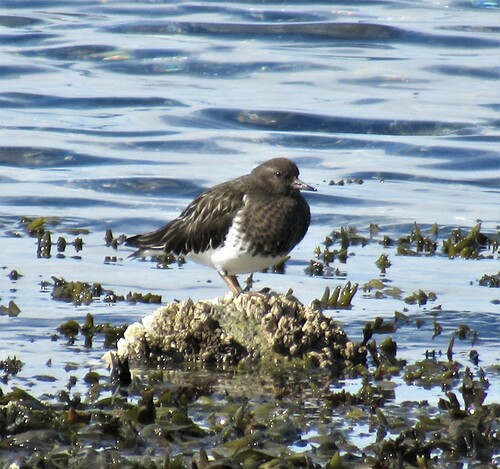 Black Turnstone
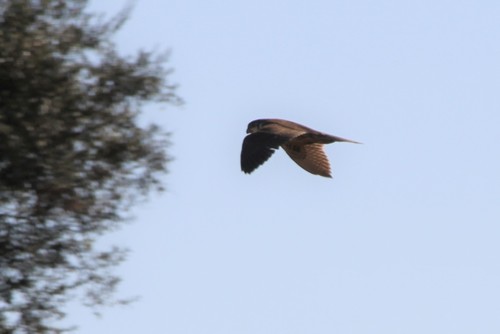 Prairie Falcon
In breve
Il segno distintivo più affidabile è la struttura generale e lo stile di volo: il Black Turnstone è un uccello costiero tozzo e dalle gambe corte con un becco tozzo e leggermente ricurvo, mentre il Prairie Falcon è un rapace potente e dalle ali lunghe con ali appuntite e un becco adunco. In volo, il Black Turnstone (di qualsiasi età) mostra una vivace banda bianca sulle ali e una macchia bianca sulla spalla, mentre il Prairie Falcon (tutte le età) ha copritrici e ascellari scuri, creando un effetto 'ascella' scuro. I giovani Prairie Falcons sono marroni sopra e mancano delle striature nette degli adulti, ma mostrano comunque il sottovolo scuro. Il Black Turnstone è sempre nerastro sopra con il ventre bianco, mai sabbioso-marrone. L'habitat è un indizio importante: il Black Turnstone è strettamente costiero, il Prairie Falcon è di terraferma e non cerca mai cibo su rocce o spiagge.
Consigli di identificazione
- Silhouette in volo: Il Prairie Falcon ha ali lunghe, appuntite e aerodinamiche; il Black Turnstone è compatto, con collo corto e ali larghe e arrotondate. Questo è il separatore più veloce a distanza.
- Schema del sottovolo (tutte le età): Il Prairie Falcon mostra copritrici e ascellari di un marrone molto scuro ('ascelle scure'), particolarmente evidenti in volo. Il sottovolo del Black Turnstone è chiaro, senza 'ascella' scura.
- Schema del sopracciglio (tutte le età): Il Black Turnstone mostra sempre una vivace banda bianca sulle ali e una macchia bianca sulla spalla in volo; il Prairie Falcon non mostra mai questi.
- Schema della coda: Il Black Turnstone ha una coda bianca con una larga banda nera subterminale; la coda del Prairie Falcon è striata e manca di questo forte contrasto.
- Forma del becco: Il Black Turnstone ha un becco corto, leggermente ricurvo e nero adatto per sondare; il Prairie Falcon ha un becco lungo, adunco e di base gialla tipico dei falchi.
- Colore delle gambe: Le gambe del Black Turnstone sono marrone scuro con una sfumatura rossastra; le gambe del Prairie Falcon sono gialle negli adulti, grigie nei giovani (ma non nere).
- Tono del piumaggio: Il Black Turnstone è nerastro sopra (mai sabbioso o marrone), con il ventre bianco; il Prairie Falcon è marrone-grigio caldo sopra, chiaro sotto con striature scure o maculature.
- Schema facciale: Il Prairie Falcon ha una sottile striscia malare scura e un supercilio bianco; il Black Turnstone ha una macchia bianca tra l'occhio e il becco, e una striscia bianca sopra l'occhio, ma manca della striscia malare del falco.
- Jizz e movimento: Il Black Turnstone si muove in rapidi e brevi scatti sulle rocce, spesso in gruppi. Il Prairie Falcon vola, plana e si posa in alto, muovendosi in modo potente e da solo o in coppia.
- Habitat: Il Black Turnstone si trova sulle coste rocciose del Pacifico, moli e spiagge; il Prairie Falcon si trova in paesaggi aridi e aperti, scogliere e canyon, mai sulla costa.
- Dimensioni: Il Prairie Falcon è molto più grande e massiccio, con un'apertura alare fino a 1,1 metri; il Black Turnstone è piccolo e tozzo.
- Confusione giovanile: I giovani Prairie Falcons sono più marroni sopra e mancano delle striature nette, ma mostrano comunque il sottovolo scuro. I giovani Black Turnstones sono più marroni degli adulti ma mostrano comunque la banda bianca sulle ali e la macchia sulla spalla.
- Voce: Il Black Turnstone emette trilli e screziature alte e frastagliate; il Prairie Falcon emette richiami rapaci acuti e ripetuti (non dettagliati qui, ma molto diversi dagli uccelli costieri).
- Comportamento alimentare: Il Black Turnstone rovescia pietre e sondare per invertebrati; il Prairie Falcon caccia uccelli e mammiferi, spesso dall'aria.
- Postura in perching: Il Prairie Falcon sta eretto, spesso su posatoi alti; il Black Turnstone si accovaccia basso, spesso su rocce vicino all'acqua.
Taglia
Il Prairie Falcon è drammaticamente più grande: i maschi sono lunghi 37–38 cm (femmine fino a 45 cm), con un'apertura alare fino a 1,1 metri e un peso di 500–970g a seconda del sesso [wikipedia]. Il Black Turnstone è molto più piccolo e tozzo, lungo 22–25 cm e pesante 100–170g [wikipedia]. Anche una piccola femmina di Prairie Falcon sovrasta un Black Turnstone. Sul campo, il Prairie Falcon appare con ali lunghe e aerodinamiche, mentre il Black Turnstone è compatto e con collo corto.
Piumaggio
- Uccelli giovani/immaturi:
- Black Turnstone (giovane): Marrone-nerastro sopra con frange color crema sulle copritrici delle ali e scapolari, ventre e ventriglio bianchi, e una banda bianca sulle ali e una macchia sulla spalla in volo. La coda ha una punta grigio-marrone scura. Nessun tono ruggine o sabbioso. [wikipedia]
- Prairie Falcon (giovane): Uniformemente marrone sopra, privo delle striature nette degli adulti; parti inferiori chiare con maculature scure. Le copritrici del sottovolo e gli ascellari sono di un marrone molto scuro, creando un forte effetto 'ascella scura' in volo. La pelle delle gambe e del cere è grigia, non gialla. [wikipedia]
- Adulti:
- Black Turnstone (riproduzione): Testa e petto neri con una macchia bianca tra l'occhio e il becco, supercilio bianco, parti superiori marrone scuro con frange chiare, ventre bianco. In volo, mostra sempre una vivace banda bianca sulle ali, una macchia bianca sulla spalla e una coda bianca con una larga banda nera. [wikipedia]
- Prairie Falcon (adulto): Marrone-grigio caldo sopra, chiaro sotto con maculature scure e striature verticali sul petto superiore. Sottile striscia malare scura, linea bianca sopra l'occhio. Le copritrici del sottovolo e gli ascellari sono sempre di un marrone molto scuro (il segno distintivo chiave in volo). [wikipedia]
- Contrasto chiave: Il Black Turnstone non mostra mai l'ascella scura del Prairie Falcon, e il Prairie Falcon non mostra mai la vivace banda bianca sulle ali e la macchia bianca sulla spalla del Black Turnstone.
Comportamento
Il Black Turnstone è un uccello costiero, spesso visto sondare tra le rocce, rovesciare pietre e alghe con il suo becco, e muoversi in brevi e rapidi scatti lungo il bordo dell'acqua. Di solito si trova in piccoli gruppi o branchi sciolti, raramente da solo. Il Prairie Falcon è un rapace, tipicamente visto volare, planare o effettuare voli rapidi e diretti su terreni aperti. Caccia uccelli e piccoli mammiferi, spesso dall'aria, e si posa su scogliere o pali elettrici. Il suo volo è potente e galleggiante, con battiti d'ali profondi e lunghe planate, a differenza del volo basso, diretto e rapido di un turnstone.
Habitat
L'habitat è un importante separatore. Il Black Turnstone è strettamente costiero in inverno, trovato sulle coste rocciose del Pacifico, moli, frangiflutti e talvolta fanghi o spiagge. Si riproduce in prati umidi e paludi di carice vicino alla costa dell'Alaska. Il Prairie Falcon è un uccello di paesaggi aridi e aperti: praterie aride, deserti, canyon e scogliere, lontano dall'oceano. Non si trova mai a cercare cibo su coste rocciose o spiagge. Se vedi un uccello su una roccia costiera o un molo, non è un Prairie Falcon; se vedi un uccello che vola sopra la salvia o posato su una scogliera, non è un Black Turnstone.
Voce
Il Black Turnstone emette un trillo frastagliato più alto e meno aspro rispetto al Voltapietre, oltre a forti allarmi screziati e morbidi richiami ai pulcini. I richiami del Prairie Falcon non sono descritti in dettaglio qui, ma come falco, emette tipicamente richiami rapaci acuti e ripetuti 'kek-kek-kek' o simili. Sul campo, i richiami del Black Turnstone sono più simili a quelli degli uccelli costieri, mentre quelli del Prairie Falcon sono distintamente rapaci.