

Black Turnstone vs Great Knot
Arenaria melanocephala contro Calidris tenuirostris
Fai un quiz con Black Turnstone e Great Knot
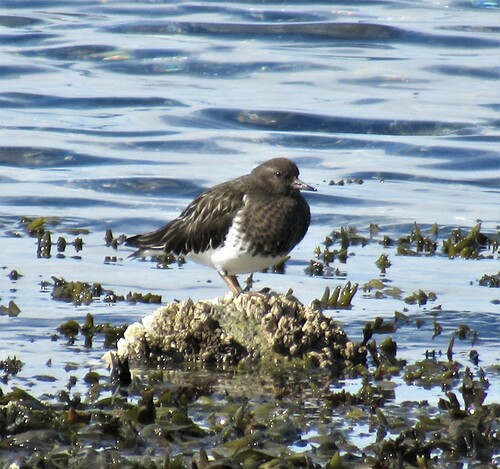 Black Turnstone
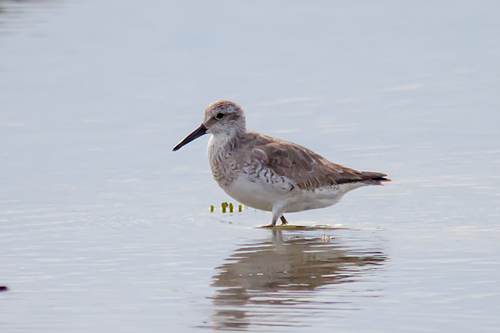 Great Knot
In breve
La separazione più affidabile tra Black Turnstone e Great Knot è il forte schema di ali e coda bianco e nero mostrato da Black Turnstone di tutte le età in volo, rispetto alle ali e alla coda semplici e non marcate di Great Knot. Black Turnstone è un uccello costiero compatto, a gambe corte, di colore nerastro e bianco con una vivace banda bianca sulle ali, una macchia bianca sulla spalla e una larga banda nera sulla coda; Great Knot è più grande, con un becco più lungo, e manca di questi forti contrasti, apparendo per lo più grigio sopra con ali e coda semplici in tutte le livree. A terra, Black Turnstone mostra una testa e un petto nerastro (con alcune marcature facciali bianche in livrea di riproduzione), mentre Great Knot è molto più chiaro e uniformemente grigio, con pesanti macchie nere sul petto solo in livrea di riproduzione. Anche il colore del becco e delle gambe differisce: Black Turnstone ha un becco nero corto e leggermente rivolto verso l'alto e gambe scure, mentre Great Knot ha un becco più lungo, dritto e sottile di colore scuro e gambe corte e scure. Se vedi un uccello costiero con un audace schema bianco e nero su una costa rocciosa del Pacifico, è quasi certamente un Black Turnstone; un wader grigio semplice e più grande con un becco più lungo su una pianura di fango o una spiaggia sabbiosa è più probabilmente un Great Knot.
Consigli di identificazione
- Il pattern di volo è il miglior segno sul campo: Black Turnstone di tutte le età mostra una vivace banda bianca sulle ali, una macchia bianca sulla spalla e una coda bianca con una larga banda nera subterminale. Great Knot non ha alcun bianco nelle ali o nella coda e appare semplicemente grigio in volo.
- Separazione giovanile/immatura: Anche i giovanili Black Turnstone mostrano il forte pattern di volo, mentre i giovanili Great Knot sono semplici sopra senza banda bianca sulle ali o banda sulla coda.
- Forma del becco: Black Turnstone ha un becco nero corto e leggermente rivolto verso l'alto; Great Knot ha un becco più lungo, sottile e dritto. Questo è visibile a distanza media.
- Colore delle gambe: Le gambe di Black Turnstone sono marrone scuro con una sfumatura rossastra; quelle di Great Knot sono corte e scure, mai arancioni.
- Forma del corpo: Black Turnstone è compatto e robusto, con un collo e una coda corti; Great Knot è più lungo, con un torace più profondo e più massiccio nel complesso.
- Livrea di riproduzione (a terra): Black Turnstone ha una testa e un petto neri con una macchia bianca tra occhio e becco, e un sopracciglio bianco; Great Knot è grigio chiaro sopra con una banda scapolare rugginosa e pesanti macchie nere sul viso, sulla gola e sul petto.
- Livrea non riproduttiva (inverno): Black Turnstone diventa marrone scuro sopra con poco bianco sulla testa e sul petto, ma mostra ancora un forte contrasto bianco e nero; Great Knot è uniformemente grigio chiaro sopra e sotto, senza un forte pattern sulla testa o sul petto.
- Livrea giovanile: Il giovanile Black Turnstone è più marrone con frange color crema sulle copritrici delle ali e scapolari, ma mostra ancora il forte pattern di volo; il giovanile Great Knot è semplicemente grigio sopra, privo di qualsiasi marcatura bianca sulle ali o sulla coda.
- Habitat: Black Turnstone si trova quasi sempre su coste rocciose del Pacifico, moli o frangiflutti in inverno; Great Knot si trova su pianure di fango e spiagge sabbiose aperte, raramente su rocce.
- Comportamento di foraggiamento: Black Turnstone spesso ribalta pietre e detriti con il suo becco; Great Knot esplora o raccoglie cibo dal fango o dalla sabbia, senza ribaltare oggetti.
- Dimensioni: In confronto diretto, Great Knot è più grande e massiccio, ma fai attenzione alla sovrapposizione—usa in combinazione con altri segni.
- Pattern facciale: Black Turnstone in livrea di riproduzione mostra una macchia bianca tra occhio e becco e un sopracciglio bianco; Great Knot non ha questi, ma può mostrare macchie nere sul viso in livrea di riproduzione.
- Pattern della coda (in pericolo): La coda di Black Turnstone è bianca con una larga banda nera; la coda di Great Knot è semplicemente grigia.
- Voce: Se sentito, il trill ronzante di Black Turnstone è più alto e meno aspro di quello di Voltapietre, ma non confrontato direttamente con Great Knot qui; la vocalizzazione non è un separatore primario per questi due.
- Contesto geografico: Black Turnstone è una specie del Pacifico nordamericano, Great Knot è del Vecchio Mondo (Asia/Australia); la vaganza è rara, quindi la posizione è un forte indizio tranne in circostanze eccezionali.
Taglia
Great Knot è nettamente più grande di Black Turnstone, con una massa corporea media di circa 165 g [wikidata] rispetto al range di 100–170 g di Black Turnstone [wikipedia]. Great Knot misura 26–30 cm di lunghezza, mentre Black Turnstone è 22–25 cm. Great Knot ha anche un'apertura alare proporzionalmente più lunga (56–66 cm rispetto a non specificato per Black Turnstone, ma più piccola). Sul campo, Great Knot appare più lungo e massiccio, con un becco più lungo e sottile e un torace più profondo, mentre Black Turnstone è più compatto e robusto.
Piumaggio
Il miglior segno sul campo è in volo: Black Turnstone di tutte le età mostra una vivace banda bianca sulle ali, una macchia bianca sulla spalla e una coda bianca con una larga banda nera subterminale. C'è anche una macchia bianca dalla parte bassa della schiena alle copritrici superiori della coda, interrotta da una banda scura sul dorso. I giovanili Black Turnstone sono simili agli adulti invernali ma più marroni, con frange color crema sulle copritrici delle ali e scapolari, e una punta della coda grigio-marrone, ma mostrano ancora lo stesso forte pattern di volo. Great Knot, al contrario, non ha alcuna banda bianca sulle ali o pattern della coda in tutte le livree; le sue ali e coda sono semplicemente grigie, e in volo appare molto meno contrastante. A terra, Black Turnstone in livrea di riproduzione ha una testa e un petto neri con marcature facciali bianche, mentre Great Knot in livrea di riproduzione è grigio chiaro sopra con una banda scapolare rugginosa e pesanti macchie nere sul viso, sulla gola e sul petto. In livrea non riproduttiva (inverno), Black Turnstone diventa marrone scuro sopra con poco bianco sulla testa e sul petto, mentre Great Knot è uniformemente grigio chiaro sopra e manca di un forte pattern sulla testa o sul petto. Anche il colore delle gambe è utile: Black Turnstone ha gambe marrone scuro con una sfumatura rossastra, mentre Great Knot ha gambe corte e scure (non arancioni). La forma del becco è diagnostica: il becco di Black Turnstone è corto, leggermente rivolto verso l'alto e nero; quello di Great Knot è più lungo, sottile e dritto.
Comportamento
Black Turnstone è spesso visto ribaltare pietre, alghe e detriti con il suo becco, specialmente su coste rocciose e strutture artificiali. Di solito si trova singolarmente o in piccoli gruppi, spesso molto vicino alle onde in rottura. Great Knot è più spesso visto esplorare o raccogliere cibo dalle pianure di fango e dalle spiagge sabbiose, di solito in gruppi più numerosi, e non mostra lo stesso comportamento di ribaltamento delle pietre. Entrambe le specie si nutrono principalmente di invertebrati, ma Black Turnstone è più specializzato per habitat rocciosi, mentre Great Knot è un foraggiatore tipico di pianure di fango e spiagge.
Habitat
Black Turnstone è fortemente associato a coste rocciose del Pacifico in inverno, ma può anche essere trovato su spiagge, pianure di fango e strutture artificiali come moli e frangiflutti. Si riproduce in prati umidi con carici nell'Alaska occidentale. Great Knot è un migratore a lungo raggio che si riproduce nella Siberia orientale e sverna su pianure di fango e spiagge nel sud dell'Asia e in Australia. Nella stagione non riproduttiva, Great Knot si trova quasi esclusivamente su pianure di fango e spiagge sabbiose aperte, raramente su coste rocciose. Pertanto, l'habitat può essere un forte indizio: un turnstone su una costa rocciosa nordamericana è quasi certamente un Black Turnstone; un grande wader grigio semplice su una pianura di fango asiatica o australiana è probabilmente un Great Knot.
Voce
Black Turnstone emette una varietà di richiami, in particolare un trill ronzante che è più alto e meno aspro di quello di Voltapietre. Altri richiami includono un allarme forte e stridente e un richiamo morbido di ronron per i pulcini. I richiami di Great Knot non sono descritti nelle note fornite, quindi la vocalizzazione non è un punto di separazione affidabile tra queste due specie.