

Black Turnstone vs Gabbiano glauco
Arenaria melanocephala contro Larus hyperboreus
Fai un quiz con Black Turnstone e Gabbiano glauco
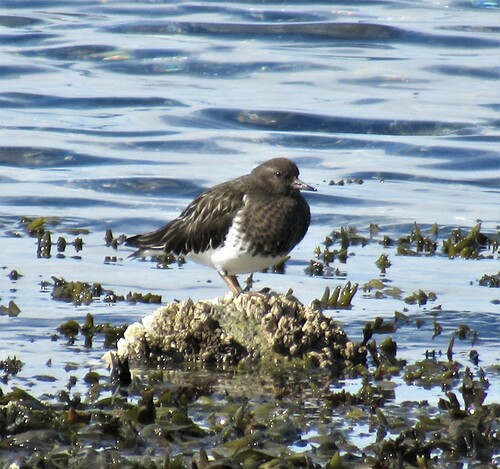 Black Turnstone
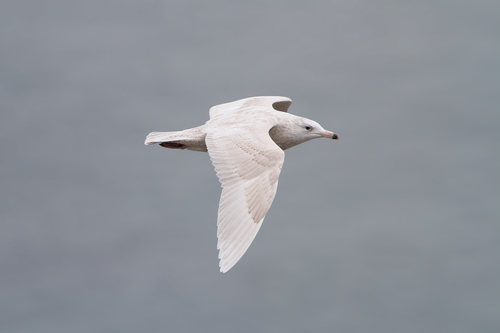 Gabbiano glauco
In breve
Il segno distintivo più affidabile tra Black Turnstone e Gabbiano glauco è la dimensione e la struttura complessiva: il Gabbiano glauco è un enorme gabbiano pallido con un becco giallo spesso, mentre il Black Turnstone è un uccello costiero piccolo e compatto con un becco corto, scuro e leggermente ricurvo. In volo, il Black Turnstone (di tutte le età) mostra una vivace banda bianca sulle ali e una macchia bianca sulla spalla, mentre il Gabbiano glauco è uniformemente pallido senza nero sulle ali o sulla coda. I Black Turnstone giovanili e invernali sono più scuri e marroni, ma non si avvicinano mai alla dimensione o al volume di un Gabbiano glauco. Se vedi un uccello con zampe arancioni o nerastre, controlla il becco e la dimensione del corpo: solo il turnstone è piccolo e con zampe scure. Usa il contesto: i turnstones si trovano di solito su coste rocciose, i gabbiani su spiagge aperte o in cerca di cibo.
Consigli di identificazione
- La dimensione è il primo controllo: Il Gabbiano glauco è massiccio, facendo sembrare piccolo il Black Turnstone. Se l'uccello è di dimensioni simili a un corvo o più grande, è un gabbiano, non un turnstone.
- Forma e colore del becco: Il Black Turnstone ha un becco corto, nero e leggermente ricurvo; il Gabbiano glauco ha un becco lungo, spesso e giallo (rosa e nero nei giovanili).
- Colore delle zampe: Il Black Turnstone ha zampe marroni scure con una sfumatura rossastra; il Gabbiano glauco ha zampe chiare (rosate nei giovanili, giallastre negli adulti). Mai arancioni.
- Schema di volo (tutte le età): Il Black Turnstone mostra una vivace banda bianca sulle ali, una macchia bianca sulla spalla e una coda bianca con una larga banda nera. Il Gabbiano glauco è pallido, senza nero sulle ali o sulla coda, e le penne di volo sono uniformemente chiare.
- Piumaggio giovanile: Il Black Turnstone giovanile è marrone con frange color crema e una punta di coda grigio-marrone; il giovanile Gabbiano glauco è di un grigio molto pallido, con un becco rosa e nero, e senza banda scura sulla coda.
- Piumaggio adulto: Gli adulti di Black Turnstone hanno una testa e un petto neri con segni facciali bianchi e una pancia bianca; gli adulti di Gabbiano glauco sono grigi pallidi sopra, bianchi sotto, con un becco giallo spesso e senza nero ovunque.
- Colore del petto e della testa: Il Black Turnstone (in riproduzione) ha una testa e un petto neri; il Gabbiano glauco è sempre con testa e petto pallidi.
- Forma delle ali e jizz: Il Black Turnstone è compatto, con ali corte e volo rapido e diretto. Il Gabbiano glauco ha ali lunghe, con un volo ampio e potente.
- Contesto dell'habitat: I turnstones sono legati a coste rocciose, moli e zone intertidali; i Gabbiani glauchi sono più generalisti, spesso visti su spiagge aperte, scogliere o in cerca di cibo.
- Comportamento alimentare: Il Black Turnstone ribalta attivamente le pietre e esplora; il Gabbiano glauco cerca cibo, vola o si riposa.
- Voce: Il richiamo del Black Turnstone è un trillo rapido e acuto; quello del Gabbiano glauco è un grido profondo e ridente.
- Associazione di gruppo: Il Black Turnstone è di solito in piccoli gruppi o coppie; il Gabbiano glauco può essere solitario o in grandi stormi, spesso con altri gabbiani.
- Cambiamenti stagionali: Il Black Turnstone diventa più marrone in inverno ma non pallido nel complesso; il Gabbiano glauco rimane pallido tutto l'anno.
- Schema della coda: Il Black Turnstone ha una coda bianca con una larga banda nera (tutte le età); il Gabbiano glauco ha una coda completamente bianca (senza nero) a tutte le età.
- Se hai dubbi: Confronta con uccelli vicini per la scala e cerca la combinazione di dimensione, becco e schema di volo. Nessun piccolo uccello scuro che ribalta le pietre è un Gabbiano glauco.
Taglia
Il Gabbiano glauco è enormemente più grande del Black Turnstone. Il Gabbiano glauco pesa in media circa 1.400 grammi e misura 55–77 cm di lunghezza, con un'apertura alare fino a 170 cm. Il Black Turnstone è molto più piccolo, lungo 22–25 cm e pesa 100–170 grammi (meno di un decimo della massa del gabbiano). Anche a distanza, il volume del gabbiano, le ali lunghe e la corporatura potente sono inconfondibili rispetto al compatto e corto-winged turnstone.
Piumaggio
-
Uccelli giovanili/immaturi: I giovanili di Black Turnstone sono marroni con frange color crema sulle copritrici delle ali e sugli scapolari, e una punta di coda grigio-marrone. In volo, tutte le età mostrano una vivace banda bianca sulle ali, una macchia bianca sulla spalla e una coda bianca con una larga banda nera. I giovanili di Gabbiano glauco sono di un grigio molto pallido, con un becco rosa e nero, e mancano di qualsiasi nero sulle ali o sulla coda; le loro penne di volo sono chiare, e l'effetto complessivo è un'apparenza spettrale e uniforme.
-
Adulti (riproduzione): Gli adulti di Black Turnstone hanno una testa e un petto neri con segni facciali bianchi, parti superiori marroni scure e una pancia bianca. Gli adulti di Gabbiano glauco sono grigi pallidi sopra, bianchi sotto, senza nero sulle ali o sulla coda, e hanno un becco giallo spesso.
-
Adulti (non riproduzione): Il Black Turnstone diventa più marrone sulla testa e sul petto con meno bianco. Il Gabbiano glauco rimane pallido e uniforme, senza cambiamenti stagionali così drammatici come quelli del turnstone.
Comportamento
Il Black Turnstone è tipicamente visto mentre esplora attivamente e ribalta pietre o detriti su coste rocciose, muovendosi rapidamente e basso sopra il terreno. Il Gabbiano glauco è più probabile che venga visto in piedi o camminare lentamente, spesso in gruppi, e può cercare cibo, volare o riposare su spiagge aperte, ghiaccio o vicino ad attività umane. In volo, il gabbiano è potente e stabile, mentre il turnstone è veloce e diretto, spesso basso sopra le rocce.
Habitat
Il Black Turnstone si trova più spesso su coste rocciose del Pacifico, moli e frangiflutti in inverno, e in prati umidi con giunchi durante la riproduzione. Il Gabbiano glauco frequenta coste aperte, spiagge, scogliere e a volte aree interne vicino a colonie, ma raramente è così legato a rocce o zone intertidali come il turnstone. Se l'uccello sta mangiando tra massi o ribaltando alghe, è probabile che sia un turnstone; se sta volando o riposando in aree aperte, specialmente con altri gabbiani, pensa al Gabbiano glauco.
Voce
Il Black Turnstone emette un trillo più alto e meno aspro rispetto al richiamo simile del Voltapietre; ha anche un allerta acuta e note morbide e ronronanti. Il richiamo del Gabbiano glauco è un grido profondo e ridente, simile a quello dell'Herring Gull ma di tono più basso. I richiami sono raramente confusi: i trilli del turnstone sono distintivi e rapidi, mentre la voce del gabbiano è più profonda e prolungata.
Black Turnstone · Gabbiano glauco · I miei uccelli difficili