

Motmot

Black Swift vs Vaux's Swift

Cypseloides niger contro Chaetura vauxi

Fai un quiz con Black Swift e Vaux's Swift

Black Swift (Cypseloides niger) Black Swift
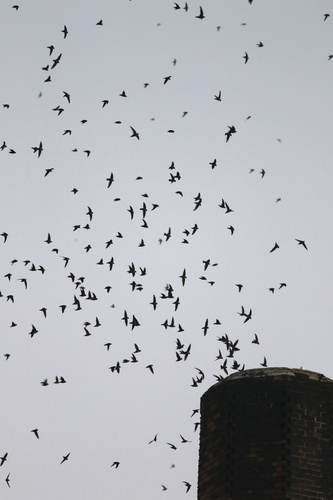
Vaux's Swift (Chaetura vauxi) Vaux's Swift

Media

Caricamento…

In breve

The most reliable field mark between Black Swift and Vaux's Swift is overall size and structure: Black Swift is much larger and heavier-bodied, with broader wings and a slightly forked tail, while Vaux's Swift is notably smaller, slimmer, and has a short, squared-off tail. In flight, Black Swift shows a sooty dark gray plumage with contrasting darker shoulders, whereas Vaux's Swift is dusky black above with a paler throat and greyish rump and underparts. Both species share a cigar-shaped silhouette, but Vaux's Swift appears more compact and rapid in its movements. Age-specific upperwing patterns are not described for either species, so focus on size, tail shape, and subtle plumage contrasts.

Consigli di identificazione

  1. Size is the most immediate clue: Black Swift is much larger and heavier than Vaux's Swift; if a swift looks bulky and broad-winged, suspect Black Swift.
  2. Tail shape matters: Black Swift has a slightly forked tail, while Vaux's Swift's tail is short and bluntly squared-off. This is especially noticeable when the birds are fanned or banking.
  3. Shoulder contrast in Black Swift: Look for distinctly darker shoulders compared to the rest of the wing in Black Swift, a subtle but consistent mark in good light.
  4. Plumage contrast in Vaux's Swift: Vaux's Swift shows a paler gray to whitish throat (especially in northern birds) and greyish brown underparts and rump, creating a contrast with the dusky black upperparts. Black Swift is more uniformly sooty gray.
  5. Juvenile Vaux's Swift throat: Young Vaux's Swifts have dusky bases to the throat feathers, giving a mottled or dirty look to the throat, which is not seen in Black Swift.
  6. Flight style: Vaux's Swift flies with rapid, stiff wingbeats and unsteady glides, looking agile and restless. Black Swift's flight is steadier, with slower, more powerful wingbeats.
  7. Flock size and behavior: Large swirling flocks, especially around chimneys or urban roosts, are almost always Vaux's Swift. Black Swift is rarely seen in such numbers or settings.
  8. Habitat context: If you see swifts near waterfalls, cliffs, or canyons, prioritize Black Swift. In urban or forested areas, especially near large chimneys, Vaux's Swift is more likely.
  9. Vocalizations: Chattering, squeaking, and buzzing calls in a flock point to Vaux's Swift. Silence or only occasional calls may indicate Black Swift, but this is not foolproof.
  10. Overall jizz: Black Swift appears as a large, dark, broad-winged swift with a slightly forked tail and steady flight. Vaux's Swift is small, compact, with a squared tail and more frenetic flight.
  11. Mixed flocks: If you see both species together (rare), the size and tail shape differences are striking.
  12. Seasonal context: During migration, Vaux's Swift forms massive communal roosts and flocks, a behavior not shared by Black Swift.
  13. No reliable age-specific upperwing patterns: Neither species shows distinctive juvenile or immature upperwing marks that aid separation in flight.
  14. Sexes similar: Both species show little to no sexual dimorphism in plumage or structure, so do not rely on sex for identification.
  15. Beware lighting: In poor light, both species can appear uniformly dark; use structure and size as primary clues when plumage contrast is hard to see.

Taglia

Black Swift is significantly larger and heavier (body mass ~45.6 g) compared to Vaux's Swift (~18.5 g). This difference is readily apparent in the field: Black Swift appears broad-winged and robust, while Vaux's Swift is small, slim, and delicate. Vaux's Swift is one of the smallest swifts in North America, and even its largest subspecies are much smaller than Black Swift. When seen together or with other swifts, Black Swift stands out for its size and bulk.

Piumaggio

There are no age-specific upperwing patterns described for either species, so focus on overall coloration and subtle contrasts. Black Swift is mostly sooty dark gray, with distinctly darker shoulders compared to the rest of the wing, and a uniform appearance. Its tail is short and only slightly forked. Vaux's Swift is dusky black above, but the underparts, rump, and tail coverts are greyish brown, and the throat is paler gray to whitish (especially in northern birds). Juvenile Vaux's Swifts have dusky bases to the throat feathers, which can make the throat appear mottled. The tail of Vaux's Swift is short and bluntly squared-off, lacking the fork of Black Swift. In strong light, the contrast between the dark upperparts and paler underparts/throat of Vaux's Swift can be a useful clue.

Comportamento

Both species are aerial insectivores, but Vaux's Swift is highly gregarious, often forming large flocks (sometimes with other swift species) and displaying communal roosting behavior, especially during migration (e.g., Portland's Chapman School phenomenon). Black Swift tends to forage in smaller groups and is less likely to be seen in massive swirling flocks. Vaux's Swift flies with a mixture of stiff wingbeats and unsteady glides, appearing more frenetic and agile, while Black Swift's flight is steadier and more powerful, befitting its larger size.

Habitat

Both species overlap broadly in range, but Black Swift is more often associated with dramatic landscapes such as cliffs, waterfalls, and canyons, where it nests. Vaux's Swift is more flexible, often found near forests, urban areas, and especially around large chimneys or hollow trees used for communal roosting. During migration, Vaux's Swift can be seen in large numbers in urban settings, a context where Black Swift is rarely encountered.

Voce

Vaux's Swift has a more varied and noticeable vocal repertoire, including chattering, buzzes, squeaks, and chips, especially when in flocks. Black Swift is generally quieter and less vocal, so hearing a lot of chatter and squeaking from a swift flock suggests Vaux's Swift. However, vocalizations are not always diagnostic in brief encounters or at a distance.

Invia una descrizione migliore

Usa le stesse sezioni del confronto. Il testo viene pubblicato subito.

The most reliable field mark between Black Swift and Vaux's Swift is overall size and structure: Black Swift is much larger and heavier-bodied, with broader wings and a slightly forked tail, while Vaux's Swift is notably smaller, slimmer, and has a short, squared-off tail. In flight, Black Swift shows a sooty dark gray plumage with contrasting darker shoulders, whereas Vaux's Swift is dusky black above with a paler throat and greyish rump and underparts. Both species share a cigar-shaped silhouette, but Vaux's Swift appears more compact and rapid in its movements. Age-specific upperwing patterns are not described for either species, so focus on size, tail shape, and subtle plumage contrasts.

  1. Size is the most immediate clue: Black Swift is much larger and heavier than Vaux's Swift; if a swift looks bulky and broad-winged, suspect Black Swift.
  2. Tail shape matters: Black Swift has a slightly forked tail, while Vaux's Swift's tail is short and bluntly squared-off. This is especially noticeable when the birds are fanned or banking.
  3. Shoulder contrast in Black Swift: Look for distinctly darker shoulders compared to the rest of the wing in Black Swift, a subtle but consistent mark in good light.
  4. Plumage contrast in Vaux's Swift: Vaux's Swift shows a paler gray to whitish throat (especially in northern birds) and greyish brown underparts and rump, creating a contrast with the dusky black upperparts. Black Swift is more uniformly sooty gray.
  5. Juvenile Vaux's Swift throat: Young Vaux's Swifts have dusky bases to the throat feathers, giving a mottled or dirty look to the throat, which is not seen in Black Swift.
  6. Flight style: Vaux's Swift flies with rapid, stiff wingbeats and unsteady glides, looking agile and restless. Black Swift's flight is steadier, with slower, more powerful wingbeats.
  7. Flock size and behavior: Large swirling flocks, especially around chimneys or urban roosts, are almost always Vaux's Swift. Black Swift is rarely seen in such numbers or settings.
  8. Habitat context: If you see swifts near waterfalls, cliffs, or canyons, prioritize Black Swift. In urban or forested areas, especially near large chimneys, Vaux's Swift is more likely.
  9. Vocalizations: Chattering, squeaking, and buzzing calls in a flock point to Vaux's Swift. Silence or only occasional calls may indicate Black Swift, but this is not foolproof.
  10. Overall jizz: Black Swift appears as a large, dark, broad-winged swift with a slightly forked tail and steady flight. Vaux's Swift is small, compact, with a squared tail and more frenetic flight.
  11. Mixed flocks: If you see both species together (rare), the size and tail shape differences are striking.
  12. Seasonal context: During migration, Vaux's Swift forms massive communal roosts and flocks, a behavior not shared by Black Swift.
  13. No reliable age-specific upperwing patterns: Neither species shows distinctive juvenile or immature upperwing marks that aid separation in flight.
  14. Sexes similar: Both species show little to no sexual dimorphism in plumage or structure, so do not rely on sex for identification.
  15. Beware lighting: In poor light, both species can appear uniformly dark; use structure and size as primary clues when plumage contrast is hard to see.

Black Swift is significantly larger and heavier (body mass ~45.6 g) compared to Vaux's Swift (~18.5 g). This difference is readily apparent in the field: Black Swift appears broad-winged and robust, while Vaux's Swift is small, slim, and delicate. Vaux's Swift is one of the smallest swifts in North America, and even its largest subspecies are much smaller than Black Swift. When seen together or with other swifts, Black Swift stands out for its size and bulk.

There are no age-specific upperwing patterns described for either species, so focus on overall coloration and subtle contrasts. Black Swift is mostly sooty dark gray, with distinctly darker shoulders compared to the rest of the wing, and a uniform appearance. Its tail is short and only slightly forked. Vaux's Swift is dusky black above, but the underparts, rump, and tail coverts are greyish brown, and the throat is paler gray to whitish (especially in northern birds). Juvenile Vaux's Swifts have dusky bases to the throat feathers, which can make the throat appear mottled. The tail of Vaux's Swift is short and bluntly squared-off, lacking the fork of Black Swift. In strong light, the contrast between the dark upperparts and paler underparts/throat of Vaux's Swift can be a useful clue.

Both species are aerial insectivores, but Vaux's Swift is highly gregarious, often forming large flocks (sometimes with other swift species) and displaying communal roosting behavior, especially during migration (e.g., Portland's Chapman School phenomenon). Black Swift tends to forage in smaller groups and is less likely to be seen in massive swirling flocks. Vaux's Swift flies with a mixture of stiff wingbeats and unsteady glides, appearing more frenetic and agile, while Black Swift's flight is steadier and more powerful, befitting its larger size.

Both species overlap broadly in range, but Black Swift is more often associated with dramatic landscapes such as cliffs, waterfalls, and canyons, where it nests. Vaux's Swift is more flexible, often found near forests, urban areas, and especially around large chimneys or hollow trees used for communal roosting. During migration, Vaux's Swift can be seen in large numbers in urban settings, a context where Black Swift is rarely encountered.

Vaux's Swift has a more varied and noticeable vocal repertoire, including chattering, buzzes, squeaks, and chips, especially when in flocks. Black Swift is generally quieter and less vocal, so hearing a lot of chatter and squeaking from a swift flock suggests Vaux's Swift. However, vocalizations are not always diagnostic in brief encounters or at a distance.

Scartare le modifiche?

Hai modifiche non salvate. Se esci ora, andranno perse.

Black Swift · Vaux's Swift · I miei uccelli difficili