

Black-nest Swiftlet vs Asian Palm Swift
Aerodramus maximus contro Cypsiurus balasiensis
Fai un quiz con Black-nest Swiftlet e Asian Palm Swift
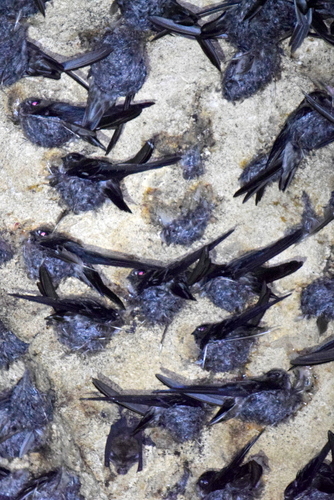 Black-nest Swiftlet
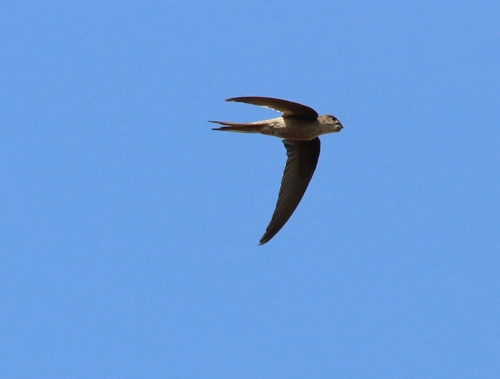 Asian Palm Swift
In breve
Il segno di campo più affidabile per separare il Black-nest Swiftlet dall'Asian Palm Swift è la combinazione di struttura e piumaggio: l'Asian Palm Swift è visibilmente di un marrone più chiaro nel complesso, con una silhouette molto snella, con ali lunghe e una coda profondamente biforcuta, mentre il Black-nest Swiftlet è più scuro e compatto, con una coda meno profondamente biforcuta. In volo, l'Asian Palm Swift mostra un profilo alare distintivo a forma di boomerang o di mezzaluna e un corpo lungo e stretto, mentre il Black-nest Swiftlet appare più tozzo e scuro. Se vedi un swift con una coda molto lunga e profondamente biforcuta e una colorazione marrone chiaro, specialmente intorno a palme o in campi aperti, è quasi certamente un Asian Palm Swift. Il Black-nest Swiftlet è più probabile che si trovi in habitat forestali o montani e manca della forma estrema della coda e delle ali del palm swift.
Consigli di identificazione
- Tail shape: L'Asian Palm Swift ha una coda molto lunga e profondamente biforcuta, spesso tenuta chiusa ma comunque visibilmente più lunga e appuntita rispetto al Black-nest Swiftlet. Questo è vero per gli adulti; i giovani hanno code più corte ma mostrano comunque una biforcazione. La coda del Black-nest Swiftlet è più corta e meno profondamente biforcuta.
- Wing shape: In volo, l'Asian Palm Swift mostra ali lunghe e ripiegate all'indietro che formano una forma a mezzaluna o a boomerang, dando un aspetto molto distintivo. Le ali del Black-nest Swiftlet sono più corte e meno drammaticamente curve.
- Overall coloration: L'Asian Palm Swift è principalmente di un marrone chiaro, mentre il Black-nest Swiftlet è molto più scuro nel complesso. Questo contrasto è visibile in tutte le età e condizioni di luce.
- Body structure: L'Asian Palm Swift è molto snello ed allungato, con un corpo stretto e ali e coda lunghe. Il Black-nest Swiftlet appare più tozzo e compatto.
- Habitat context: L'Asian Palm Swift è quasi sempre visto intorno a palme, in campi aperti o in aree coltivate. Il Black-nest Swiftlet si trova in foreste e habitat montani, raramente in aree aperte o dominate da palme.
- Perching behavior: L'Asian Palm Swift si aggrappa solo a superfici verticali (come le foglie di palma) e non si posa mai a terra. Il Black-nest Swiftlet può essere visto entrare o uscire da grotte o aggrapparsi alle pareti delle grotte.
- Flight style: L'Asian Palm Swift vola spesso basso su aree aperte e può essere visto nutrirsi vicino al suolo. Il Black-nest Swiftlet è più probabile che venga visto più in alto sopra le foreste o vicino agli ingressi delle grotte.
- Vocalization: Se senti un grido forte e acuto proveniente da uno swift, è probabile che sia un Asian Palm Swift. La mancanza di vocalizzazione non è diagnostica per il Black-nest Swiftlet.
- Nest location: L'Asian Palm Swift costruisce il suo nido sulla parte inferiore delle foglie di palma, visibile se vedi swift intorno a palme. Il Black-nest Swiftlet nidifica in grotte, il che non è solitamente visibile sul campo ma può aiutare se osservi il comportamento di nidificazione.
- Juvenile marks: I giovani Asian Palm Swifts hanno code più corte ma sono comunque di un marrone chiaro e snelli; i giovani Black-nest Swiftlet non sono descritti in dettaglio ma si prevede che siano scuri e compatti come gli adulti.
- Sex differences: Entrambe le specie hanno sessi simili, quindi non fare affidamento sul sesso per l'identificazione.
- Confusion risk: In scarsa luce o a distanza, concentrati sulla lunghezza e biforcazione della coda, sulla forma dell'ala e sull'oscurità complessiva rispetto alla chiarezza. La silhouette dell'Asian Palm Swift è unica tra gli swift nella regione.
- Seasonal presence: Entrambe le specie sono residenti nei loro territori, quindi la stagione non è un forte separatore.
- Group behavior: Gli Asian Palm Swifts si trovano spesso in stormi, specialmente intorno a palme; il Black-nest Swiftlet può essere visto singolarmente o in gruppi più piccoli vicino a grotte o ai margini delle foreste.
- Feeding height: L'Asian Palm Swift si nutre frequentemente in basso, a volte appena sopra il livello del suolo; il Black-nest Swiftlet di solito si nutre più in alto sopra la chioma della foresta.
Taglia
L'Asian Palm Swift è un piccolo swift, con una massa corporea adulta di circa 9.2g [wikidata]. La massa del Black-nest Swiftlet non è fornita, ma la sua struttura complessiva è più tozza e compatta rispetto all'Asian Palm Swift snello ed allungato. Sul campo, l'Asian Palm Swift apparirà più delicato e allungato, specialmente a causa della sua lunga coda e delle ali, mentre il Black-nest Swiftlet apparirà più pesante e con una coda più corta.
Piumaggio
I giovani Asian Palm Swifts hanno code più corte rispetto agli adulti, ma altrimenti, sia gli adulti che gli immaturi sono principalmente di un marrone chiaro e mancano di forti contrasti o marcature. Le loro ali sono lunghe e ripiegate all'indietro, dando una forma a mezzaluna o a boomerang in volo. Il Black-nest Swiftlet, al contrario, è complessivamente molto più scuro, mancando delle tonalità marroni chiare dell'Asian Palm Swift, e non mostra la stessa forma di ali o coda. Non è descritto alcun modello distintivo specifico per l'età per nessuna delle due specie, quindi la separazione si basa sull'oscurità complessiva (Black-nest Swiftlet) rispetto alla chiarezza e alla forma di coda/ala (Asian Palm Swift) in tutti i piumaggi.
Comportamento
Gli Asian Palm Swifts sono quasi sempre visti in volo, raramente si posano se non aggrappandosi verticalmente a foglie di palma. Si nutrono in basso su campi aperti e piantagioni, spesso vicino al suolo e intorno a palme. I Black-nest Swiftlets sono anche insetti volanti aerei ma sono più associati ad aree forestali e grotte per la nidificazione. Gli Asian Palm Swifts sono più probabili da vedere in ambienti aperti, coltivati o ricchi di palme, spesso in stormi, mentre il Black-nest Swiftlet è più probabile in ambienti forestali o montani.
Habitat
L'Asian Palm Swift è fortemente associato a campi aperti, coltivazione e soprattutto palme da olio, nidificando spesso sulla parte inferiore delle foglie di palma. Il Black-nest Swiftlet si trova in foreste umide subtropicali o tropicali e montane, e non è legato a palme o habitat aperti. Se vedi uno swift in una piantagione di palme o in un'area aperta, è molto più probabile che sia un Asian Palm Swift; in foreste dense o vicino a grotte, il Black-nest Swiftlet è il candidato migliore.
Voce
L'Asian Palm Swift emette un grido forte e acuto, che può essere un indizio utile sul campo. Non sono fornite informazioni sulla vocalizzazione per il Black-nest Swiftlet, quindi la voce è utile solo per confermare l'Asian Palm Swift.
Black-nest Swiftlet · Asian Palm Swift · I miei uccelli difficili