

Black Drongo vs Munia pettosquamato
Dicrurus macrocercus contro Lonchura punctulata
Fai un quiz con Black Drongo e Munia pettosquamato
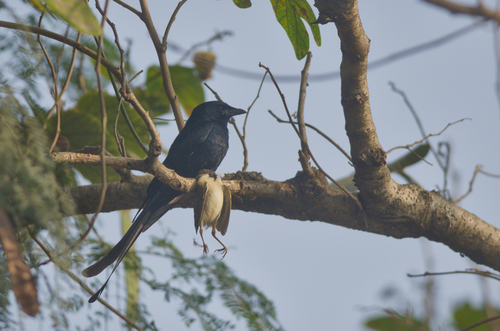 Black Drongo
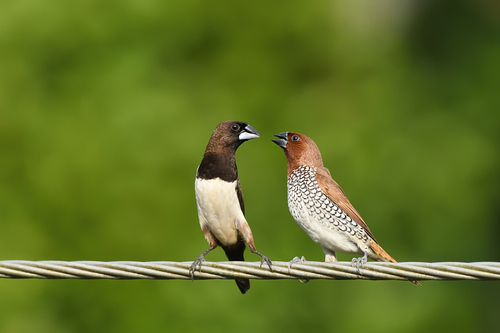 Munia pettosquamato
In breve
Il modo più affidabile per separare il Black Drongo dal Munia pettosquamato è il colore e la struttura complessiva: il Black Drongo è un uccello di medie dimensioni, lucido e completamente nero, con una coda profondamente forked, mentre il Munia pettosquamato è un fringillide molto più piccolo, marrone, con un becco corto e conico e marcature distintive simili a squame sulle sue parti inferiori bianche. I Black Drongo juvenili possono mostrare alcune barre o macchie bianche sotto, ma mai il modello di squame ordinato del munia. In volo o posato, la lunga coda forked del drongo e la sua postura eretta sono inconfondibili rispetto alla coda corta e alla postura tozza del munia. Anche a distanza, la differenza di dimensioni è sorprendente: il drongo è quasi tre volte la lunghezza e molto più pesante del munia.
Consigli di identificazione
- Dimensione e forma: Il Black Drongo è quasi tre volte la lunghezza del Munia pettosquamato e molto più massiccio. Se l'uccello sembra delle dimensioni di un passero, non è un drongo.
- Forma della coda: Il drongo mostra sempre una lunga coda forked in tutte le piumature e età; il munia ha una coda corta e quadrata. In volo, la coda del drongo è un segno distintivo.
- Struttura del becco: Il drongo ha un becco sottile e appuntito adatto per catturare insetti; il munia ha un becco corto, spesso e conico per mangiare semi. La forma del becco è diagnostica a distanza ravvicinata.
- Colore generale: Il drongo adulto è completamente nero e lucido, a volte con una piccola macchia bianca alla bocca. Il munia non è mai completamente nero: gli adulti hanno parti superiori marroni, una testa marrone scuro e parti inferiori bianche con squame scure.
- Schema delle parti inferiori: Gli adulti del munia hanno marcature nette simili a squame sul ventre e sul petto bianchi. Il drongo non mostra mai questo schema; i dronghi juvenili possono avere alcune barre o macchie bianche, ma sono irregolari e non simili a squame.
- Confusione giovanile: I dronghi juvenili sono marroni con alcune macchie bianche sotto, ma mostrano ancora una coda forked e una postura eretta. I munia juvenili sono marrone chiaro sopra e color crema sotto, mancano della testa scura e delle squame, ma mantengono il becco corto e spesso e il comportamento gregario.
- Postura posata: Il drongo si siede eretto e da solo o in coppia, spesso su posatoi esposti. I munia sono tozzi, spesso in gruppi, e si posano fianco a fianco.
- Stile di volo: Il drongo vola con battiti d'ala forti e diretti e può eseguire manovre acrobatiche; i munia volano debolmente in brevi scatti, di solito come un gruppo.
- Comportamento sociale: Il drongo è solitario o in coppie, aggressivo e può attaccare uccelli più grandi. Il munia è altamente sociale, raramente solo e non aggressivo.
- Contesto dell'habitat: Il drongo è spesso visto in campagna aperta, su fili o rami nudi, a volte seguendo il bestiame o gli aratri. Il munia si trova in campi erbosi, canne e giardini, di solito vicino al suolo.
- Vocalizzazioni: Le chiamate del drongo sono forti, metalliche e varie; quelle del munia sono morbide, fischiate e con cinguettii, spesso udite come rumore di fondo in un gruppo.
- Colore dell'iride: Il drongo ha un'iride marrone scuro; l'ashy drongo (non in questa coppia) ha un colore cremisi, ma questo non è un rischio di confusione con il munia.
- Comportamento aggressivo: Se vedi un piccolo uccello inseguire o attaccare corvi o rapaci, è quasi certamente un drongo, non un munia.
- Muta e variazione stagionale: Il drongo può mostrare alcune variazioni nella lucentezza o piccole macchie bianche alla bocca, ma non si avvicina mai al modello di squame del munia.
- Trappole: Non confondere le macchie bianche irregolari dei dronghi juvenili con le squame ordinate del munia; controlla la forma della coda, il becco e la dimensione complessiva per confermare.
Taglia
Il Black Drongo è un passeriforme di medie dimensioni, lungo circa 28 cm (11 in), mentre il Munia pettosquamato è delle dimensioni di un passero, lungo solo 11–12 cm (4.3–4.7 in) e pesa circa 14 g [wikidata]. Il drongo non è solo molto più lungo, ma anche più massiccio e robusto, con una coda e ali più lunghe. Sul campo, il drongo appare elegante e prominente sui posatoi, spesso da solo o in coppia, mentre i munia sono piccoli, compatti e di solito visti in gruppi stretti.
Piumaggio
- Giovanili: I Black Drongo juvenili sono marroni con alcune barre o macchie bianche verso il ventre e il vent, e gli uccelli di primo anno hanno punte bianche sulle piume del ventre, ma questi segni sono diffusi e non formano mai il modello di squame netto e regolare del munia. I Munia pettosquamati juvenili mancano della testa scura e del modello di squame dell'adulto, apparendo marrone chiaro sopra e color crema sotto, ma mostrano ancora un becco corto e spesso e mai la coda forked o la piumaggio nero lucido del drongo.
- Adulti: Il Black Drongo adulto è completamente nero e lucido, a volte con una piccola macchia bianca alla base della bocca, e una coda larga e profondamente forked. L'Adulto Munia pettosquamato ha parti superiori marroni, una testa marrone scuro e parti inferiori bianche con marcature scure ordinate simili a squame. I sessi sono simili in entrambe le specie, ma i maschi del munia hanno squame e gola leggermente più scure.
- Viste in volo: La lunga coda forked del Black Drongo è evidente in volo, e l'uccello appare completamente scuro. Il munia mostra una coda corta e quadrata e parti inferiori chiare con squame (se adulto), e le ali sono molto più corte e arrotondate.
Comportamento
Il Black Drongo è tipicamente visto singolarmente o in coppie, posato eretto e in modo evidente su fili, rami nudi o anche su animali al pascolo, ed è notevolmente aggressivo, spesso inseguendo uccelli molto più grandi. Vola con battiti d'ala forti e diretti ed è altamente manovrabile quando cattura insetti. Il Munia pettosquamato è altamente sociale, quasi sempre in gruppi (a volte fino a 100), muovendosi in gruppi stretti tra l'erba o le spighe di semi, e posandosi fianco a fianco. I munia muovono le loro code e ali mentre saltellano e raramente mostrano aggressività; invece, si dedicano all'allopreening e al riposo comune.
Habitat
Entrambe le specie sono diffuse in Asia tropicale, ma il Black Drongo preferisce la campagna aperta, i campi e i bordi dove può posarsi in alto e lanciarsi per catturare insetti, spesso seguendo aratri o incendi. Il Munia pettosquamato si trova più spesso in aree erbose, canne, campi agricoli e giardini, specialmente dove ci sono semi abbondanti. I munia sono raramente visti da soli e tendono a rimanere bassi nella vegetazione, mentre i dronghi sono evidenti e spesso si posano in spazi aperti.
Voce
Il Black Drongo ha un repertorio vario, ma una chiamata comune è un acuto 'tee-hee' a due note che ricorda uno shikra. Le sue chiamate sono forti e possono essere dure o metalliche. Il Munia pettosquamato emette fischi morbidi e brevi, variazioni 'kitty-kitty-kitty' e note di allerta acute. Le chiamate del munia sono molto più morbide e meno varie rispetto a quelle del drongo, e sono spesso udite come chiacchiere di fondo in un gruppo.
Black Drongo · Munia pettosquamato · I miei uccelli difficili