

Black Bustard vs Stark's Lark
Afrotis afra contro Spizocorys starki
Fai un quiz con Black Bustard e Stark's Lark
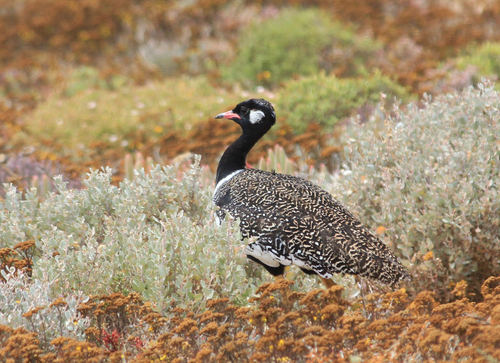 Black Bustard
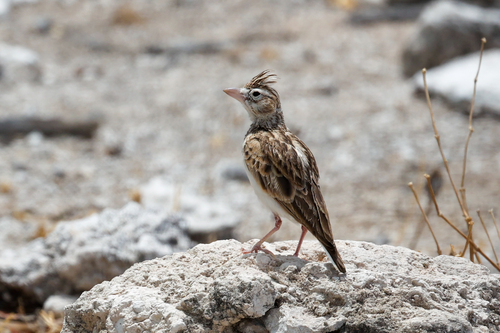 Stark's Lark
In breve
Il segno di campo più affidabile per separare il Black Bustard (Afrotis afra) dallo Stark's Lark (Spizocorys starki) è la dimensione e la struttura complessiva: il Black Bustard è un bustardo molto più grande, eretto, con lunghe gambe e un audace motivo nero e bianco (soprattutto nei maschi), mentre lo Stark's Lark è un piccolo lark color sabbia-marrone, striato, con una coda corta e un distintivo sopracciglio chiaro. In volo o a terra, il piumaggio a scacchi del bustardo e le sue gambe gialle spiccano, mentre il lark si mimetizza con le sue sottili striature e la cresta sollevata. Se vedi un uccello con un becco robusto e rossastro e parti inferiori nere, è il bustardo; un uccello chiaro, striato e crestato con un becco gonfio è il lark. È possibile una sovrapposizione degli habitat, ma il bustardo è limitato al sud-ovest del Sudafrica, mentre il lark si distribuisce più ampiamente nell'Africa meridionale arida.
Consigli di identificazione
- Size and shape: Il Black Bustard è molto più grande e massiccio dello Stark's Lark. Se l'uccello appare delle dimensioni di un piccione o più grande, è il bustardo; se è delle dimensioni di un passero, è il lark.
- Leg color: Entrambi i sessi del Black Bustard hanno gambe gialle brillanti, che spiccano nel campo. Lo Stark's Lark non ha gambe di colore notevole.
- Bill structure: Il bustardo ha un becco robusto e rossastro con una punta nera (più lungo nei maschi), mentre il becco del lark è chiaro, corto e appare leggermente gonfio ma non di colore brillante.
- Plumage pattern (male bustard): Il maschio del Black Bustard è audacemente a scacchi nero e bianco con un ventre e un collo neri, bianco sulle ali inferiori, guance e strisce oculari. Nessun lark nella regione mostra questo contrasto.
- Plumage pattern (female bustard): La femmina del bustardo è a scacchi marrone e bianco, con la testa, il collo e il petto che corrispondono al corpo. Ancora più decorata del lark, ma meno contrastante del maschio.
- Plumage pattern (lark): Lo Stark's Lark è color sabbia-marrone sopra con sottili striature, un distintivo sopracciglio chiaro, parti inferiori bianche con striature deboli e una cresta striata, spesso sollevata. Nessuna macchia nera o bianca audace.
- Crest: Lo Stark's Lark mostra spesso una cresta striata sollevata, specialmente quando è all'erta o in calore. Il Black Bustard non ha cresta.
- Tail: Il Black Bustard ha una coda lunga (12–13 cm), mentre lo Stark's Lark ha una coda corta tipica dei lark.
- Posture: Il bustardo sta eretto e alto, spesso camminando lentamente e deliberatamente. Il lark è tozzo, spesso accovacciato o correndo rapidamente a terra.
- Flight display: I maschi del Black Bustard possono eseguire voli alti e appariscenti per attrarre le femmine. Lo Stark's Lark esegue acrobazie aeree con il canto, ma è molto più piccolo e meno appariscente in volo.
- Habitat: Se ti trovi nel sud-ovest del Sudafrica in una macchia aperta/prairie, considera il bustardo; se sei in praterie aride e ghiaiose (soprattutto dopo la pioggia) in una gamma più ampia dell'Africa meridionale, considera il lark.
- Flocking: Lo Stark's Lark è spesso in stormi, specialmente dopo la pioggia, a volte con altri piccoli uccelli. Il Black Bustard è solitamente solitario o in piccoli gruppi.
- Vocalization: Se senti trilli, fischi e cinguettii da un uccello in mostra, è probabile che sia lo Stark's Lark. Le vocalizzazioni del bustardo non sono descritte qui.
- Sexual dimorphism: Solo il bustardo mostra forti differenze di piumaggio maschio/femmina; il lark non lo fa.
- Confusion risk: La femmina del bustardo è meno audacemente segnata e potrebbe essere confusa con un grande lark chiaro a distanza, ma la dimensione, il colore delle gambe e la forma del becco sono separatori affidabili.
Taglia
Il Black Bustard è drammaticamente più grande dello Stark's Lark. Il bustardo è un piccolo bustardo, ma comunque molto più massiccio e alto di qualsiasi lark, con un'apertura alare di 25–28 cm e una lunga coda (12–13 cm), che sta eretto su lunghe gambe gialle brillanti. Lo Stark's Lark è un tipico piccolo lark, che pesa circa 18,6 g, con un corpo compatto, coda corta e gambe molto più corte. Anche a distanza, la dimensione e la postura eretta del bustardo sono evidenti rispetto al profilo tozzo e aderente al suolo del lark.
Piumaggio
Nessun segno specifico per l'età o il pattern di volo è descritto per entrambe le specie, quindi ci si concentra sulle differenze tra adulti e sessi. Il maschio del Black Bustard è audacemente a scacchi nero e bianco, con un ventre e un collo neri, bianco sulle ali inferiori, guance e strisce oculari. Le femmine sono meno contrastanti ma hanno comunque un motivo a scacchi marrone e bianco, con la testa, il collo e il petto che corrispondono al corpo. Entrambi i sessi hanno gambe gialle brillanti e un becco rossastro con una punta nera. Lo Stark's Lark è molto più semplice: color sabbia-marrone sopra con sottili striature, un distintivo sopracciglio chiaro, parti inferiori bianche con striature deboli e una cresta striata, spesso sollevata. Il becco del lark è chiaro e appare leggermente gonfio, e le sue gambe non sono descritte come di colore brillante. In sintesi, il bustardo è audacemente decorato e colpisce, mentre il lark è criptico e striato.
Comportamento
Il Black Bustard è un uccello terrestre, spesso visto camminare eretto in praterie aperte o macchie, a volte esibendosi con voli alti e appariscenti durante la riproduzione. È generalmente solitario o in piccoli gruppi. Lo Stark's Lark è altamente mobile e nomade, formando stormi dopo la pioggia e a volte associandosi ad altri piccoli uccelli granivori. Il lark cerca spesso ombra e adotta una postura con una cresta sollevata e ali abbassate in caso di calore. Nella sua esibizione, il lark esegue acrobazie aeree con il canto. La camminata lenta e maestosa del bustardo e la sua postura eretta contrastano con il comportamento rapido, basso e spesso in stormo del lark.
Habitat
Entrambe le specie possono verificarsi in praterie e macchie aride, ma il Black Bustard è endemico del sud-ovest del Sudafrica (da Namaqualand a Città del Capo e a est fino a Makhanda), mentre lo Stark's Lark si trova più ampiamente in Angola, Botswana, Namibia e Sudafrica. Il bustardo preferisce macchie aperte, semi-aride, praterie e savane, a volte vicino a zone umide. Lo Stark's Lark favorisce praterie aride con suoli ghiaiosi e evita le aree sabbiose. Se ti trovi al di fuori del sud-ovest del Sudafrica, è improbabile vedere il bustardo; se sei in una prateria arida e ghiaiosa, soprattutto dopo la pioggia, è più probabile vedere il lark.
Voce
Nessuna vocalizzazione è descritta per il Black Bustard nelle note fornite. Lo Stark's Lark, durante il corteggiamento, emette un repertorio di trilli, fischi e cinguettii, spesso durante l'esibizione aerea. Se senti un canto complesso simile a quello del lark e vedi un piccolo uccello crestato in mostra, è probabile che sia lo Stark's Lark.