

Black-backed Puffback vs Common Bulbul
Dryoscopus cubla contro Pycnonotus barbatus
Fai un quiz con Black-backed Puffback e Common Bulbul
 Black-backed Puffback
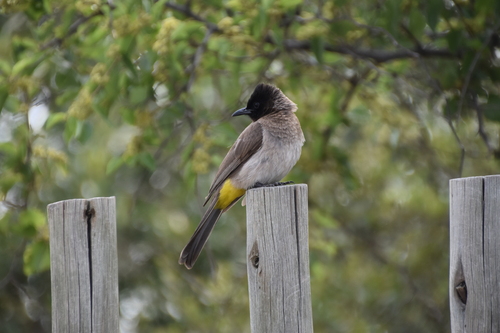 Common Bulbul
In breve
Il segno distintivo più affidabile per separare il Black-backed Puffback dal Common Bulbul è il forte contrasto bianco e nero del Puffback, specialmente le parti superiori nere lucide e le parti inferiori bianche pure nei maschi adulti, rispetto alla colorazione complessiva marrone e grigia del Bulbul con copritrici gialle sotto la coda in alcune sottospecie. I Puffback immaturi sono più grigi e color sabbia, ma mostrano comunque un contrasto più netto rispetto a qualsiasi Bulbul. Strutturalmente, i Puffback sono più piccoli, più compatti e hanno un aspetto distintamente simile a quello di un ghiandaia, mentre i Bulbul sono più grandi, con una coda più lunga e un aspetto più simile a quello di un tordo. Entrambe le specie possono essere attive nella chioma degli alberi, ma il loro stile di movimento e comportamento sociale differiscono. Le vocalizzazioni non sono simili e sono poco probabili da confondere.
Consigli di identificazione
- Upperpart color (all ages): I Puffback hanno sempre parti superiori più scure (nere nei maschi, grigie nelle femmine/immaturi) rispetto a qualsiasi Bulbul, che è marrone sopra.
- Underpart contrast (all ages): I Puffback mostrano parti inferiori bianche o color sabbia con un forte contrasto rispetto alle parti superiori; i Bulbul sono grigi opachi sotto, fondendosi con le parti superiori marroni.
- Adult male Puffback: Cerca un dorso blu-nero lucido, un cappello nero e parti inferiori bianche pure. Nessun Bulbul mostra questo schema.
- Adult female Puffback: Nota la striscia loreale nera, il supralorale bianco, le copritrici auricolari chiare e a volte un supercilio. I Bulbul hanno un volto marrone uniforme senza un forte schema.
- Immature Puffback: Più grigi sopra e color sabbia sotto rispetto agli adulti, ma mostrano comunque più contrasto rispetto agli immaturi del Bulbul, che assomigliano agli adulti.
- Wing markings: I Puffback (soprattutto i maschi e alcune razze) hanno bordi bianchi sulle remiganti e una barra scapolare bianca, visibile negli uccelli in posato e a volte in volo. I Bulbul non mostrano alcun bianco nell'ala o nell'area scapolare a tutte le età.
- Iris color: I Puffback adulti hanno iridi rosse o arancioni (a seconda della razza), mentre i Bulbul hanno occhi marroni scuri con un anello oculare scuro (non facilmente visibile). I Puffback immaturi hanno iridi marroni.
- Bill shape: I Puffback hanno un becco simile a quello di un ghiandaia, leggermente più pesante, mentre i Bulbul hanno un becco corto, sottile e leggermente ricurvo.
- Tail shape and length: I Bulbul hanno una coda più lunga e più graduata, dando un aspetto allungato; i Puffback hanno una coda più corta e più squadrata.
- Overall structure: I Puffback sono più compatti e robusti; i Bulbul sono più lunghi, più pesanti e più simili a un tordo.
- Behavior: I Puffback sbattono le ali e la coda, si muovono bruscamente e possono gonfiare le piume della schiena; i Bulbul saltellano e si posano più apertamente, spesso in gruppi.
- Habitat context: Nei giardini, nei parchi o nelle aree disturbate, aspettati il Bulbul; in boschi naturali o ai margini delle foreste, specialmente a sud dell'equatore, controlla per il Puffback.
- Vocalization: Il richiamo forte e ripetitivo del Bulbul è distintivo; i richiami del Puffback non sono simili e sono poco probabili da confondere.
- Sex differences: I Puffback mostrano dimorfismo sessuale (maschi e femmine separabili), mentre i Bulbul no.
- Subspecies variation: Alcune razze di Puffback hanno marcature bianche sulle ali più ampie o più strette e colori dell'iride diversi; le sottospecie di Bulbul differiscono principalmente nel colore delle copritrici sotto la coda (giallo in alcune), ma non si avvicinano mai al modello bianco e nero del Puffback.
Taglia
Il Black-backed Puffback è più piccolo e più leggero (26,0 g) rispetto al Common Bulbul (35,05 g). Il Puffback è lungo circa 17 cm, mentre il Bulbul è leggermente più lungo a 18–20 cm. Il Puffback appare più compatto e meno allungato, con una coda più corta e una corporatura più robusta. Sul campo, la coda più lunga e il corpo più pesante del Bulbul gli conferiscono un profilo più allungato e simile a un tordo rispetto alle proporzioni del Puffback.
Piumaggio
-
Juvenile/Immature birds: I Puffback immaturi assomigliano alle femmine ma sono ancora più grigi sopra, con parti inferiori e bordi delle ali color sabbia, becchi marroni e iridi marroni. Mostrano ancora un contrasto tra le parti inferiori più chiare e le parti superiori più scure, ma è meno netto rispetto agli adulti. I Bulbul immaturi assomigliano agli adulti: parti superiori marroni, parti inferiori grigie opache e copritrici gialle sotto la coda in alcune sottospecie, senza contrasto netto o marcature sulle ali.
-
Adult males: I maschi Puffback hanno parti superiori lucide blu-nerastre, un cappello nero, iridi rosse o arancioni (a seconda della sottospecie) e parti inferiori bianche pure. La barra scapolare bianca e i bordi bianchi sulle remiganti sono prominenti in alcune razze. I Bulbul non mostrano mai questo contrasto bianco e nero; la loro testa è marrone scuro, le parti superiori marroni e le parti inferiori grigie opache, con copritrici gialle sotto la coda in alcune forme.
-
Adult females: Le femmine Puffback sono più grigie sopra, con una striscia loreale nera, un supralorale bianco, copritrici auricolari chiare e a volte un supercilio prominente. Le parti inferiori sono bianche o color sabbia. Le femmine di Bulbul non sono separabili dai maschi sul campo e condividono lo stesso schema marrone/grigio/giallo. Le femmine Puffback possono mostrare un modello facciale più contrastante e parti inferiori più chiare rispetto a qualsiasi Bulbul.
-
Wing pattern in flight: I Puffback (soprattutto i maschi e alcune razze) mostrano bordi bianchi sulle remiganti e una barra scapolare bianca, visibile negli uccelli in posato e a volte in volo. I Bulbul non mostrano alcun bianco nell'ala o nell'area scapolare.
Comportamento
I Puffback sono irrequieti, si muovono singolarmente, in coppie o in gruppi familiari, e tendono a rimanere più in alto nella chioma degli alberi, spesso sbattendo le loro code e ali. I loro movimenti sono più bruschi e simili a quelli di una ghiandaia, a volte gonfiando le piume della schiena. I Bulbul sono anche attivi ma si muovono in modo più rilassato, saltellando spesso in gruppi sciolti, e sono meno propensi a sbattere le ali o la coda nello stesso modo. I Bulbul spesso si posano più apertamente e cantano da punti conspicui, mentre i Puffback sono più propensi a essere parzialmente nascosti nel fogliame.
Habitat
Entrambe le specie possono essere trovate in habitat boschivi, ma i Puffback sono più strettamente associati a vari ambienti boschivi a sud dell'equatore e sono sedentari. I Bulbul sono molto più diffusi, presenti in gran parte dell'Africa (eccetto le aree molto aride) e persino nel sud della Spagna. I Bulbul sono comuni in giardini, parchi e crescita secondaria, mentre i Puffback sono più tipici di cespugli, boschi e margini forestali. Nel sud dell'Africa, trovare un Puffback in un bosco naturale denso è più probabile, mentre i Bulbul sono abbondanti in aree disturbate o coltivate.
Voce
I richiami del Puffback non sono descritti nelle note, ma non sono simili a quelli del Bulbul. Il Common Bulbul ha un richiamo forte e ripetitivo 'doctor-quick doctor-quick be-quick be-quick', che è distintivo e poco probabile da confondere con qualsiasi vocalizzazione del Puffback.
Black-backed Puffback · Common Bulbul · I miei uccelli difficili