

Black-backed Puffback vs Black-crowned Tchagra
Dryoscopus cubla contro Tchagra senegalus
Fai un quiz con Black-backed Puffback e Black-crowned Tchagra
 Black-backed Puffback
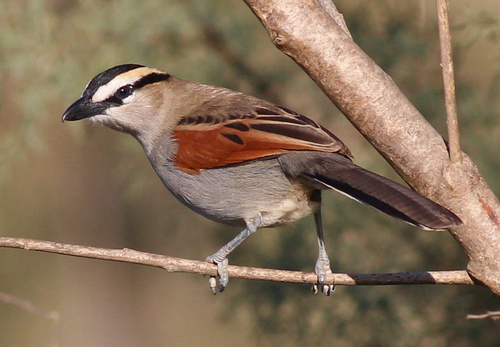 Black-crowned Tchagra
In breve
Il modo più affidabile per separare il Black-backed Puffback e il Black-crowned Tchagra è attraverso il modello della testa e delle ali: i maschi di Puffback hanno un cappello nero lucido e parti superiori con parti inferiori bianche, mentre il Tchagra mostra una corona nera audace e una striscia oculare divisa da un ampio supercilio bianco, oltre a ali castanee e una coda nera con una punta bianca. I Puffback immaturi mancano della corona nera solida e hanno becchi e occhi marroni, mentre i giovani Tchagra hanno un cappello marrone e un becco giallo pallido. In volo o posati, il pannello delle ali castanee del Tchagra e il suo modello facciale sorprendente sono unici, mentre il Puffback è più pulito in bianco e nero. Entrambi sono bushshrikes, ma il Tchagra è più grande e ha una coda più lunga, e il loro comportamento e habitat preferito differiscono.
Consigli di identificazione
- Head pattern: Il Tchagra ha una corona nera audace e una striscia oculare separata da un ampio supercilio bianco—questo è visibile in tutte le età e sessi. I maschi di Puffback hanno un cappello nero lucido, ma le femmine e gli immaturi mancano di una corona nera solida e mostrano una striscia loriale nera o toni marroni.
- Facial contrast: Il volto del Tchagra è sorprendentemente decorato con la testa bianco e nero, mentre il Puffback ha un volto più semplice, specialmente nelle femmine e negli immaturi.
- Wing color: Le ali ripiegate del Tchagra sono castanee, in contrasto con le ali bianche e nere del Puffback. Questo è visibile sia posato che in volo.
- Tail pattern: Il Tchagra ha una coda nera con una punta bianca, facilmente visibile quando l'uccello apre o muove la coda. La coda del Puffback è nera senza una punta bianca.
- Underparts: Il Puffback ha parti inferiori bianche pure (maschio) o bianco sporco a buffo (femmina/immaturo), mentre quelle del Tchagra sono grigie chiare.
- Bill color: I Puffback immaturi hanno un becco marrone; i giovani Tchagra hanno un becco giallo pallido. Gli adulti di entrambe le specie hanno becchi neri.
- Iris color: Gli adulti di Puffback hanno iridi rosse o arancioni (a seconda della sottospecie); gli immaturi hanno occhi marroni. Il colore dell'iride del Tchagra è variabile a seconda della sottospecie ma non è così distintivo sul campo.
- Size and shape: Il Tchagra è più lungo e più snello, con una coda più lunga; il Puffback è più compatto e arrotondato.
- Behavior: Il Puffback è più attivo, spesso nella chioma, e si muove in modo irrequieto. Il Tchagra è più propenso a posarsi silenziosamente in un cespuglio o in un albero basso.
- Habitat: Il Puffback preferisce boschi più densi; il Tchagra è più spesso in cespugli aperti, semi-deserto o aree coltivate.
- Response to playback: Il Tchagra spesso si avvicina quando il suo canto viene imitato; la risposta del Puffback non è descritta.
- Sex differences: I maschi di Puffback sono più lucidi e contrastanti rispetto alle femmine; i sessi del Tchagra sono simili.
- Juvenile confusion: I giovani Puffback sono più opachi e marroni rispetto agli adulti ma non mostrano mai il modello facciale audace del Tchagra o le ali castanee. I giovani Tchagra mantengono il supercilio e l'ala castanea, anche con un cappello marrone.
- Subspecies variation: Le sottospecie di Puffback variano nella quantità di bianco sulle ali e sulla schiena; le sottospecie di Tchagra differiscono nel colore della schiena e delle parti inferiori, ma il modello facciale e l'ala castanea rimangono diagnostici.
- Voice: Se senti un canto fischiante discendente, è il Tchagra. Il canto del Puffback non è descritto qui, quindi usa questo solo per un'identificazione positiva del Tchagra.
Taglia
Il Black-crowned Tchagra è notevolmente più grande, con una lunghezza di 19–22 cm, rispetto ai 17 cm del Black-backed Puffback. Il Puffback è anche più leggero (massa corporea 26 g), con un aspetto più compatto e arrotondato, mentre il Tchagra appare più lungo e più snello, specialmente nella coda. Questa differenza è più evidente quando entrambi sono visti fianco a fianco o quando sono posati in aperto.
Piumaggio
-
Juvenile/immature birds: I giovani Puffback somigliano alle femmine con becchi marroni e iridi marroni, parti superiori più grigie e parti inferiori e bordi delle ali color buffo. Mancano del cappello nero solido dei maschi adulti. I giovani Tchagra hanno un cappello marrone (non nero) e un becco giallo pallido, ma mostrano ancora il supercilio bianco ampio e le ali castanee, rendendoli distinti dal Puffback a tutte le età.
-
Adult males: I maschi di Puffback sono di un blu-nero profondo sopra con un cappello lucido, parti inferiori bianche pure e parti superiori bianche e nere. Gli adulti di Tchagra hanno una corona nera e una striscia oculare nera, separate da un ampio supercilio bianco, parti inferiori grigie chiare, parti superiori marroni chiare, ali castanee e una coda nera con punta bianca.
-
Adult females: Le femmine di Puffback sono simili ai maschi ma con una striscia loriale nera, piumaggio supraloriale bianco, copritrici auricolari chiare e schiene più grigie. Le femmine di Tchagra sono simili ai maschi, mantenendo il modello facciale audace e le ali castanee.
-
Wings and tail: Le ali del Puffback sono nere con bordi bianchi variabili (a seconda della sottospecie), e la coda è nera senza una punta bianca. Le ali ripiegate del Tchagra sono castanee, e la coda è nera con una punta bianca—questo è un segno distintivo sul campo quando l'uccello è posato o in volo.
Comportamento
Il Black-backed Puffback è irrequieto, muovendosi singolarmente, in coppie o in gruppi familiari, e di solito cerca cibo in alto nelle chiome degli alberi. È più attivo e meno propenso a rimanere esposto a lungo. Il Black-crowned Tchagra caccia da un posatoio in un cespuglio, spesso meno evidente rispetto ai veri shrike, ma può essere attirato in vista imitandone il canto. Il Tchagra esegue anche un volo di esibizione a zig-zag. Il movimento del Puffback è più energetico e arboreo, mentre il Tchagra è più deliberato e vive nei cespugli.
Habitat
Il Puffback si trova in vari habitat boschivi a sud dell'equatore, tipicamente in boschi più densi e ai margini delle foreste, ed è sedentario. Il Tchagra occupa un'area più ampia, inclusi cespugli, boschi aperti, semi-deserto e aree coltivate, ed è trovato in gran parte dell'Africa e della Penisola Arabica. Se l'uccello si trova in cespugli aperti o semi-deserto, è più probabile che sia un Tchagra; in boschi densi o ai margini delle foreste, il Puffback è favorito.
Voce
Il Tchagra ha un canto fischiante discendente distintivo ("chee-chee chee cheroo cheroo") ed è reattivo alla riproduzione, avvicinandosi spesso alla fonte. Le vocalizzazioni del Puffback non sono descritte nelle note fornite, quindi la voce è solo un forte separatore se si sente il canto del Tchagra.
Black-backed Puffback · Black-crowned Tchagra · I miei uccelli difficili