

Basra Reed Warbler vs Clamorous Reed Warbler
Acrocephalus griseldis contro Acrocephalus stentoreus
Fai un quiz con Basra Reed Warbler e Clamorous Reed Warbler
 Basra Reed Warbler
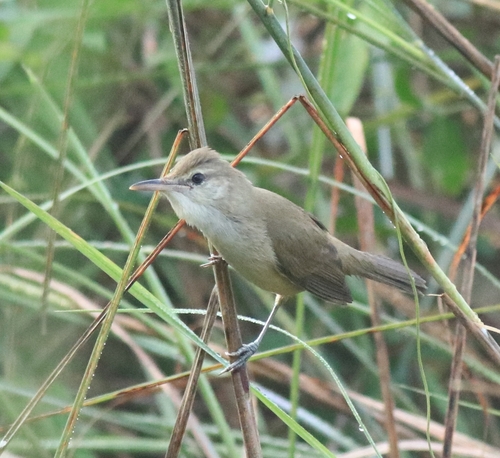 Clamorous Reed Warbler
In breve
Per separare il Basra Reed Warbler dal Clamorous Reed Warbler, concentrati prima sulla forma del becco e sul colore delle parti inferiori: il Basra ha un becco visibilmente più stretto, lungo e appuntito, e le sue parti inferiori sono più bianche. Il Clamorous è complessivamente più robusto, con un becco forte e appuntito e un aspetto più robusto, simile a un tordo. Entrambi sono marroni uniformi sopra e chiari sotto, ma il Basra è più piccolo e più delicato, con un jizz meno potente. La voce può aiutare: il Basra emette un richiamo 'chaar' più profondo e ruvido, mentre il Clamorous ha un canto forte e chiacchierino. È possibile sovrapposizione degli habitat, ma il Basra è molto più localizzato e specializzato in densi canneti del sistema Tigri–Eufrate.
Consigli di identificazione
- Forma del becco: Il Basra Reed Warbler ha un becco visibilmente più stretto, lungo e appuntito rispetto al Clamorous, che ha un becco forte, spesso e appuntito. Questa è spesso la differenza strutturale più affidabile a distanza ravvicinata.
- Colore delle parti inferiori: Il Basra mostra parti inferiori visibilmente più bianche, specialmente sul ventre e sui fianchi, rispetto alle parti inferiori più attenuate e biancastre (ma non bianche pure) del Clamorous. Questo è più facile da giudicare in buona luce e su uccelli in posa.
- Dimensioni e jizz: Il Clamorous è più grande e robusto, con una presenza simile a un tordo, mentre il Basra è più piccolo, più snello e delicato. In stormi misti o con un riferimento di dimensione, questo può essere utile, ma fai attenzione agli uccelli solitari.
- Testa e fronte: Il Clamorous ha una fronte appiattita e un profilo della testa più pesante, mentre la testa del Basra è più fine e meno squadrata.
- Parte superiore: Entrambi sono marroni uniformi sopra, ma il Clamorous può mostrare toni marroni più ricchi o scuri in alcune sottospecie (forme settentrionali e dello Sri Lanka), mentre il Basra è più uniforme e privo di forte saturazione di colore.
- Nessun motivo distintivo sulle ali: Nessuna delle due specie mostra un forte pannello delle ali specifico per l'età, triangolo o bordo contrastante in volo o a riposo, quindi non fare affidamento sul motivo delle ali superiori per la separazione.
- Sessi simili: Entrambe le specie hanno poco o nessun dimorfismo sessuale nel piumaggio, quindi il sesso non è un utile segno sul campo.
- Voce: Ascolta il richiamo profondo e ruvido 'chaar' del Basra, che è di tono più basso e meno musicale rispetto al canto forte, chiacchierino e variegato del Clamorous. Usa questo soprattutto in copertura densa o in scarsa luce.
- Habitat e distribuzione: Se nel sistema Tigri–Eufrate o in zone umide israeliane recentemente colonizzate, il Basra è molto più probabile, specialmente in estesi canneti di papiro. Il Clamorous è diffuso su un'area molto più ampia e può essere trovato in una gamma più ampia di habitat di canneti.
- Comportamento: Entrambi si nascondono nei canneti, ma il Basra può apparire più agile e meno pesante rispetto al Clamorous più pesante. Questo è sottile e meglio utilizzato come prova di supporto.
- Migrazione e vagabondaggio: Il Basra è un raro vagabondo in Europa e sverna in Africa orientale, mentre il Clamorous è residente o migratorio su un'area molto più ampia. Fuori dalla sua area, il Clamorous è molto più probabile.
- Trappole nel piumaggio: Entrambi possono essere confusi con il Cannareccione, ma il Basra è più piccolo e più bianco sotto, mentre il Clamorous è più robusto e meno riccamente colorato rispetto al Great Reed.
- Uccelli giovanili/immaturi: Non sono descritti segni distintivi di ali o piumaggio giovanile o immaturo per nessuna delle due specie, quindi utilizza la struttura e il colore delle parti inferiori per tutte le età.
- Contesto: Se hai una chiara visione del becco e delle parti inferiori, dai priorità a queste caratteristiche. In visioni scarse, fai affidamento sulla voce e sulla dimensione complessiva/jizz, ma fai attenzione alla sovrapposizione.
- Variazione delle sottospecie: Il Clamorous mostra alcune variazioni regionali nel colore delle parti superiori, ma questo non si sovrappone all'area o all'aspetto del Basra.
Taglia
Il Clamorous Reed Warbler è il più grande dei due, descritto come delle dimensioni di un tordo (18–20 cm), con una corporatura più robusta e un becco più forte. Il Basra Reed Warbler è più piccolo e più snello, anche se le misure esatte non sono fornite nelle note. In un confronto diretto, il Basra apparirà più delicato e meno robusto, con una testa e una struttura del becco più fine.
Piumaggio
Non ci sono differenze specifiche per età nel motivo delle ali superiori o nel volo descritte per nessuna delle due specie nelle note. Entrambi sono marroni non striati sopra e chiari sotto, ma il Basra Reed Warbler ha parti inferiori visibilmente più bianche, mentre le parti inferiori del Clamorous Reed Warbler sono biancastre ma non così pulite o luminose. Il becco del Basra è più stretto, lungo e appuntito, mentre il Clamorous ha un becco forte e appuntito e una fronte appiattita. Non si menziona alcuna variazione stagionale o dipendente dall'età nel piumaggio per nessuna delle due specie, ma il Clamorous mostra alcune variazioni subspecifich nel colore delle parti superiori (gli uccelli settentrionali sono marroni più ricchi, gli uccelli dello Sri Lanka sono i più scuri), che non è un fattore per il Basra.
Comportamento
Entrambe le specie sono tipici Acrocephalus, muovendosi attraverso densi canneti e vegetazione acquatica. Il Clamorous, essendo più grande e robusto, può apparire più lento e pesante nei movimenti, mentre il Basra è probabile che sembri più agile e delicato. Entrambi possono essere trovati in cespugli e terreni boschivi durante la migrazione o l'inverno, quindi il comportamento da solo non è altamente diagnostico.
Habitat
Il Basra Reed Warbler è altamente localizzato, nidificando quasi esclusivamente nel sistema fluviale Tigri–Eufrate (sud-ovest dell'Iran, Iraq orientale/sud, Kuwait e recentemente Israele), ed è estremamente raro altrove. È legato a letti estesi di papiro e canne in acque dolci o salmastre poco profonde. Il Clamorous Reed Warbler ha un'area di distribuzione molto più ampia, dall'Egitto attraverso il Sud Asia fino al Sud-est asiatico, e non è così ristretto a un sistema fluviale specifico. Entrambi utilizzano densi canneti, ma il Basra è più specializzato e meno probabile al di fuori della sua area principale.
Voce
Il Basra Reed Warbler emette un richiamo ruvido 'chaar', che è più profondo rispetto al simile Cannaiola comune. Il canto del Clamorous Reed Warbler è forte e lontano, descritto come un lento 'kereet-kereet-kereet' chiacchierino con fischi e mimetismo, ma meno raucous rispetto al Cannareccione. Sul campo, il richiamo del Basra è più brusco e di tono più basso, mentre il Clamorous è più musicale e variegato.
Basra Reed Warbler · Clamorous Reed Warbler · I miei uccelli difficili