

Banded Martin vs Topino
Neophedina cincta contro Riparia riparia
Fai un quiz con Banded Martin e Topino
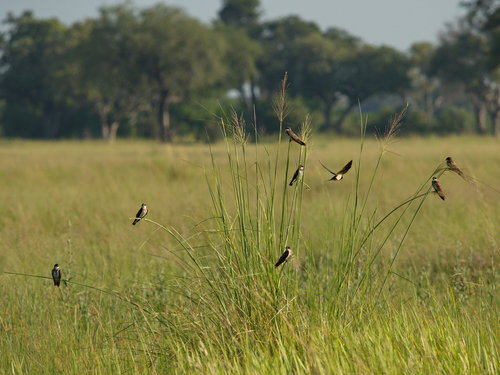 Banded Martin
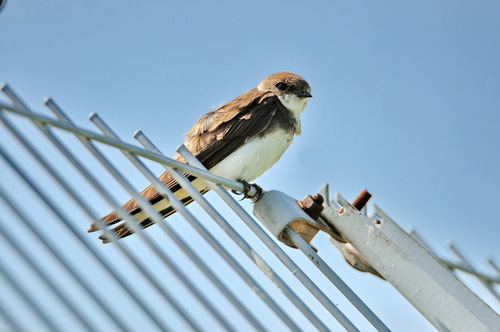 Topino
In breve
Il segno distintivo più affidabile per separare il Banded Martin dal Topino è la dimensione e la struttura: il Banded Martin è notevolmente più grande, con una coda più quadrata e una bold striscia bianca sopra l'occhio, mentre il Topino è più piccolo, con un volo più compatto e veloce e un supercilium meno evidente. Le piume giovanili possono essere ingannevoli, ma i giovani Banded Martin mostrano punte dorate sulle piume e una banda petto più chiara, mentre i giovani Topino hanno punte rugginose sulle copritrici delle ali e sulle secondarie. In volo, il Banded Martin mostra copritrici bianche sotto le ali, mentre quelle del Topino sono più semplici. Entrambi hanno una banda petto scura, ma quella del Banded Martin è più ampia e più contrastante. La sovrapposizione degli habitat è limitata: il Banded Martin è endemico dell'Africa, mentre il Topino è un migratore diffuso, che sverna solo in Africa.
Consigli di identificazione
- Size and bulk: Il Banded Martin è molto più grande e pesante del Topino. Se vedi entrambi insieme, la differenza è sorprendente, ma anche singolarmente, il Banded Martin appare più robusto e con ali più lunghe.
- Tail shape: Il Banded Martin ha una coda quadrata, mentre la coda del Topino è leggermente biforcuta. Questo è meglio visibile quando gli uccelli sono appollaiati o in volo.
- Supercilium (eyebrow): Il Banded Martin mostra una chiara striscia bianca sopra l'occhio, visibile da vicino o in buona luce. Il Topino manca di questa caratteristica.
- Breast band: Entrambe le specie hanno una banda petto scura, ma quella del Banded Martin è più ampia e più contrastante, specialmente negli adulti. La banda del Topino è più stretta e meno audace.
- Underwing pattern: In volo, il Banded Martin mostra copritrici bianche sotto le ali, creando un lampo chiaro sotto l'ala. L'ala del Topino è più uniformemente opaca e manca di questo contrasto. Questo è un segno chiave per gli uccelli in volo di tutte le età.
- Juvenile plumage: I giovani Banded Martin hanno punte dorate sulle piume superiori e una banda petto più chiara. I giovani Topino hanno punte rugginose sulle copritrici delle ali e sulle secondarie, che possono essere visibili su uccelli appollaiati o in volo lento.
- Ventral line: Il Banded Martin a volte mostra una sottile linea scura attraverso il vent, che il Topino non mostra mai. Questo è sottile e non sempre visibile.
- Flight style: Il Topino ha un volo rapido, a scatti e tremolante, mentre il Banded Martin è più stabile e diretto. Questa differenza è più evidente quando si osservano stormi o gruppi misti.
- Social behavior: Il Topino è altamente gregario, spesso visto in grandi colonie o stormi. Il Banded Martin è più spesso in coppie o piccoli gruppi.
- Habitat and range: Il Banded Martin è residente in Africa tutto l'anno (eccetto per alcune sottospecie migratorie), mentre il Topino è presente in Africa solo come migratore o visitatore invernale. Se visto in Europa, Asia o Nord America, è quasi certamente un Topino.
- Perched posture: Il Banded Martin tende a sembrare più lungo e più eretto quando è appollaiato, mentre il Topino appare compatto e curvo.
- Bill and legs: Entrambi hanno becchi e zampe scuri; questi non sono utili per la separazione.
- Sexes: Entrambe le specie sono sessualmente monomorfiche; le differenze nel piumaggio non aiutano a determinare il sesso o a separare le due specie.
- Voice: Il cinguettio ghiaioso del Topino e l'allerta dura sono tipici, ma i richiami del Banded Martin non sono distintivi sul campo, quindi non fare affidamento sulla voce per la separazione.
- Season: In Africa, il Topino è presente principalmente nella stagione non riproduttiva, mentre il Banded Martin è presente tutto l'anno (eccetto per migrazioni locali). Usa la stagione e la posizione come contesto di supporto, non come segni primari di identificazione.
Taglia
Il Banded Martin è nettamente più grande: 15–17 cm di lunghezza, rispetto ai 12–13 cm del Topino. Il Banded Martin è anche più pesante (quasi il doppio del peso del Topino), rendendolo più robusto e con ali più lunghe in confronto diretto. Il Topino è notevolmente più piccolo e leggero, con un'apertura alare di 26,5–29 cm e un peso tipico di 11–16 g (a volte fino a 19,5 g prima della migrazione). Queste differenze sono particolarmente evidenti quando entrambe le specie sono viste insieme, ma anche singolarmente, il jizz più grande e robusto del Banded Martin si distingue.
Piumaggio
- Juveniles/immatures: I giovani Banded Martin hanno punte dorate sulle piume superiori e una banda petto più chiara e meno distintiva. I giovani Topino mostrano punte rugginose (marrone caldo) sulle copritrici delle ali e sui bordi delle secondarie, che possono essere viste in buona luce su uccelli appollaiati o in volo.
- Adults: Entrambe le specie hanno parti superiori marroni e una banda petto scura su parti inferiori bianche, ma la banda petto del Banded Martin è più ampia e più nettamente definita. Il Banded Martin ha anche un supercilium bianco evidente (striscia sopra l'occhio), assente nel Topino. Le copritrici sotto le ali del Banded Martin sono bianche, in contrasto con il resto dell'ala inferiore, mentre l'ala del Topino è più uniformemente opaca e manca di questo contrasto. Il Banded Martin a volte mostra una sottile linea scura attraverso il vent, assente nel Topino.
- Tail: Il Banded Martin ha una coda quadrata, mentre la coda del Topino è leggermente biforcuta, sebbene non così profondamente come alcune altre rondini.
Comportamento
Il Banded Martin è meno gregario, tipicamente visto in coppie o piccoli stormi, mentre il Topino è altamente sociale, spesso formando grandi colonie e stormi rumorosi. In volo, il Topino ha uno stile di volo rapido, a scatti e tremolante, che riflette la sua dimensione più piccola e la sua struttura più leggera. Il volo del Banded Martin è più stabile e diretto, corrispondente alla sua forma più grande e quadrata. Appollaiato, il Banded Martin spesso appare più lungo e più eretto, mentre il Topino appare compatto e curvo.
Habitat
Il Banded Martin è endemico dell'Africa, preferendo habitat aperti come terreni agricoli, praterie e savane, di solito vicino all'acqua. È assente dalle regioni più secche. Il Topino nidifica attraverso l'Olarctico (Europa, Asia, Nord America) e si verifica in Africa solo come migratore o visitatore invernale, spesso vicino a fiumi, laghi o banchi di sabbia. In Africa, il Topino è presente principalmente nella stagione non riproduttiva, quindi il contesto e il periodo dell'anno sono indizi utili.
Voce
Il Topino emette un continuo cinguettio ghiaioso in volo e un richiamo di allerta duro quando disturbato. Non ci sono note vocali distintive per il Banded Martin nelle fonti fornite, quindi la voce non è un separatore affidabile sul campo per queste due specie.