

Austral Rail vs Plumbeous Rail
Rallus antarcticus contro Pardirallus sanguinolentus
Fai un quiz con Austral Rail e Plumbeous Rail
 Austral Rail
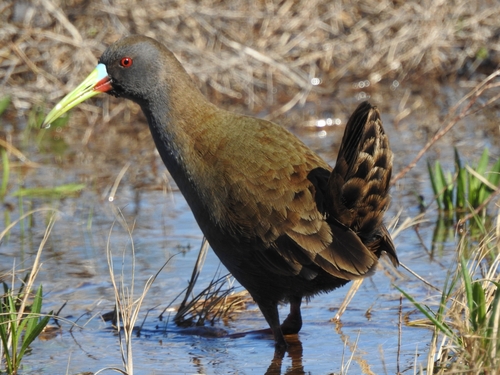 Plumbeous Rail
In breve
Il segno di campo più affidabile per separare l'Austral Rail dal Plumbeous Rail è la dimensione: il Plumbeous Rail è molto più grande e pesante, con un corpo e un becco visibilmente più lunghi. Per il piumaggio, gli adulti di Austral Rail mostrano centri neri con bordi color crema sulle piume della schiena e una marcatura audace a strisce nere e bianche sui fianchi, mentre il Plumbeous Rail è di un grigio più semplice sotto e manca di forti marcature sui fianchi. I giovani Austral Rail hanno piume del petto con punte nerastre e una gola bianca, che non è eguagliata da nessuna età del Plumbeous Rail. Sul campo, concentrati sulla dimensione complessiva, sul colore del becco e sul modello dei fianchi e delle parti superiori per la migliore separazione.
Consigli di identificazione
- La dimensione è il controllo più veloce: Il Plumbeous Rail è quasi il doppio della lunghezza dell'Austral Rail e molto più pesante. Se l'uccello sembra grande e robusto per un rail, è quasi certamente un Plumbeous.
- Il giovane Austral Rail è unico: Cerca piume del petto con punte nerastre e una gola bianca nei giovani—i giovani Plumbeous Rail non mostrano questi segni.
- Marcature sui fianchi: L'Austral Rail (tutte le età) ha marcature audaci a strisce nere e bianche sui fianchi, mentre il Plumbeous Rail ha fianchi semplici o solo debolmente marcati.
- Modello della schiena: L'Austral Rail ha centri neri con bordi color crema sulle piume della schiena, dando un effetto striato. Le parti superiori del Plumbeous Rail sono macchiate di marrone (nominate) o di un semplice marrone oliva (alcune sottospecie), mancando dei centri netti con bordi color crema.
- Colore del viso e della gola: Entrambi hanno visi grigi, ma la gola dell'Austral Rail è grigia (adulti) o bianca (giovani), mentre quella del Plumbeous Rail è sempre di un grigio semplice.
- Colore del becco: Il Plumbeous Rail ha un becco verde con una base blu cielo e una mandibola rossa brillante (eccetto P. s. luridus), che può essere sorprendente in buona luce. Il becco dell'Austral Rail non è descritto come colorato.
- Parti inferiori: Il Plumbeous Rail è di un grigio semplice sotto (con alcune sottospecie più chiare), mentre l'Austral Rail è marrone oliva sul petto e barrato sui fianchi.
- Colore delle gambe e degli occhi: Il Plumbeous Rail ha occhi e gambe rossi, che possono essere visti da vicino. Il colore delle gambe e degli occhi dell'Austral Rail non è descritto come distintivo.
- Gamma geografica: Fuori dall'Argentina e dal Cile, un rail che corrisponde a queste descrizioni è quasi certamente un Plumbeous Rail.
- Variazione delle sottospecie nel Plumbeous Rail: Alcune sottospecie (ad es., P. s. luridus) mancano di macchie e sono più chiare sotto, ma nessuna corrisponde ai fianchi barrati o al modello della schiena dell'Austral Rail.
- Comportamento: Entrambi sono riservati, ma il Plumbeous Rail può apparire meno delicato a causa della sua dimensione.
- Habitat: Entrambi utilizzano zone umide; l'habitat non è un separatore affidabile all'interno della loro gamma condivisa.
- Viste in volo: Non sono descritti segni distintivi sulle ali superiori o sul modello di volo per nessuna delle due specie, quindi concentrati sulla dimensione e sul modello del corpo.
- Sessi simili: In entrambe le specie, maschi e femmine sembrano simili; non fare affidamento sulle differenze sessuali.
- Stagione: Non sono descritti forti cambiamenti stagionali nel piumaggio per nessuna delle due specie; l'età è più importante della stagione per l'identificazione.
Taglia
La dimensione è una differenza decisiva: l'Austral Rail è lungo circa 20 cm (7,9 in), mentre il Plumbeous Rail è molto più grande, lungo 30–38 cm (12–15 in) e pesa 170–230 g (6,0–8,1 oz) [wikipedia]. Anche a distanza, il Plumbeous Rail appare più robusto e con un corpo più lungo, con un becco proporzionalmente più lungo. Se vedi due rail insieme, il divario di dimensione è ovvio; se sei solo, usa la scala dell'uccello contro canne o bordi d'acqua per il contesto.
Piumaggio
I giovani Austral Rail sono distintivi, con punte nerastre sulle piume del petto e una gola bianca—caratteristiche non viste in nessuna età del Plumbeous Rail. Gli adulti di Austral Rail hanno parti superiori di un marrone opaco con centri neri con bordi color crema sulla schiena, un viso e una gola grigi, un petto marrone oliva e marcature audaci a strisce nere e bianche sui fianchi. Il Plumbeous Rail (nominate e la maggior parte delle sottospecie) ha parti superiori macchiate di marrone, un viso e parti inferiori grigi semplici, e manca di forti marcature sui fianchi. Alcune sottospecie di Plumbeous Rail hanno parti superiori marrone oliva e parti inferiori grigie più chiare, ma nessuna mostra la combinazione di fianchi barrati e centri neri con bordi color crema dell'Austral Rail. Anche il colore del becco è un indizio: il Plumbeous Rail ha un becco verde con una base blu cielo e una mandibola rossa brillante (eccetto in P. s. luridus), mentre il colore del becco dell'Austral Rail non è descritto come distintivo.
Comportamento
Entrambe le specie sono rail e tendono a essere riservate, ma ci sono poche informazioni comparative su foraggiamento o movimento. Si sa che il Plumbeous Rail è sedentario in alcune regioni e parzialmente migratorio in altre, mentre il comportamento dell'Austral Rail è meno ben documentato. Sul campo, entrambi possono essere visti muoversi furtivamente nella vegetazione delle zone umide, ma la maggiore dimensione del Plumbeous Rail può farlo apparire più robusto e meno delicato nel movimento.
Habitat
Entrambe le specie si sovrappongono in Argentina e Cile, ma il Plumbeous Rail ha una gamma molto più ampia, presente anche in Bolivia, Brasile, Ecuador, Paraguay, Perù e Uruguay [wikipedia]. L'Austral Rail è più ristretto al sud America meridionale. Se ti trovi al di fuori dell'Argentina o del Cile, è molto più probabile che tu incontri un Plumbeous Rail. All'interno delle aree sovrapposte, entrambe si trovano in habitat umidi, quindi l'habitat da solo non è diagnostico.