

Ash-winged Antwren vs Fasciated Antshrike
Euchrepomis spodioptila contro Cymbilaimus lineatus
Fai un quiz con Ash-winged Antwren e Fasciated Antshrike
 Ash-winged Antwren
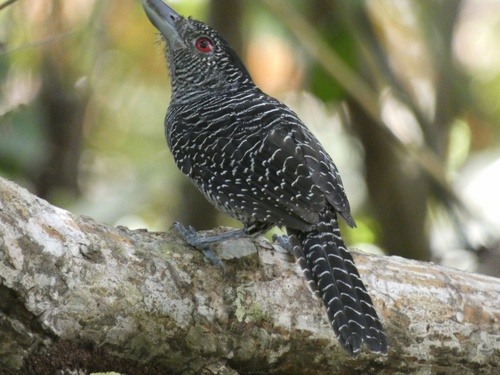 Fasciated Antshrike
In breve
Il segno distintivo più affidabile è la dimensione e la struttura complessiva: il Fasciated Antshrike è molto più grande e robusto dell'Ash-winged Antwren, con un becco pesante e ricurvo e un piumaggio a barre notevolmente marcato in tutte le età. L'Ash-winged Antwren è piccolo, snodato e più delicato, con un sottile dimorfismo sessuale e barre alari distinte. Gli Ash-winged Antwrens immaturi mostrano bordi olivastro o verdognoli sulle penne di volo, mentre i Fasciated Antshrike immaturi mostrano già alcune barre. Se vedi un piccolo uccello attivo in alto nella chioma con due barre alari ordinate, pensa all'Ash-winged Antwren; un grande uccello a barre audaci con un becco spesso è sempre un Fasciated Antshrike.
Consigli di identificazione
- La dimensione è il primo controllo: Se l'uccello è piccolo, delicato e simile a un warbler, considera l'Ash-winged Antwren. Se è grande, robusto e con un becco pesante, è un Fasciated Antshrike.
- Forma del becco: L'Ash-winged Antwren ha un becco fine, corto e dritto. Il Fasciated Antshrike ha un becco massiccio e ricurvo, simile a quello di un shrike—questo è ovvio anche a distanza.
- Barre alari vs barre: L'Ash-winged Antwren (tutte le età) mostra due barre alari ordinate e chiare su copritrici nerastre. Il Fasciated Antshrike non mostra mai barre alari; invece, cerca barre regolari e strette su tutto il corpo e le ali.
- Segni immaturi/giovanili: Gli Ash-winged Antwrens immaturi hanno bordi olivastro o verdognoli sulle penne di volo e a volte una sfumatura giallo-verde sulle barre alari e sul ventre (soprattutto in E. s. meridionalis). Non sono presenti barre. I Fasciated Antshrike immaturi mostrano già alcune barre, con i maschi subadulti che hanno barre bianche più ampie rispetto agli adulti.
- Colore della corona: Il maschio dell'Ash-winged Antwren ha una corona/nuca nera; la femmina ha un colore bruno-giallastro. I maschi del Fasciated Antshrike hanno una corona/forehead nera con barre bianche sottili, le femmine una corona rugginosa.
- Schiena e groppa: I maschi dell'Ash-winged Antwren hanno una schiena e una groppa rugginose-castagnee, mai viste nel Fasciated Antshrike, che è a barre in tutto.
- Supercilium: L'Ash-winged Antwren ha un supercilium chiaro (biancastro o giallastro) in entrambi i sessi; il Fasciated Antshrike non ha un supercilium forte, poiché il motivo facciale è dominato dalle barre.
- Parte inferiore: L'Ash-winged Antwren è di un grigio chiaro uniforme (maschio) o giallastro (femmina) sotto, senza barre. Il Fasciated Antshrike è a barre sotto in entrambi i sessi.
- Coda: L'Ash-winged Antwren ha una coda grigio-marrone uniforme; il Fasciated Antshrike ha una coda a barre (marrone scuro e chiaro o cannella nelle femmine).
- Colore dell'iride: Il Fasciated Antshrike ha un'iride rossa in entrambi i sessi; il colore dell'iride non è menzionato per l'Ash-winged Antwren, quindi non usarlo come segno principale a meno che non sia visto bene.
- Altezza di foraggiamento: L'Ash-winged Antwren è quasi sempre in alto nella subchioma/chioma; il Fasciated Antshrike è spesso più in basso (2–10 m) e può essere visto all'altezza degli occhi.
- Comportamento: L'Ash-winged Antwren è veloce, agile, e spesso in gruppi misti; il Fasciated Antshrike è più lento, più metodico, e spesso solo o in coppie.
- Sovrapposizione dell'areale: Entrambi possono verificarsi nelle foreste amazzoniche, ma l'Ash-winged Antwren è molto più ristretto a foreste terra firme intatte ed è raro in Ecuador e Colombia, mentre il Fasciated Antshrike è diffuso e comune in habitat adatti.
- Dimorfismo sessuale: Entrambe le specie mostrano dimorfismo sessuale, ma nell'antshrike, entrambi i sessi sono a barre (con differenze di colore), mentre nell'antwren, maschi e femmine differiscono principalmente nel colore della corona e della parte inferiore, non nelle barre.
- Non fidarti mai solo delle barre: Se vedi barre su qualsiasi parte inferiore, schiena o coda, è sempre un Fasciated Antshrike—l'Ash-winged Antwren non è mai a barre in nessuna età.
Taglia
Il Fasciated Antshrike è drammaticamente più grande (17–18 cm, ~35–40 g) dell'Ash-winged Antwren (9.5–11 cm, 6.5–7.5 g). L'antshrike è quasi due volte più lungo e circa cinque volte più pesante, con una costruzione molto più robusta e potente. L'antwren è tra i più piccoli antbirds, apparendo delicato e leggero, mentre l'antshrike è massiccio e imponente. Anche a distanza, la dimensione e il becco spesso dell'antshrike si fanno notare.
Piumaggio
- Uccelli immaturi/giovanili: Gli immaturi dell'Ash-winged Antwren (entrambi i sessi) hanno bordi olivastro-verde o verdognoli sulle penne di volo, e in alcune sottospecie, una sfumatura giallo-verde sulle barre alari e sul ventre. Questo non è mai visto nel Fasciated Antshrike, i cui immaturi mostrano già un certo grado di barre, con i maschi subadulti che hanno barre bianche più ampie rispetto agli adulti.
- Maschi adulti: I maschi dell'Ash-winged Antwren hanno una corona/nuca nera, schiena rugginosa-castagnea, faccia grigia con un supercilium bianco e due barre alari bianche; le parti inferiori sono grigie chiare. I maschi del Fasciated Antshrike sono audacemente e strettamente a barre bianche e nere ovunque, con una fronte/corona nera e un becco pesante e ricurvo. Nessuna tonalità rugginosa o castanea.
- Femmine adulte: Le femmine dell'Ash-winged Antwren sono bruno-giallastre sopra con un supercilium e parti inferiori giallastre, e barre alari sottili. Le femmine del Fasciated Antshrike hanno una corona rugginosa e sono a barre marrone scuro e giallo-bruno chiaro in tutto, compresa la coda. Entrambi i sessi dell'antshrike hanno un'iride rossa, che non è notata per l'antwren.
- Motivo alare in volo: L'Ash-winged Antwren mostra sempre due barre alari bianche ordinate (adulti e immaturi), mentre il Fasciated Antshrike non ha mai barre alari—il suo motivo è a barre su tutto il corpo.
Comportamento
L'Ash-winged Antwren è altamente attivo e acrobatico, foraggiando rapidamente nella subchioma e nella chioma, spesso come parte di stormi misti di specie. È raramente visto da solo e quasi mai in basso nella foresta. Il Fasciated Antshrike è più deliberato, spesso foraggiando più in basso (2–10 m) e a volte da solo o in coppie, con un movimento più pesante e metodico. La grande dimensione dell'antshrike e i movimenti più lenti contrastano con l'antwren piccolo e irrequieto.
Habitat
L'Ash-winged Antwren è uno specialista della chioma delle foreste evergreen terra firme di pianura, quasi sempre nella subchioma o nella chioma, e raramente sotto i 600 m tranne che nelle regioni tepui. Il Fasciated Antshrike è molto più diffuso, trovato dall'America Centrale nella maggior parte del Sud America (escludendo il cono meridionale), e occupa una gamma più ampia di tipi e strati di foresta, spesso più in basso nella foresta e non limitato alla chioma.
Ash-winged Antwren · Fasciated Antshrike · I miei uccelli difficili