

Labbo vs Gazza marina
Stercorarius parasiticus contro Alca torda
Fai un quiz con Labbo e Gazza marina
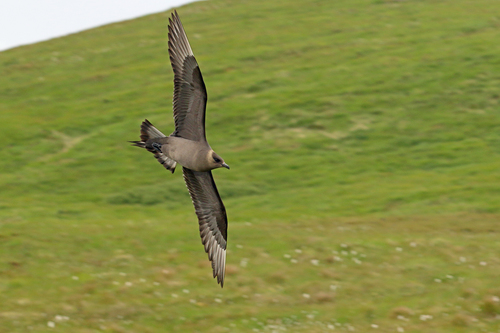 Labbo
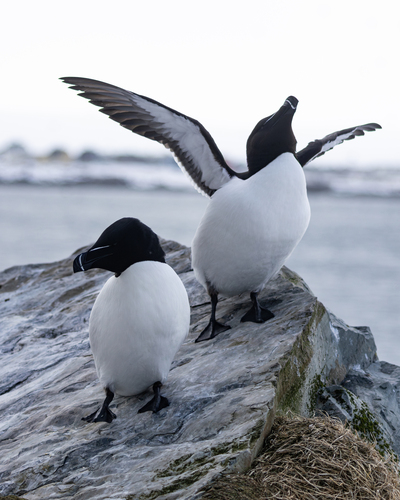 Gazza marina
In breve
La separazione sul campo più affidabile tra Labbo e Gazza marina è la loro struttura generale e lo stile di volo: Labbo è un uccello marino predatore snello con ali appuntite, una coda lunga (spesso con streamers centrali negli adulti) e un volo agile e distintamente simile a quello di un falco, mentre Gazza marina è un auk massiccio e dal collo corto con un becco profondo e ottuso, una coda corta e battiti d'ali rapidi e diretti. In tutte le livree, Labbo mostra un lampo bianco sulle ali (alla base delle primarie) visibile in volo, mentre le ali della Gazza marina sono uniformemente scure. I Labbi giovani e immaturi possono essere confusi con altri jaeger, ma non con la Gazza marina, che appare sempre più simile a un pulcinella di mare o a un murre nella forma. Le differenze di livrea sono sorprendenti: la Gazza marina è nettamente bianca e nera con un becco pesante e verticalmente rigato, mentre il Labbo varia da forme chiare a tutte scure, ma non ha mai il pattern netto o il becco della Gazza marina. Se visto posato, il becco e la forma del corpo sono inconfondibili. Entrambe le specie possono essere viste al largo, ma la Gazza marina non è quasi mai vista inseguire altri uccelli o compiere pirateria aerea, a differenza del Labbo.
Consigli di identificazione
- Lampo bianco sulle ali (Labbo): In tutte le livree e età, il Labbo mostra una macchia bianca audace alla base delle primarie in volo, assente nella Gazza marina. Cerca questo specialmente in uccelli distanti o retroilluminati.
- Forma del becco: La Gazza marina ha un becco nero profondo, compresso lateralmente e ottuso con scanalature verticali e una linea bianca (in livrea di riproduzione), unico e diagnostico a qualsiasi distanza. Il becco del Labbo è snello, ricurvo e non mostra mai scanalature o una linea bianca.
- Struttura del corpo: Il Labbo è snello, con ali lunghe e agile, con una coda appuntita (streamers centrali negli adulti). La Gazza marina è massiccia, dal collo corto e dal corpo pesante, con una coda corta a forma di cuneo e una postura orizzontale.
- Stile di volo: Il Labbo è galleggiante, agile e simile a un falco, spesso si contorce e insegue altri uccelli. La Gazza marina vola bassa e diretta, con battiti d'ali rapidi e fruscianti, senza mai inseguire altri uccelli.
- Forma della coda: I Labbi adulti hanno piume centrali della coda appuntite (streamers) in livrea di riproduzione, estendendo la coda oltre le punte delle ali. La coda della Gazza marina è corta e a forma di cuneo, con piume centrali solo leggermente più lunghe, mai simili a streamers.
- Pattern di livrea: La Gazza marina è nettamente nera sopra e bianca sotto in livrea di riproduzione, con una testa nera e una sottile linea bianca dall'occhio al becco. Il Labbo (forma chiara) è marrone sopra, bianco sotto, con un collo e una testa bianco-giallastri e un cappello nero; la forma scura è completamente marrone scuro. Nessuna forma di Labbo mostra il netto contrasto bianco e nero o le linee facciali della Gazza marina.
- Pattern delle ali: Le ali della Gazza marina sono uniformemente scure sopra e sotto, senza lampo bianco. Il Labbo mostra sempre il lampo bianco sulle ali in volo.
- Postura posata: La Gazza marina si siede orizzontalmente, spesso su rocce o scogliere, apparendo massiccia e eretta. Il Labbo sta più eretto, con un aspetto snello e predatorio.
- Comportamento alimentare: Se visto inseguire altri uccelli marini in volo, è un Labbo. La Gazza marina non si impegna mai in pirateria aerea.
- Contesto dell'habitat: La Gazza marina si trova su scogliere rocciose e in mare, spesso in gruppi, raramente lontano dalla terra. Il Labbo è più probabile che venga visto al largo, specialmente dove sono presenti gabbiani e sterne, e nidifica su tundra o isole.
- Cambiamenti stagionali: Il viso e il pattern del becco della Gazza marina diventano meno distinti nella stagione non riproduttiva (gola e viso dietro l'occhio bianchi, scanalature del becco meno marcate), ma il pattern complessivo bianco e nero rimane. La livrea del Labbo varia per forma ma non corrisponde mai al netto contrasto della Gazza marina.
- Confusione giovanile: Il Labbo giovane può essere confuso con altri jaeger ma non con la Gazza marina, che ha sempre un becco spesso e un pattern bianco e nero.
- Impressione di dimensione: Il Labbo ha ali più lunghe e più snello, la Gazza marina è più massiccia e dal corpo più pesante, nonostante la lunghezza simile.
- Piedi in volo: I piedi della Gazza marina non si proiettano oltre la coda in volo; le gambe del Labbo sono più corte e meno visibili.
- Vocalizzazioni: Il Labbo emette richiami nasali e lamentosi nei luoghi di riproduzione; la Gazza marina è generalmente silenziosa in mare. La voce non è di solito utile per la separazione.
Taglia
Il Labbo è leggermente più lungo (41–48 cm) e ha un'apertura alare molto maggiore (107–125 cm) rispetto alla Gazza marina (lunghezza del corpo 37–39 cm, con lunghezza dell'ala 201–216 mm), ma la Gazza marina è più pesante in media (505–890 g contro 300–650 g per il Labbo) e appare molto più robusta. Sul campo, il Labbo appare snello e atletico, con ali lunghe e appuntite e una coda relativamente lunga (specialmente negli adulti con streamers), mentre la Gazza marina è compatta, con collo spesso e coda corta, con un profilo profondo e simile a un pinguino. Il becco della Gazza marina è molto più profondo e ottuso rispetto al becco snello e ricurvo del Labbo. In volo, le ali della Gazza marina sono corte e a forma di pala, dando un'impressione rapida e frusciante, mentre le ali del Labbo sono lunghe e appuntite, adatte per inseguimenti aerei agili.
Piumaggio
I Labbi giovani e immaturi sono variabili, passando da forme chiare a scure, ma mostrano tutti un distintivo lampo bianco alla base delle primarie in volo, indipendentemente dall'età o dalla forma. Questo è assente nella Gazza marina, che ha ali uniformemente scure sopra e sotto. I Labbi adulti (forma chiara) mostrano un dorso marrone, parti inferiori bianche, collo e testa bianco-giallastri con un cappello nero, e piume centrali della coda appuntite; le forme scure sono completamente marroni scure ma mostrano ancora il lampo bianco. Gli adulti di Gazza marina in livrea di riproduzione sono nettamente neri sopra e bianchi sotto, con una testa nera, collo e dorso, una pancia bianca e una sottile linea bianca dall'occhio al becco. In livrea non riproduttiva, la gola e il viso della Gazza marina dietro l'occhio diventano bianchi, ma il pattern complessivo rimane nettamente bianco e nero. Il becco della Gazza marina è nero con scanalature verticali e una linea bianca, unico tra gli uccelli marini dell'Atlantico settentrionale. Il Labbo non mostra mai questo pattern del becco o il netto contrasto bianco e nero della Gazza marina. In volo, la Gazza marina mostra una coda corta e a forma di cuneo e nessun lampo sulle ali, mentre la coda del Labbo è più lunga e appuntita (specialmente negli adulti), e il lampo bianco è sempre presente.
Comportamento
Il Labbo è famoso per il suo comportamento kleptoparassitario, spesso visto inseguire gabbiani e sterne in un volo agile e contorto per rubare cibo. Il suo volo è simile a quello di un falco, con battiti d'ali potenti e galleggianti e cambiamenti improvvisi di direzione. Quando è posato, sta eretto con un aspetto snello e predatorio. La Gazza marina, al contrario, è raramente vista in inseguimenti aerei; è uno specialista del tuffo, nuotando sott'acqua con le ali per catturare pesci. A terra, la Gazza marina sta orizzontalmente, spesso in colonie dense su scogliere, ed è goffa a terra ma agile sott'acqua. In volo, la Gazza marina è diretta e rapida, con battiti d'ali brevi e fruscianti e una traiettoria bassa e dritta, impegnandosi raramente in inseguimenti aerei.
Habitat
Entrambe le specie sono marine, ma i loro habitat preferiti differiscono. Il Labbo nidifica su tundra aperta, monti e isole, ed è più spesso visto al largo o lungo le coste durante la migrazione, specialmente dove sono presenti gabbiani e sterne. È il jaeger più probabile da vedere dalla riva. La Gazza marina è strettamente marina tranne quando nidifica, nidiando colonialmente in crepe e su scogliere lungo coste rocciose. In mare, la Gazza marina è solitamente vista in piccoli gruppi o da sola, spesso seduta bassa sull'acqua, ed è meno probabile che venga vista lontano dalla terra tranne durante la migrazione. Il Labbo è più spesso osservato in volo, specialmente quando infastidisce altri uccelli marini.
Voce
Il Labbo è generalmente silenzioso in mare, ma nei luoghi di riproduzione emette richiami nasali e lamentosi, e un richiamo di allerta più breve. Le vocalizzazioni della Gazza marina non sono descritte nelle note fornite, ma sono generalmente silenziose in mare e più vocali nelle colonie. La voce non è un separatore affidabile in mare.