

American Robin vs Tordo oscuro
Turdus migratorius contro Turdus obscurus
Fai un quiz con American Robin e Tordo oscuro
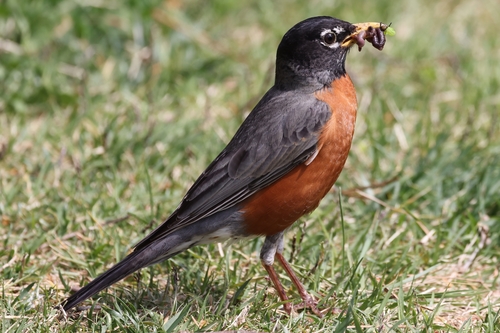 American Robin
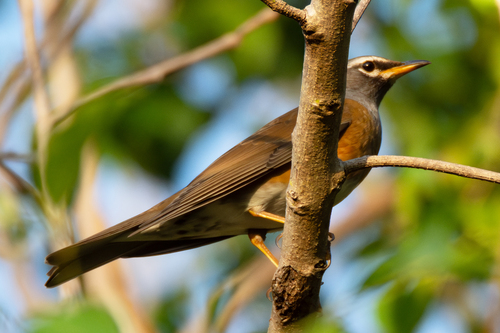 Tordo oscuro
In breve
Il segno distintivo più affidabile per separare l'American Robin dal Tordo oscuro è il motivo della testa: il Tordo oscuro mostra sempre una linea nera degli occhi netta con bordi bianchi audaci sopra e sotto, mentre l'American Robin ha una testa scura (nerastra o grigia) con archi oculari bianchi spezzati ma senza una forte linea degli occhi. Entrambe le specie hanno arancione sul petto, ma quello del robin è più profondo e più esteso, mentre l'arancione del Tordo oscuro è più confinato al petto e ai fianchi, con un ventre bianco più pulito. I giovani robins mostrano macchie distinte sul petto e copritrici delle ali pallide, che il Tordo oscuro non ha. I robins sono anche visibilmente più robusti e dal corpo più lungo, con un becco giallo più tozzo. In volo o a riposo, cerca le copritrici bianche della coda del robin e l'assenza di una striscia facciale, rispetto al motivo facciale nitido del Tordo oscuro e alla sua struttura più piccola e snella.
Consigli di identificazione
- Il motivo della testa è fondamentale: il Tordo oscuro mostra sempre una linea nera degli occhi netta con bordi bianchi audaci sopra e sotto (supercilium e linea suboculare), creando un forte contrasto facciale. L'American Robin non ha alcuna linea degli occhi o un forte supercilium, mostrando invece archi oculari bianchi spezzati e una testa scura semplice.
- Colore del petto e del ventre: il petto rosso-arancione del robin è più profondo, ricco e più esteso, spesso da amaranto a arancione pesca, e contrasta nettamente con il ventre bianco e le copritrici della coda. Il Tordo oscuro ha un petto arancione e fianchi più confinati, con un ventre bianco pulito e nitido.
- Segni giovanili: i giovani robins sono pesantemente macchiati sul petto e hanno copritrici delle ali pallide e biancastre—queste caratteristiche non sono mai presenti nel Tordo oscuro di alcuna età. I robins di primo anno possono mantenere alcune piume giovanili, apparendo macchiettati o opachi.
- Struttura e colore del becco: il becco del robin è più tozzo e per lo più giallo con una punta scura (soprattutto in inverno), mentre il Tordo oscuro ha un becco più snello e meno prominente.
- Schiena e parti superiori: il robin ha una schiena marrone, mentre il Tordo oscuro è grigio sopra (più marrone negli immaturi), accentuando ulteriormente il motivo facciale in quest'ultimo.
- Motivo della gola: il robin mostra una gola bianca con strisce nere; il Tordo oscuro ha una gola semplice, con le strisce facciali che dominano il motivo.
- Differenze sessuali: le femmine di robin sono più opache, con parti superiori più marroni e parti inferiori meno brillanti, ma mancano comunque di un forte motivo facciale. I sessi del Tordo oscuro sono simili, anche se gli immaturi sono più marroni sopra.
- Dimensioni e struttura: i robins sono più robusti, dal corpo più lungo e più pesanti (77 g vs 63 g), con un torace più ampio e una postura più eretta. Il Tordo oscuro è più snello e compatto.
- Volo e coda: in volo, il robin mostra copritrici bianche della coda e un'ala superiore uniforme; il motivo di volo del Tordo oscuro non è descritto come distintivo, ma la sua dimensione più piccola e l'assenza di bianco nella coda sono indizi.
- Contesto dell'habitat: i robins sono comuni in habitat aperti, urbani e suburbani in tutta l'America del Nord, spesso visti sui prati. Il Tordo oscuro preferisce foreste dense e taiga in Asia ed è raramente trovato in aree aperte o urbane.
- Comportamento: i robins sono più audaci, spesso foraggiando in spazi aperti e nidificando vicino agli esseri umani. Il Tordo oscuro è più segreto, rimanendo in coperture dense.
- Trappole del piumaggio: le femmine opache o i robins di primo anno possono apparire meno colorati ma non mostrano mai il motivo facciale nitido del Tordo oscuro. Il Tordo oscuro immaturo può essere più marrone ma mantenere la linea degli occhi e i bordi bianchi.
- Variazione stagionale: il becco del robin scurisce alla punta in inverno, ma la struttura e il piumaggio complessivi rimangono simili durante tutto l'anno. Il Tordo oscuro non ha forti cambiamenti di piumaggio stagionale in queste note.
- Quando i segni falliscono: in scarsa illuminazione o in viste distanti, fai affidamento sulla presenza o assenza delle audaci strisce facciali per il Tordo oscuro, e sulla maggiore dimensione e testa semplice del robin. Se il petto è pesantemente macchiato, è un robin giovane.
- Voce: se udito, il Tordo oscuro ha un semplice canto fischiante (non così ricco come il canto del robin), ma questo è raramente diagnostico senza esperienza.
Taglia
L'American Robin è il più grande e pesante dei due, con una media di circa 77 g rispetto ai 63 g del Tordo oscuro [wikidata]. I robins appaiono più robusti, con un corpo più lungo, un torace più ampio e un becco giallo più tozzo e prominente. Il Tordo oscuro è più snello e più delicato nel complesso, con un becco proporzionalmente più piccolo e un aspetto più corto e compatto. In confronto diretto, i robins sembrano visibilmente più robusti sia in posizione perpendicolare che in volo.
Piumaggio
I giovani American Robins sono distintivi: mostrano un petto pallido e macchiato e copritrici delle ali biancastre, che non sono mai presenti nel Tordo oscuro. I robins di primo anno possono mantenere alcune copritrici giovanili, facendoli apparire macchiettati o più opachi rispetto agli adulti, ma mancano comunque di qualsiasi forte marcatura facciale. I robins adulti hanno una testa scura uniforme (nerastra nei maschi, più marrone nelle femmine), archi oculari bianchi spezzati, una gola bianca con strisce nere, un petto rosso-arancione ricco, schiena marrone e ventre e copritrici della coda bianchi. Al contrario, il Tordo oscuro di tutte le età mostra una testa e una schiena grigia, una linea nera degli occhi netta con un audace supercilium e linea suboculare bianchi, petto e fianchi arancioni e un ventre bianco pulito. I Tordi oscuri immaturi sono più marroni sopra ma mostrano comunque il motivo facciale. Il becco del robin è principalmente giallo con una punta scura (soprattutto in inverno), mentre il Tordo oscuro ha un becco più snello e meno appariscente. In volo, il robin mostra copritrici bianche della coda e un'ala superiore più uniforme; non è stato notato alcun motivo distintivo dell'ala superiore per nessuna delle due specie in queste fonti.
Comportamento
Gli American Robins sono spesso visti foraggiare sui prati, saltellando eretti, e sono tolleranti alla presenza umana, nidificando frequentemente vicino alle case. Possono essere visti singolarmente o in gruppi sciolti, soprattutto al di fuori della stagione riproduttiva. Il Tordo oscuro tende a essere più segreto, frequentando foreste conifere dense o taiga, ed è meno probabile che venga visto in habitat aperti o urbani. I loro movimenti sono più furtivi e sono meno probabili da vedere su terreno aperto.
Habitat
L'American Robin è diffuso in tutta l'America del Nord, spesso trovato in boschi aperti, giardini, parchi e aree suburbane, ed è a suo agio attorno all'abitazione umana [wikipedia]. Il Tordo oscuro nidifica in foreste conifere dense e taiga dalla Siberia al Giappone, e trascorre l'inverno in aree forestali dell'Asia orientale e sudorientale. È raramente trovato in habitat aperti o urbani, quindi il contesto può aiutare: un tordo in un parco cittadino o su un prato in Nord America è quasi certamente un robin, mentre un uccello in una foresta asiatica densa è più probabile che sia un Tordo oscuro.
Voce
Il Tordo oscuro ha un semplice canto fischiante, che ricorda il Tordela [wikipedia]. L'American Robin canta una ricca serie di frasi melodiche, ma questo non è descritto nelle note fornite. I richiami non sono dettagliati per nessuna delle due specie in queste fonti, quindi la vocalizzazione non è un segno distintivo primario qui.