

American Barn Owl vs Red Owl
Tyto furcata contro Tyto soumagnei
Fai un quiz con American Barn Owl e Red Owl
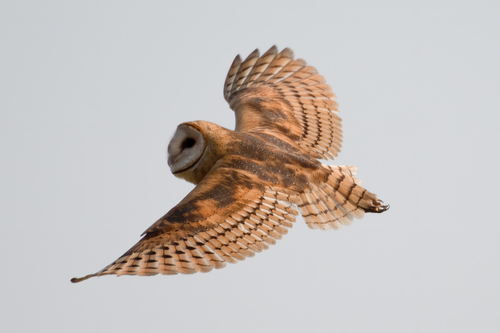 American Barn Owl
 Red Owl
In breve
Il segno di campo più affidabile per separare l'American Barn Owl dal Red Owl è il colore complessivo del piumaggio: l'American Barn Owl è chiaro, con parti inferiori bianche o color sabbia e un volto a forma di cuore bianco o chiaro, mentre il Red Owl è distintamente arancione-rossastro con piccole macchie nere e un disco facciale nero pece. Entrambi hanno la classica forma di gufo delle fattorie e un volto a forma di cuore, ma il Red Owl è più piccolo e più ricco di colore. In volo o posato, l'American Barn Owl appare più chiaro e con ali più lunghe, mentre l'aspetto compatto e riccamente colorato del Red Owl si distingue. I modelli di ali specifici per i giovani e gli immaturi non sono descritti per nessuna delle due specie, quindi concentrati sul colore e sulla struttura complessivi.
Consigli di identificazione
- Colore complessivo: l'American Barn Owl è chiaro (bianco a sabbia sotto, marrone chiaro a grigio sopra); il Red Owl è di un profondo arancione-rossastro con piccole macchie nere. Questo è il segno di campo più immediato.
- Disco facciale: l'American Barn Owl ha un volto a forma di cuore bianco brillante o chiaro; il volto del Red Owl è nero pece o scuro, fondendosi di più con il resto del piumaggio.
- Dimensione e forma: l'American Barn Owl è più grande e con ali più lunghe, particolarmente evidente in volo. Il Red Owl è più piccolo, più compatto e con ali più corte.
- Macchie sulle parti inferiori: i maschi dell'American Barn Owl sono di solito semplici sotto; le femmine possono essere più macchiate, ma mai così riccamente colorate come il Red Owl. Il Red Owl mostra sempre piccole macchie nere su uno sfondo rugginoso ricco.
- Becco e piedi: il becco dell'American Barn Owl varia da corno chiaro a sabbia scura; quello del Red Owl è grigio chiaro con un cere color carne. I piedi del Red Owl sono grigio fumo, mentre quelli dell'American Barn Owl sono rosa a grigio-rosato.
- Colore degli occhi: entrambi hanno occhi scuri, ma quelli del Red Owl sono descritti come neri pece, il che può apparire più sorprendente contro il suo volto rugginoso.
- Forma della coda: l'American Barn Owl ha una coda corta e squadrata, che aiuta a separarlo dai gufi tipici ma è simile al Red Owl; la coda non è un forte separatore tra questi due.
- Volo: il volo ondulato e galleggiante dell'American Barn Owl e le lunghe ali sono più pronunciati; la dimensione più piccola del Red Owl può far sembrare il suo volo più compatto e meno allungato.
- Zampe: entrambi hanno zampe piumate, ma quelle dell'American Barn Owl sono più chiare e più visibili in volo.
- Habitat e distribuzione: il Red Owl si trova solo nelle foreste del Madagascar; l'American Barn Owl è diffuso nelle Americhe. Se visto al di fuori del Madagascar, non è un Red Owl.
- Sesso e età: le femmine dell'American Barn Owl sono più grandi e più macchiate dei maschi, ma entrambi i sessi sono ancora molto più chiari del Red Owl. Non sono descritti segni specifici per l'età del Red Owl.
- Piumaggio giovanile: i pulcini dell'American Barn Owl sono bianchi e lanosi; non c'è una descrizione giovanile per il Red Owl, ma probabilmente simile nella struttura di base.
- Contesto alimentare: il Red Owl predilige principalmente i mammiferi malgasci nativi; l'American Barn Owl spesso mangia roditori introdotti. I resti delle prede possono essere un indizio di supporto nei dormitori.
- Vocalizzazioni: non descritte per nessuna delle due specie in queste note; non usarle come separatore.
- Trappole: in scarsa illuminazione, l'American Barn Owl può apparire color sabbia, ma mai veramente arancione-rossastro. Il colore ricco del Red Owl è unico tra i gufi delle fattorie.
Taglia
Il Red Owl è più piccolo e più leggero dell'American Barn Owl. La massa corporea del Red Owl è in media di circa 380 g [wikidata], con una lunghezza corporea misurata di 27–30 cm e una lunghezza dell'ala di circa 209 mm. L'American Barn Owl è generalmente più grande (le femmine di sottospecie grandi possono superare i 550 g, con i maschi circa il 10% più leggeri) [wikipedia], e appare più allungato sia nel corpo che nelle ali. Sul campo, l'American Barn Owl apparirà visibilmente più grande e con ali più lunghe, specialmente in volo.
Piumaggio
Non sono descritte differenze specifiche per età nei modelli di volo o nelle ali superiori per nessuna delle due specie, quindi fai affidamento sulla colorazione complessiva. L'American Barn Owl adulto è chiaro sopra (marrone chiaro a grigio, a volte marrone più ricco) con fine maculatura bianco e nera, e ha un volto a forma di cuore bianco o chiaro. Le parti inferiori sono bianche a ruggine, di solito con poche o nessuna macchia (maschi più chiari, femmine più macchiate). Il Red Owl, al contrario, è arancione-rossastro con piccole macchie nere, un occhio nero pece e un becco grigio chiaro. Il suo volto è meno bianco brillante, apparendo più scuro o nero pece, e l'impressione complessiva è molto più ricca e scura di qualsiasi American Barn Owl. Il piumaggio giovanile non è dettagliato per il Red Owl, ma i pulcini dell'American Barn Owl sono bianchi e lanosi con il disco facciale visibile precocemente. Entrambe le specie hanno zampe piumate, ma quelle dell'American Barn Owl sono più chiare. In tutte le età e stagioni, i toni rugginosi profondi del Red Owl e la sua dimensione più piccola sono distintivi.
Comportamento
Entrambe le specie condividono comportamenti simili della famiglia dei gufi delle fattorie: notturni, volo silenzioso e riposo in cavità o copertura densa. L'American Barn Owl è noto per il suo volo ondulato e le zampe piumate penzolanti, che possono essere un utile segno distintivo. Non è descritto alcun tratto comportamentale specifico per il Red Owl che lo separerebbe sul campo, anche se la sua dimensione più piccola può far sembrare il suo volo più compatto. Entrambi cacciano piccoli mammiferi, ma le prede del Red Owl sono principalmente specie malgasce native, mentre l'American Barn Owl spesso cattura roditori introdotti.
Habitat
L'habitat è un forte indizio contestuale. Il Red Owl è endemico del Madagascar, trovato in foreste sempreverdi umide e foreste decidue secche, sia primarie che disturbate, e talvolta vicino ai bordi delle foreste. È raro e locale. L'American Barn Owl è diffuso nelle Americhe, spesso in campi aperti, terreni agricoli, praterie e talvolta vicino a insediamenti umani. Se non ti trovi in Madagascar, stai quasi certamente vedendo un'American Barn Owl. Anche all'interno del Madagascar, non ci si aspetta di vedere un'American Barn Owl (a meno che non sia stata introdotta), quindi la posizione è altamente diagnostica.