

Amazonian Antshrike vs White-bellied Antpitta
Thamnophilus amazonicus contro Grallaria hypoleuca
Fai un quiz con Amazonian Antshrike e White-bellied Antpitta
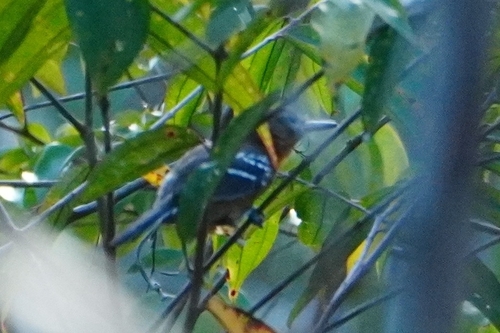 Amazonian Antshrike
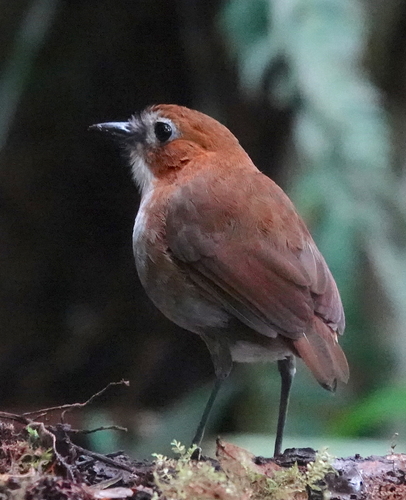 White-bellied Antpitta
In breve
Il segno distintivo più affidabile che separa l'Amazonian Antshrike dalla White-bellied Antpitta è la forma e la postura complessive: gli antshrike sono snelli, con code lunghe e spesso si posano in grovigli, mentre le antpitta sono tozze, con code corte e quasi sempre si trovano a terra o nelle vicinanze. Gli esemplari maschi adulti di Amazonian Antshrike mostrano un forte dimorfismo sessuale con piumaggio nero e grigio, mentre tutte le White-bellied Antpitta (entrambi i sessi) sono di un caldo marrone sopra con un ventre bianco pulito e un petto grigio. In volo o posati, le ali nere macchiate di bianco dell'antshrike e la coda più lunga contrastano nettamente con le ali marroni rufescenti e la coda molto corta dell'antpitta. Se vedi un uccello saltellare a terra con una postura rotonda e eretta, è l'antpitta; se sta cercando cibo in grovigli a livello medio con un becco ricurvo e ali macchiate, è l'antshrike.
Consigli di identificazione
- Overall shape and posture: L'antshrike è snello, con coda lunga e si posano orizzontalmente in grovigli; l'antpitta è tozza, con coda corta e sta eretta a terra. Questa è la separazione sul campo più rapida a qualsiasi distanza.
- Tail length: L'antshrike ha una coda visibilmente più lunga, spesso flickata o aperta; la coda dell'antpitta è estremamente corta, appena estesa oltre il corpo.
- Bill shape: Il becco dell'antshrike è lungo, robusto e ricurvo all'estremità (come un shrike); il becco dell'antpitta è più corto, più conico e non ricurvo.
- Wing pattern: L'antshrike mostra audaci macchie bianche e bordi su ali nerastre (entrambi i sessi, ma specialmente i maschi); le ali dell'antpitta sono di un marrone rossiccio uniforme, mai macchiate o bordate di bianco.
- Sexual dimorphism: Solo l'antshrike mostra forti differenze maschio/femmina (maschi neri/grigi, femmine rufescenti/oliva); i sessi dell'antpitta sono identici.
- Underparts: I maschi di antshrike sono grigi sotto, le femmine di un brillante rosso-marrone giallastro; l'antpitta è sempre con il ventre bianco e un petto grigio e lati marroni rufescenti.
- Head pattern: I maschi di antshrike hanno una fronte/corona nera, le femmine una corona rufescenti brillante; l'antpitta ha una corona rufescenti o marrone scuro con alcune striature nere e lore bianche o grigie.
- Back color: I maschi di antshrike sono neri o grigi, le femmine di un profondo oliva; l'antpitta è sempre rufescenti o marrone scuro sopra.
- Tail pattern: La coda dell'antshrike è nera con punte/macchie bianche (entrambi i sessi, anche se meno in alcune sottospecie); la coda dell'antpitta è di un marrone rossiccio uniforme, a volte fulva sotto, mai con bianco.
- Leg color: Il colore delle gambe dell'antshrike non è descritto; l'antpitta ha gambe e piedi blu-grigi (può aiutare se visti bene).
- Foraging height: L'antshrike si trova di solito in grovigli a livello medio (1–17 m sopra), raramente a terra; l'antpitta è quasi sempre a terra.
- Movement: L'antshrike salta e si lancia attraverso le viti, a volte lanciandosi verso l'alto; l'antpitta corre e salta a terra, spesso fermandosi eretta.
- Range: L'antshrike è diffuso nelle pianure amazzoniche; l'antpitta è limitata alle pendici andine/foreste nuvolose di Colombia, Ecuador, Perù.
- Size impression: L'antpitta è molto più robusta e pesante per la sua lunghezza; l'antshrike è più leggera e agile.
- Subspecies variation: Le sottospecie di antshrike variano in oscurità e colore delle parti inferiori, ma tutte condividono ali/coda macchiate e dimorfismo sessuale; le sottospecie di antpitta differiscono solo nella profondità del marrone sulle parti superiori e sui fianchi, mai nel motivo.
Taglia
La White-bellied Antpitta è sostanzialmente più grande e robusta: 16–18 cm di lunghezza e peso di 62–69 g ([wikipedia]), rispetto ai 14–15 cm e 17–21 g dell'Amazonian Antshrike ([wikipedia]). L'antpitta non è solo più lunga ma anche molto più pesante e rotonda, con un corpo visibilmente tozzo e una coda molto corta. L'antshrike è più snello, più leggero e ha una coda e un becco proporzionalmente più lunghi.
Piumaggio
- Juvenile/immature wing pattern: Non sono descritti segni specifici per l'età sulle ali superiori o sul volo per nessuna delle due specie; tutti i contrasti si basano sul piumaggio adulto e di base ([wikipedia]).
- Adult Amazonian Antshrike: I maschi sono neri e grigi sopra con una coda nera punteggiata e macchiata di bianco, e ali nere con macchie/bordi bianchi. Le parti inferiori sono grigie. Le femmine hanno una corona rufescenti, con parti inferiori di un brillante rosso-marrone giallastro e un dorso di un profondo oliva, ali e coda più marroni con bordi di un pallido oliva. Le sottospecie variano in oscurità e colore delle parti inferiori, ma tutte hanno qualche combinazione di ali/coda macchiate e dimorfismo sessuale.
- Adult White-bellied Antpitta: Entrambi i sessi sono simili: rufescenti o marrone scuro sopra, lore bianche o grigie su un volto rufescenti, ali e coda marroni rossicci, gola e ventre bianchi, petto grigio con lati marroni rufescenti, fianchi oliva o fulvi, copritrici della coda fulve. Nessuna macchia sulle ali o dimorfismo sessuale. La sottospecie castanea è di un marrone più profondo sopra e sui fianchi.
- Key contrast: L'antshrike mostra sempre del bianco nelle ali/nella coda e dimorfismo sessuale; l'antpitta è di un marrone uniforme sopra, bianca sotto e monomorfica.
Comportamento
L'Amazonian Antshrike cerca cibo singolarmente o in coppie, di solito 1–17 m sopra il suolo, saltellando attraverso grovigli di viti e raccogliendo insetti dalla vegetazione. Spesso si unisce a stormi di specie miste e a volte segue le formiche soldato, ma raramente si trova a terra. La White-bellied Antpitta è quasi interamente terrestre, correndo e saltando sul pavimento della foresta in vegetazione densa, a volte seguendo sciami di formiche o anche persone per catturare prede disturbate. Il suo movimento è più simile a quello di un piccolo mammifero: eretto, rimbalzante e raramente posato sopra il suolo. L'antshrike è più attivo nel piano medio e nella parte bassa della chioma, mentre l'antpitta è rigorosamente a livello del suolo.
Habitat
L'Amazonian Antshrike è diffuso nelle foreste amazzoniche di pianura in gran parte del Sud America (eccetto Argentina, Cile, Paraguay, Uruguay), preferendo cespugli densi, grovigli di viti e bambù in foreste umide ([wikipedia]). La White-bellied Antpitta è limitata alle foreste montane di Colombia, Ecuador e Perù, di solito a quote più elevate, in una densa vegetazione. Se ti trovi nelle pianure amazzoniche, aspettati l'antshrike; nelle pendici andine o nella foresta nuvolosa, aspettati l'antpitta.
Amazonian Antshrike · White-bellied Antpitta · I miei uccelli difficili