

Motmot

Tourco à gorge blanche vs Mérulaxe à flancs ocre

Scelorchilus albicollis contre Eugralla paradoxa

Faire un quiz avec Tourco à gorge blanche et Mérulaxe à flancs ocre
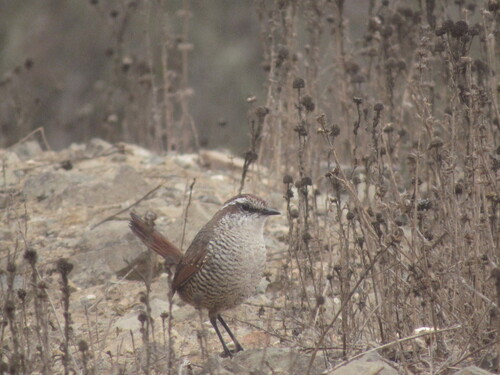
Tourco à gorge blanche (Scelorchilus albicollis) Tourco à gorge blanche
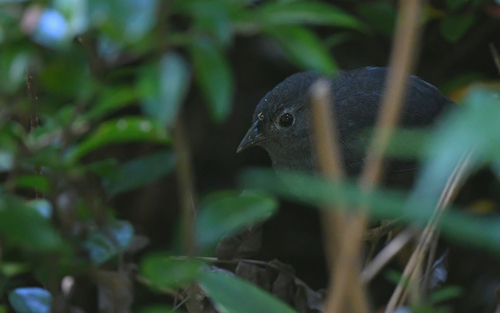
Mérulaxe à flancs ocre (Eugralla paradoxa) Mérulaxe à flancs ocre

Médias

Chargement…

En bref

The most reliable field mark between White-throated Tapaculo and Ochre-flanked Tapaculo is the bold white supercilium and white throat of the former, versus the ochre (tawny) flanks and clay-brown vent of the latter. Juvenile plumage is a potential pitfall, as both species are barred throughout at this age, but the color and distribution of barring and overall tones differ. White-throated Tapaculo is notably larger and bulkier, with a cinnamon forehead and more brownish upperparts, while Ochre-flanked Tapaculo is smaller, darker gray above, and has a unique 'Roman nose' profile. Careful attention to underpart patterning, face, and size will separate them in most field situations.

Conseils d’identification

  1. Juvenile barring: Both species' juveniles are barred all over, but Ochre-flanked Tapaculo juveniles have cinnamon to rufous barring over a dusky gray base, while White-throated Tapaculo juveniles are paler with more cinnamon tones and less overall contrast.
  2. Supercilium and throat: White-throated Tapaculo of all ages (except possibly very young juveniles) shows a bold white supercilium and a white throat—these are absent in Ochre-flanked Tapaculo.
  3. Flank and vent color: Ochre-flanked Tapaculo adults have distinctive tawny-brown (ochre) flanks and a clay-brown vent, setting them apart from the barred, paler underparts of White-throated Tapaculo.
  4. Forehead color: White-throated Tapaculo has a cinnamon forehead, which is not seen in Ochre-flanked.
  5. Upperparts tone: White-throated Tapaculo is gray-brown above (with S. a. atacamae paler and grayer), while Ochre-flanked Tapaculo is dark gray above.
  6. Underpart barring: White-throated Tapaculo adults have dark brown barring across most of the underparts, while Ochre-flanked Tapaculo adults have plain gray underparts with no barring, except in juveniles.
  7. Face shape: Ochre-flanked Tapaculo has a 'Roman nose'—a sloping, prominent facial profile—unusual for tapaculos and not present in White-throated.
  8. Size and structure: White-throated Tapaculo is larger (19 cm vs. 14.5 cm) and bulkier, with a longer tail; Ochre-flanked is compact and short-tailed.
  9. Rump pattern: White-throated Tapaculo shows lightly barred rump; Ochre-flanked Tapaculo's rump is not specifically described as barred.
  10. Regional context: If in western Argentina, only Ochre-flanked Tapaculo is possible. In central Chile, both may occur, so plumage and structure are critical.
  11. Subspecies confusion: S. a. atacamae (White-throated) is paler and grayer, but still has the white supercilium and throat, which Ochre-flanked never shows.
  12. Perched vs. moving views: The white throat and supercilium of White-throated Tapaculo are often visible even in brief views; the ochre flanks of Ochre-flanked may be best seen when the bird is moving or flicking its wings.
  13. Barred juveniles in flight: If you see a small, barred tapaculo in Chilean forests, check for the base color (dusky gray for Ochre-flanked, paler cinnamon for White-throated) and look for any hint of ochre on the flanks or white on the face.
  14. Sex differences: No sex-specific plumage differences are described for either species, so all field marks apply to both sexes.
  15. Voice: Not described in the notes, so do not rely on vocalizations for separation in this context.

Taille

White-throated Tapaculo is significantly larger, measuring about 19 cm in length, while Ochre-flanked Tapaculo is only 14.5 cm. The Ochre-flanked is also lighter, with adult body mass around 34.5 g (Wikidata), while White-throated Tapaculo is bulkier (exact mass not given, but implied by length and structure). In the field, White-throated Tapaculo appears more robust and longer-tailed, while Ochre-flanked Tapaculo is compact and short-tailed.

Plumage

Juveniles of both species are barred throughout, but White-throated Tapaculo juveniles show overall barring with a paler, more cinnamon wash, while Ochre-flanked Tapaculo juveniles have cinnamon to rufous barring over a dusky gray base. For adults, White-throated Tapaculo shows a bold white supercilium, white throat, cinnamon forehead, gray-brown upperparts, and underparts with dark brown barring over whitish to pale cinnamon. Its rump is lightly barred. Ochre-flanked Tapaculo adults are dark gray above, paler gray on the underparts to the abdomen, with a clay-brown (ochre) vent and distinct tawny-brown flanks. The face profile of Ochre-flanked is distinctive, with a sloping 'Roman nose,' unlike the more typical tapaculo face of White-throated. The subspecies S. a. atacamae is paler and grayer, but still shows the white supercilium and throat.

Habitat

White-throated Tapaculo is endemic to Chile, while Ochre-flanked Tapaculo is found in south-central Chile and adjacent western Argentina. Their ranges overlap in parts of Chile, but Ochre-flanked is more likely in southern and Andean forests, whereas White-throated is restricted to Chilean habitats. Habitat alone is not always diagnostic, but can support identification if the location is known.

Envoyer une meilleure description

Utilise les mêmes sections que la comparaison. Ton texte est publié tout de suite.

The most reliable field mark between White-throated Tapaculo and Ochre-flanked Tapaculo is the bold white supercilium and white throat of the former, versus the ochre (tawny) flanks and clay-brown vent of the latter. Juvenile plumage is a potential pitfall, as both species are barred throughout at this age, but the color and distribution of barring and overall tones differ. White-throated Tapaculo is notably larger and bulkier, with a cinnamon forehead and more brownish upperparts, while Ochre-flanked Tapaculo is smaller, darker gray above, and has a unique 'Roman nose' profile. Careful attention to underpart patterning, face, and size will separate them in most field situations.

  1. Juvenile barring: Both species' juveniles are barred all over, but Ochre-flanked Tapaculo juveniles have cinnamon to rufous barring over a dusky gray base, while White-throated Tapaculo juveniles are paler with more cinnamon tones and less overall contrast.
  2. Supercilium and throat: White-throated Tapaculo of all ages (except possibly very young juveniles) shows a bold white supercilium and a white throat—these are absent in Ochre-flanked Tapaculo.
  3. Flank and vent color: Ochre-flanked Tapaculo adults have distinctive tawny-brown (ochre) flanks and a clay-brown vent, setting them apart from the barred, paler underparts of White-throated Tapaculo.
  4. Forehead color: White-throated Tapaculo has a cinnamon forehead, which is not seen in Ochre-flanked.
  5. Upperparts tone: White-throated Tapaculo is gray-brown above (with S. a. atacamae paler and grayer), while Ochre-flanked Tapaculo is dark gray above.
  6. Underpart barring: White-throated Tapaculo adults have dark brown barring across most of the underparts, while Ochre-flanked Tapaculo adults have plain gray underparts with no barring, except in juveniles.
  7. Face shape: Ochre-flanked Tapaculo has a 'Roman nose'—a sloping, prominent facial profile—unusual for tapaculos and not present in White-throated.
  8. Size and structure: White-throated Tapaculo is larger (19 cm vs. 14.5 cm) and bulkier, with a longer tail; Ochre-flanked is compact and short-tailed.
  9. Rump pattern: White-throated Tapaculo shows lightly barred rump; Ochre-flanked Tapaculo's rump is not specifically described as barred.
  10. Regional context: If in western Argentina, only Ochre-flanked Tapaculo is possible. In central Chile, both may occur, so plumage and structure are critical.
  11. Subspecies confusion: S. a. atacamae (White-throated) is paler and grayer, but still has the white supercilium and throat, which Ochre-flanked never shows.
  12. Perched vs. moving views: The white throat and supercilium of White-throated Tapaculo are often visible even in brief views; the ochre flanks of Ochre-flanked may be best seen when the bird is moving or flicking its wings.
  13. Barred juveniles in flight: If you see a small, barred tapaculo in Chilean forests, check for the base color (dusky gray for Ochre-flanked, paler cinnamon for White-throated) and look for any hint of ochre on the flanks or white on the face.
  14. Sex differences: No sex-specific plumage differences are described for either species, so all field marks apply to both sexes.
  15. Voice: Not described in the notes, so do not rely on vocalizations for separation in this context.

White-throated Tapaculo is significantly larger, measuring about 19 cm in length, while Ochre-flanked Tapaculo is only 14.5 cm. The Ochre-flanked is also lighter, with adult body mass around 34.5 g (Wikidata), while White-throated Tapaculo is bulkier (exact mass not given, but implied by length and structure). In the field, White-throated Tapaculo appears more robust and longer-tailed, while Ochre-flanked Tapaculo is compact and short-tailed.

Juveniles of both species are barred throughout, but White-throated Tapaculo juveniles show overall barring with a paler, more cinnamon wash, while Ochre-flanked Tapaculo juveniles have cinnamon to rufous barring over a dusky gray base. For adults, White-throated Tapaculo shows a bold white supercilium, white throat, cinnamon forehead, gray-brown upperparts, and underparts with dark brown barring over whitish to pale cinnamon. Its rump is lightly barred. Ochre-flanked Tapaculo adults are dark gray above, paler gray on the underparts to the abdomen, with a clay-brown (ochre) vent and distinct tawny-brown flanks. The face profile of Ochre-flanked is distinctive, with a sloping 'Roman nose,' unlike the more typical tapaculo face of White-throated. The subspecies S. a. atacamae is paler and grayer, but still shows the white supercilium and throat.

White-throated Tapaculo is endemic to Chile, while Ochre-flanked Tapaculo is found in south-central Chile and adjacent western Argentina. Their ranges overlap in parts of Chile, but Ochre-flanked is more likely in southern and Andean forests, whereas White-throated is restricted to Chilean habitats. Habitat alone is not always diagnostic, but can support identification if the location is known.

Abandonner tes modifications ?

Tu as des modifications non enregistrées. Si tu pars maintenant, elles seront perdues.

Tourco à gorge blanche · Mérulaxe à flancs ocre · Mes oiseaux difficiles