

Motmot

Calao à cuisses blanches vs Calao siffleur

Bycanistes albotibialis contre Bycanistes fistulator

Faire un quiz avec Calao à cuisses blanches et Calao siffleur
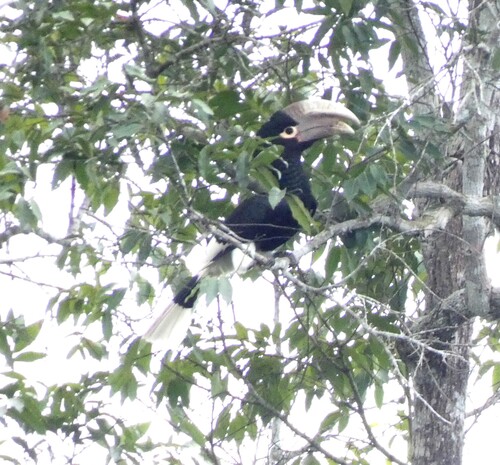
Calao à cuisses blanches (Bycanistes albotibialis) Calao à cuisses blanches
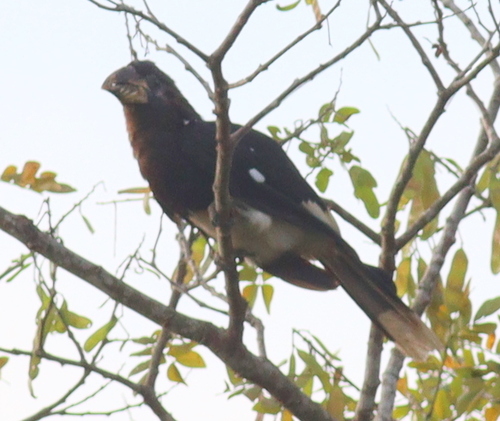
Calao siffleur (Bycanistes fistulator) Calao siffleur

Médias

Chargement…

En bref

The most reliable way to separate White-thighed Hornbill from Piping Hornbill is by size: Piping Hornbill is distinctly smaller, being the smallest Bycanistes, while White-thighed is medium-large. Both are black-and-white hornbills of Central and West African forests, and their ranges overlap widely. In the field, structural differences (especially bill size and overall bulk) are often more helpful than plumage, as both species share similar contrasting patterns. Age-specific wing or juvenile plumage marks are not described in available sources, so focus on body size, bill proportions, and context. Both species occur in similar habitats, but Piping Hornbill is more likely in secondary growth and edge, while White-thighed prefers denser forest.

Conseils d’identification

  1. Size is the most reliable field mark: Piping Hornbill is noticeably smaller and slimmer than White-thighed Hornbill. Use this when birds are side by side or with other Bycanistes for scale.
  2. Bill size and shape: White-thighed Hornbill has a proportionally larger, heavier bill, while Piping Hornbill's bill is smaller and more delicate. This is especially apparent when perched.
  3. White thighs: White-thighed Hornbill shows obvious white on the thighs, especially when perched or in good light. Piping Hornbill lacks this clear white thigh patch, though this mark can be hard to see in flight or at distance.
  4. Plumage contrast: Both species are black-and-white, and overall pattern is similar. Do not rely on general color contrast alone.
  5. No distinctive juvenile/immature wing pattern: There are no described age-specific upperwing or flight marks for either species, so do not expect to separate them by juvenile flight pattern.
  6. Habitat context: If the bird is in secondary growth, forest edge, or disturbed habitat, Piping Hornbill is more likely. White-thighed Hornbill is more typical of dense, mature forest, but this is not absolute.
  7. Group size and behavior: Both can be seen in groups, but Piping Hornbill may be more active and agile, reflecting its smaller size. This is subtle and not diagnostic.
  8. Range overlap: Both species occur together across much of Central and West Africa; do not use range alone for separation.
  9. Voice: No distinguishing vocalizations are described in the notes; do not rely on calls for separation.
  10. Sex and season: No sexual dimorphism or seasonal plumage differences are noted for either species in the available sources; all ages and sexes are similar.
  11. Direct comparison: If you have the opportunity to compare both species directly (e.g., at a fruiting tree), the size and bill differences become very apparent.
  12. When in doubt: If the bird is intermediate in size or the thigh color is not visible, err on the side of caution and do not attempt a firm identification based on these features alone.
  13. Photographic review: Photos can help confirm the presence or absence of white thighs and relative size, especially if multiple birds are present for comparison.
  14. Common pitfalls: Do not mistake the white underparts of both species for the white thigh patch of White-thighed Hornbill; check the specific area above the legs.
  15. Summary tip: In the field, prioritize size and bill structure, then look for white thighs on perched birds. Use habitat as a supporting clue, but not as a primary field mark.

Taille

Piping Hornbill is the smallest Bycanistes, averaging about 50 cm in length [wikipedia]. White-thighed Hornbill is larger and bulkier, though precise measurements are not provided in the current notes. In direct comparison, White-thighed appears heavier-bodied and longer, with a proportionally larger bill. If you see a group of hornbills and one is noticeably smaller and more slender, it is likely a Piping Hornbill.

Plumage

No age-specific or juvenile wing pattern differences are described in the available sources for these two species. Both are black-and-white hornbills, with bold contrasting plumage. The most consistent plumage difference is that White-thighed Hornbill shows white thighs (as its name suggests), while Piping Hornbill does not have this feature as prominently marked. However, this can be subtle or obscured in the field, especially in flight or poor light. Both species otherwise show similar black upperparts and white underparts, so plumage alone is often not sufficient for a confident ID.

Comportement

Behavior is not described in detail for either species in the available notes. Both are typical hornbills, often seen flying in groups or pairs, and both can be conspicuous when feeding or calling. Piping Hornbill may be more likely to forage at forest edge or in secondary growth, while White-thighed Hornbill tends to remain in denser forest, but this is not a strong field separation.

Habitat

Both species occur in humid forests of Central and West Africa, with overlapping ranges from Senegal and Uganda south to Angola [wikipedia]. Piping Hornbill is noted for its presence in both primary forest and secondary growth, and may be somewhat more adaptable to disturbed habitats. White-thighed Hornbill is typically found in dense forest, but also occurs in a wide range of forested habitats. Habitat alone is not diagnostic, but Piping Hornbill is more likely at forest edge or in degraded areas.

Voix

No vocal differences are provided in the available notes. Both species are hornbills and may have similar calls, but without specific descriptions, voice cannot be reliably used for separation here.

Envoyer une meilleure description

Utilise les mêmes sections que la comparaison. Ton texte est publié tout de suite.

The most reliable way to separate White-thighed Hornbill from Piping Hornbill is by size: Piping Hornbill is distinctly smaller, being the smallest Bycanistes, while White-thighed is medium-large. Both are black-and-white hornbills of Central and West African forests, and their ranges overlap widely. In the field, structural differences (especially bill size and overall bulk) are often more helpful than plumage, as both species share similar contrasting patterns. Age-specific wing or juvenile plumage marks are not described in available sources, so focus on body size, bill proportions, and context. Both species occur in similar habitats, but Piping Hornbill is more likely in secondary growth and edge, while White-thighed prefers denser forest.

  1. Size is the most reliable field mark: Piping Hornbill is noticeably smaller and slimmer than White-thighed Hornbill. Use this when birds are side by side or with other Bycanistes for scale.
  2. Bill size and shape: White-thighed Hornbill has a proportionally larger, heavier bill, while Piping Hornbill's bill is smaller and more delicate. This is especially apparent when perched.
  3. White thighs: White-thighed Hornbill shows obvious white on the thighs, especially when perched or in good light. Piping Hornbill lacks this clear white thigh patch, though this mark can be hard to see in flight or at distance.
  4. Plumage contrast: Both species are black-and-white, and overall pattern is similar. Do not rely on general color contrast alone.
  5. No distinctive juvenile/immature wing pattern: There are no described age-specific upperwing or flight marks for either species, so do not expect to separate them by juvenile flight pattern.
  6. Habitat context: If the bird is in secondary growth, forest edge, or disturbed habitat, Piping Hornbill is more likely. White-thighed Hornbill is more typical of dense, mature forest, but this is not absolute.
  7. Group size and behavior: Both can be seen in groups, but Piping Hornbill may be more active and agile, reflecting its smaller size. This is subtle and not diagnostic.
  8. Range overlap: Both species occur together across much of Central and West Africa; do not use range alone for separation.
  9. Voice: No distinguishing vocalizations are described in the notes; do not rely on calls for separation.
  10. Sex and season: No sexual dimorphism or seasonal plumage differences are noted for either species in the available sources; all ages and sexes are similar.
  11. Direct comparison: If you have the opportunity to compare both species directly (e.g., at a fruiting tree), the size and bill differences become very apparent.
  12. When in doubt: If the bird is intermediate in size or the thigh color is not visible, err on the side of caution and do not attempt a firm identification based on these features alone.
  13. Photographic review: Photos can help confirm the presence or absence of white thighs and relative size, especially if multiple birds are present for comparison.
  14. Common pitfalls: Do not mistake the white underparts of both species for the white thigh patch of White-thighed Hornbill; check the specific area above the legs.
  15. Summary tip: In the field, prioritize size and bill structure, then look for white thighs on perched birds. Use habitat as a supporting clue, but not as a primary field mark.

Piping Hornbill is the smallest Bycanistes, averaging about 50 cm in length [wikipedia]. White-thighed Hornbill is larger and bulkier, though precise measurements are not provided in the current notes. In direct comparison, White-thighed appears heavier-bodied and longer, with a proportionally larger bill. If you see a group of hornbills and one is noticeably smaller and more slender, it is likely a Piping Hornbill.

No age-specific or juvenile wing pattern differences are described in the available sources for these two species. Both are black-and-white hornbills, with bold contrasting plumage. The most consistent plumage difference is that White-thighed Hornbill shows white thighs (as its name suggests), while Piping Hornbill does not have this feature as prominently marked. However, this can be subtle or obscured in the field, especially in flight or poor light. Both species otherwise show similar black upperparts and white underparts, so plumage alone is often not sufficient for a confident ID.

Behavior is not described in detail for either species in the available notes. Both are typical hornbills, often seen flying in groups or pairs, and both can be conspicuous when feeding or calling. Piping Hornbill may be more likely to forage at forest edge or in secondary growth, while White-thighed Hornbill tends to remain in denser forest, but this is not a strong field separation.

Both species occur in humid forests of Central and West Africa, with overlapping ranges from Senegal and Uganda south to Angola [wikipedia]. Piping Hornbill is noted for its presence in both primary forest and secondary growth, and may be somewhat more adaptable to disturbed habitats. White-thighed Hornbill is typically found in dense forest, but also occurs in a wide range of forested habitats. Habitat alone is not diagnostic, but Piping Hornbill is more likely at forest edge or in degraded areas.

No vocal differences are provided in the available notes. Both species are hornbills and may have similar calls, but without specific descriptions, voice cannot be reliably used for separation here.

Abandonner tes modifications ?

Tu as des modifications non enregistrées. Si tu pars maintenant, elles seront perdues.

Calao à cuisses blanches · Calao siffleur · Mes oiseaux difficiles