

Hirondelle de fenêtre vs Hirondelle sud-africaine
Delichon urbicum contre Petrochelidon spilodera
Faire un quiz avec Hirondelle de fenêtre et Hirondelle sud-africaine
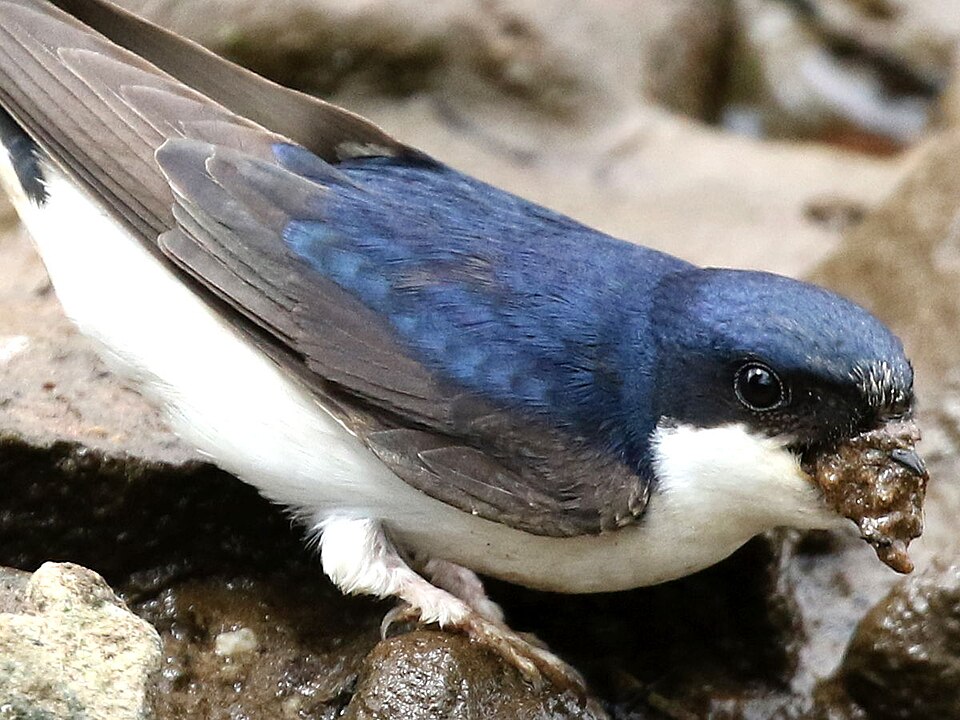 Hirondelle de fenêtre
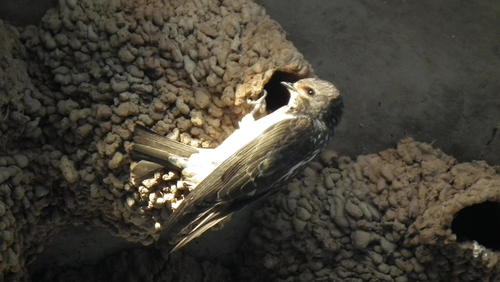 Hirondelle sud-africaine
En bref
The most reliable field mark to separate Western House Martin from South African Swallow is the House Martin’s striking white rump and pure white underparts, which are obvious in flight and when perched. Juvenile House Martins also show white-tipped wing coverts and quills, while South African Swallow lacks these features and does not have a white rump. Both species are aerial insectivores and may nest on buildings, but the House Martin’s steel-blue upperparts and clean white underparts contrast with the South African Swallow’s more muted coloration. Structure and tail shape are similar, so focus on rump and underpart color, especially in flight.
Conseils d’identification
- White rump (all ages): Western House Martin always shows a bright white rump, which is very conspicuous in flight and when perched. South African Swallow never shows a white rump; its back and rump are uniform or only slightly paler.
- Underparts color: House Martin has pure white underparts, including the underwings. South African Swallow’s underparts are not described in detail, but are not pure white and do not contrast as sharply with the upperparts.
- Juvenile wing covert pattern: Juvenile House Martins have white tips and edges to some wing coverts and quills, giving a slightly scaled or edged look to the upperwing. This mark is absent in South African Swallow.
- Upperparts gloss: Adult House Martins are steel-blue above, especially fresh birds. South African Swallow has duller, less glossy upperparts.
- Tail fork: Both species have forked tails, but House Martin’s fork is shallow. Tail shape is not a strong separator between these two.
- Legs and toes: House Martin’s legs and toes are feathered white and exposed parts are pink, but this is rarely visible in the field.
- Flight style: House Martin has a rapid wingbeat (5.3 beats/sec), but this is subtle and hard to use unless directly compared.
- Nesting behavior: Both nest on buildings or under eaves, but House Martin colonies can be very dense, sometimes with thousands of nests in contact. South African Swallow also nests colonially but is not noted for such large aggregations.
- Habitat and range: House Martin is found across Eurasia and migrates to Africa; South African Swallow is resident or migratory within Africa. In southern Africa, check for white rump to rule out vagrant House Martin.
- Perched posture: Both perch on wires or buildings, but House Martin’s white rump may be visible even when perched, especially from behind.
- Confusion with other swallows: House Martin’s white rump and underparts prevent confusion with Barn Swallow, Sand Martin, or Red-rumped Swallow. South African Swallow could be confused with other African swallows, but not with House Martin if the rump is seen.
- Sex and season: Both species are sexually monomorphic and do not show strong seasonal plumage changes, so age and rump color are more important than sex or season.
- Voice: No distinguishing vocalizations are described in the notes, so do not rely on calls for separation.
- Pitfalls: In poor light or distant views, the white rump of House Martin can be missed, but it is diagnostic when seen. Juvenile House Martins may appear duller but still show the white rump and covert markings.
- In flight: Always try to see the rump and underparts in flight; House Martin will flash white, while South African Swallow will not.
Taille
Western House Martin averages about 13 cm in length with a wingspan of 26–29 cm and a weight around 18.3 g [wikipedia]. No direct measurements are provided for South African Swallow in the notes, but both are small hirundines and likely similar in size. Size alone is not a reliable separator in the field.
Plumage
-
Juvenile/immature birds: Western House Martin juveniles are sooty black above, with white tips and edgings to some wing coverts and quills. This can give a slightly scaled look to the upperwing in fresh juveniles. The white rump is present even in young birds and is a key mark at all ages. South African Swallow juveniles are not described in detail in the notes, but there is no mention of a white rump or similar wing covert markings.
-
Adults: Adult House Martins are steel-blue above with a bright white rump and pure white underparts, including the underwings. South African Swallow lacks the white rump and instead has more muted, less contrasting upperparts and underparts. House Martin’s white rump is especially obvious in flight, while South African Swallow’s rump blends with the rest of the back.
-
Tail: House Martin has a shallowly forked tail, while the South African Swallow’s tail shape is not detailed here, but both are typical swallows with some fork. The House Martin’s tail is not as deeply forked as Barn Swallow.
-
Sexes: Both species show little sexual dimorphism in plumage.
Comportement
Both species are aerial insectivores, catching insects on the wing. House Martins often breed colonially, with nests sometimes in large, dense clusters on buildings or cliffs. South African Swallow also nests on artificial structures, often under eaves or bridges, and builds mud nests. In flight, House Martins have a rapid wingbeat (5.3 beats/sec) and a typical swallow flight style. There is no information on South African Swallow’s flight style, but it is likely similar. Both species are highly social around nesting sites.
Habitat
Western House Martin breeds across Europe, North Africa, and west-central Asia, often near human habitation or open country, and winters in sub-Saharan Africa and southwestern Asia. South African Swallow is native to southern Africa and winters in the lower Congo Basin. Both species are closely associated with human structures for nesting, but House Martin is more likely in temperate Eurasia, while South African Swallow is restricted to Africa. In areas of overlap (southern Africa in winter), context and range should be considered.
Hirondelle de fenêtre · Hirondelle sud-africaine · Mes oiseaux difficiles