

Pipit de Richard vs Pipit à long bec
Anthus richardi contre Anthus similis
Faire un quiz avec Pipit de Richard et Pipit à long bec
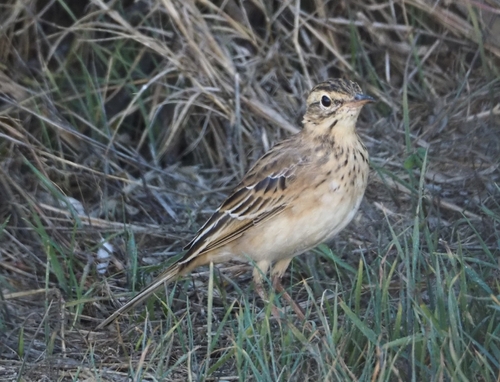 Pipit de Richard
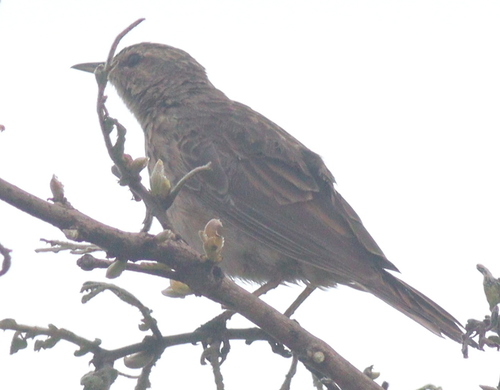 Pipit à long bec
En bref
Richard's Pipit and Long-billed Pipit are both large, upright pipits with similar sandy-brown plumage, but Richard's Pipit is generally larger and more slender, with a longer, straighter hindclaw and more upright stance. The most reliable field marks are structural: Richard's Pipit has a longer tail, longer legs, and a longer, slightly decurved bill with a yellowish base to the lower mandible, while Long-billed Pipit is slightly smaller and stockier with a long, dark bill. In flight, both species show strong, direct movement, but Richard's Pipit tends to look more elongated. Plumage differences are subtle and variable, but Richard's Pipit often shows more prominent facial markings and two pale wingbars. Calls and habitat can help: Richard's Pipit gives a harsh 'shreep', while Long-billed Pipit's 'chupp' is softer and more lark-like.
Conseils d’identification
- Structure is key: Richard's Pipit is longer-legged, longer-tailed, and more upright than Long-billed Pipit. Look for the overall elongated, slender appearance and upright stance in Richard's, versus the slightly stockier, less upright Long-billed.
- Bill shape and color: Richard's Pipit has a long, slightly decurved bill with a yellowish base to the lower mandible; Long-billed Pipit has a long, dark bill that is less decurved and lacks the yellowish base. This is best seen at close range or in good light.
- Hindclaw: Richard's Pipit has a long, fairly straight hindclaw, while Long-billed Pipit's is not described as distinctive. If you see the hindclaw well, this can be a clincher for Richard's.
- Facial pattern: Richard's Pipit shows a strong pale supercilium and lores, with dark eyestripe, moustachial, and malar stripes, giving a more marked face. Long-billed Pipit has a plainer face with less contrast.
- Wingbars: Richard's Pipit typically shows two pale wingbars (from pale tips to wing coverts), which are less prominent or absent in Long-billed Pipit. This is subtle but can help in perched birds.
- Tail pattern: Richard's Pipit has a long tail with white outer feathers, which may be visible in flight or when the tail is flicked. Long-billed Pipit has a long tail but less white on the outer feathers.
- Plumage tone: Richard's Pipit is brown above with dark streaks, while Long-billed Pipit is sandy grey above and paler below. The difference is subtle and variable, but Richard's may appear more crisply streaked, especially on the breast.
- Flight style: Richard's Pipit has a strong, undulating flight, often with a more elongated look. Long-billed Pipit's flight is strong and direct but may appear less undulating.
- Call: Richard's Pipit's 'shreep' is loud, harsh, and explosive; Long-billed Pipit's 'chupp' is softer, more lark-like. Calls are often the best clue if the bird is not seen well.
- Song: Richard's Pipit's song is a monotonous series of buzzy notes; Long-billed Pipit's song is slower and more varied ('sri...churr...').
- Habitat: In overlapping areas, Richard's Pipit prefers moist, open grasslands and cultivated fields, while Long-billed Pipit is more often in dry, rocky slopes with sparse vegetation.
- Posture: Richard's Pipit stands very upright, often looking alert and tall; Long-billed Pipit is less upright and may appear more relaxed.
- Season and context: Richard's Pipit is a long-distance migrant and may appear as a vagrant in Europe in autumn and winter, especially on coasts and islands. Long-billed Pipit is mostly resident or a short-distance migrant.
- Group size: Both species are usually seen alone or in small groups, so this is not a strong separator.
- Juvenile/immature plumage: No distinctive age-specific upperwing or flight marks are described for these two species, so focus on structure and subtle plumage differences for all ages.
Taille
Richard's Pipit is the larger of the two, measuring 17–20 cm in length and weighing 25–36 g (no AVONET mass available), with a wingspan of 29–33 cm. Long-billed Pipit is slightly smaller at 16–17.5 cm and 23 g (wikidata), with a slightly shorter overall appearance. In the field, Richard's Pipit appears more elongated and upright, with longer legs and tail, while Long-billed Pipit is a bit more compact and less upright. These differences are subtle and best appreciated with direct comparison or experience.
Plumage
No age-specific upperwing or flight pattern marks are described for either species, so focus is on adult and general plumage. Richard's Pipit is brown above with dark streaks on the upperparts and breast, plain pale underparts, and two pale wingbars formed by the tips of the wing coverts. Its face is strongly marked with a pale supercilium and lores, and dark eyestripe, moustachial, and malar stripes. The tail is long with white outer feathers. Long-billed Pipit is sandy grey above and whitish or pale buff below, with less prominent facial markings and less obvious wingbars. Both species are rather plain on the ground, but Richard's Pipit tends to look more crisply marked, especially in the face. Subspecific variation exists in both, but is not reliably diagnostic in the field.
Comportement
Richard's Pipit often stands very upright and is frequently seen alone or in small groups in open, flat country. Its flight is strong and undulating, and it sometimes makes short flights to catch insects. Long-billed Pipit is also seen in open areas but prefers dry, rocky slopes with low vegetation, and its flight is strong and direct. Both species forage on the ground for insects and seeds, but Richard's Pipit may appear more alert and upright, while Long-billed Pipit is less so.
Habitat
Richard's Pipit breeds in open grasslands, steppe, and cultivated lowlands, especially in moist, fertile areas, and is a long-distance migrant, wintering in the Indian subcontinent and Southeast Asia. It is a rare but regular vagrant to Europe, especially coastal headlands and islands. Long-billed Pipit is more resident or a short-distance migrant, with a wide range across Africa, Arabia, and South Asia, favoring dry, open slopes with rocks and sparse vegetation. In overlapping regions, Richard's Pipit is more likely in lush, flat grasslands, while Long-billed Pipit prefers drier, rockier terrain.
Voix
Richard's Pipit gives a loud, harsh, explosive 'shreep' call, reminiscent of a House Sparrow, and its song is a series of monotonous buzzy notes delivered in undulating song flight. Long-billed Pipit gives a softer, lark-like 'chupp' call and a slower, more varied song ("sri...churr...sri...churr"). Calls are a useful field clue, especially if the bird is not seen well.
Pipit de Richard · Pipit à long bec · Mes oiseaux difficiles