

Grive mauvis vs Sizerin flammé (flammea/rostrata/islandica)
Turdus iliacus contre Acanthis flammea
Faire un quiz avec Grive mauvis et Sizerin flammé (flammea/rostrata/islandica)
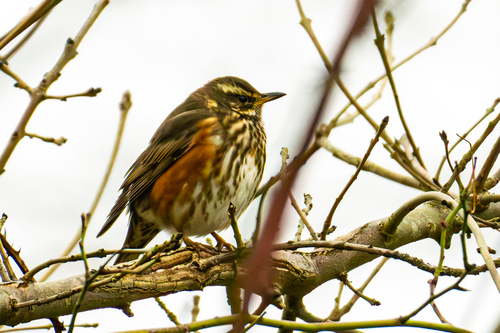 Grive mauvis
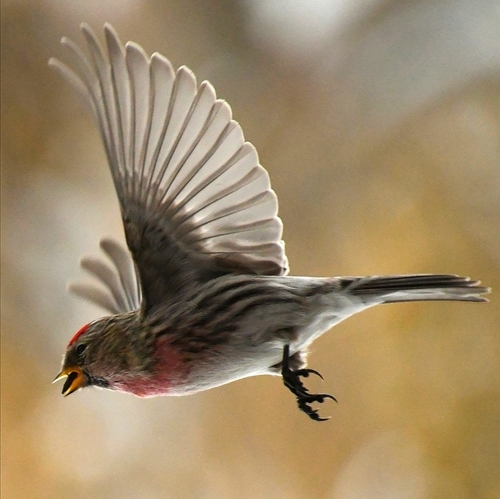 Sizerin flammé (flammea/rostrata/islandica)
En bref
The most reliable way to separate Redwing from Common Redpoll is by overall structure and key plumage features: Redwing is a medium-sized thrush with a bold creamy supercilium and distinct reddish flanks and underwing, while Common Redpoll is a much smaller, streaky finch with a bright red forehead, black bib, and two pale wingbars. In flight or perched, Redwing’s size and thrush shape stand out, whereas Redpoll appears compact and finch-like. Juvenile or immature-specific upperwing patterns are not described for either species, so focus on body shape and face pattern. If you see a bird with a red forehead and black chin, it is a Redpoll; if you see a bird with a strong pale eyebrow and rusty flanks, it is a Redwing.
Conseils d’identification
- Size and shape: Redwing is much larger and bulkier than Common Redpoll. If the bird looks thrush-sized, it is a Redwing; if it is small and finch-like, it is a Redpoll. This holds for all ages and seasons.
- Face pattern: Redwing shows a bold, creamy-white supercilium (eyebrow) above the eye, which is always present and diagnostic. Redpoll lacks this mark, instead showing a bright red forehead and a black bib below the bill.
- Red markings: Redwing’s red is on the flanks and underwing (visible in flight or when fluffed), never on the forehead. Redpoll’s red is a cap on the forehead; males may also have a pinkish breast, but never red on the flanks or underwing.
- Underparts: Redwing has white underparts with dark spots or streaks, especially on the breast and flanks. Redpoll is heavily streaked below, but the streaking is finer and more uniform, and there is often a pinkish wash in males.
- Wing pattern: Redwing has plain brown wings with no wingbars. Redpoll always shows two pale wingbars on each wing, visible both perched and in flight.
- Bill: Redwing has a typical thrush bill—longer and more robust. Redpoll has a small, conical, yellowish bill with a dark tip, typical of finches.
- Tail: Redwing’s tail is longer and more rounded; Redpoll’s tail is shorter and more notched.
- Leg color: Redwing’s legs are not described in detail, but Redpoll has brown legs.
- Behavior: Redwing is more likely to be seen on the ground or low in shrubs, moving with a thrush’s gait. Redpoll is more active in trees and bushes, often hanging upside down or feeding acrobatically.
- Flock size: Redpolls are often in large, noisy flocks, especially in winter. Redwings may form flocks, but are often seen singly or in small groups.
- Habitat: In open fields or weedy patches, especially among birch or alder, expect Redpoll. In wooded areas, hedgerows, or on the ground, expect Redwing.
- Voice: Redwing’s song is a varied, melodious thrush song with whistled notes; flight call is a clear whistle. Redpoll’s calls are twittering and buzzy, lacking the musical quality of Redwing.
- Season: Both species can occur in winter in similar areas, but Redwing is more likely in wooded or shrubby habitats, Redpoll in open, weedy places.
- Sex/age: No age-specific upperwing or flight pattern differences are described for either species, so all ages are separated by the above marks.
- Pitfalls: Beware of distant views—Redwing’s supercilium and red flanks can be hard to see at range, and Redpoll’s red forehead may be missed in poor light. Use size, structure, and face pattern as primary clues.
Taille
Redwing is substantially larger and heavier: about 20–24 cm in length, with a mass around 62 g [wikidata]. Common Redpoll is much smaller, only 11.5–14 cm in length and weighing 12–16 g [wikipedia]. In the field, Redwing looks like a typical thrush—long-bodied, with a rounded head and longer wings—while Redpoll is a small, compact finch. The size difference is obvious when seen side by side, but even singly, Redwing will look noticeably bulkier and longer-tailed than any Redpoll.
Plumage
No age-specific upperwing or flight pattern differences are described for either species, so focus on overall coloration and face pattern. Redwing of all ages shows a plain brown back, white underparts with dark spots, a bold creamy-white supercilium (eyebrow), and most distinctively, reddish flanks and underwing. The supercilium is always present and prominent. Common Redpoll, regardless of age or sex, is brownish-grey and heavily streaked, with a bright red forehead, black bib, and two pale wingbars. Males often have a pinkish wash on the breast, but all Redpolls show the red cap and black chin. The bill is yellowish with a dark tip. Redwing lacks any red on the forehead or black on the chin, and never shows wingbars.
Comportement
Redwing is typically seen foraging on the ground or in low shrubs, often singly or in loose flocks, especially in winter. Its movements are thrush-like: hopping or running on the ground, sometimes flicking its wings or tail. In flight, Redwing is strong and direct, with steady wingbeats. Common Redpoll is much more active and acrobatic, often feeding in flocks high in trees or on seed heads, hanging upside down or fluttering between perches. Redpolls are restless, frequently calling and moving, and rarely spend much time on the ground compared to Redwing.
Habitat
Redwing breeds in northern forests and tundra, often in conifer or birch woods, and winters in a variety of wooded and open habitats, including fields, hedgerows, and parks. It is usually found in areas with some tree or shrub cover. Common Redpoll breeds in Arctic and boreal forests, especially among birch and alder, and in winter is found in open woodland, scrub, and weedy fields. Both species can occur in similar northern habitats, but Redpoll is more likely to be seen in flocks feeding on seeds in trees or weedy patches, while Redwing is more often seen on the ground or in low vegetation.
Voix
Redwing has a varied, short song with introductory elements and a whistling flight call. Its song is more complex and thrush-like, with trills and whistles, and shows geographic variation. Common Redpoll gives a variety of twittering calls and trills, but does not have the rich, melodious song of a thrush. In flight, Redpolls often give sharp, buzzy calls, while Redwing’s flight call is a clear, whistled note. If you hear a melodious song or a single, whistled flight call, it is likely a Redwing; if you hear constant twittering and buzzing, it is more likely a Redpoll.
Grive mauvis · Sizerin flammé (flammea/rostrata/islandica) · Mes oiseaux difficiles