

Motmot

Capucin pie vs Astrild à joues noires

Spermestes fringilloides contre Coccopygia melanotis

Faire un quiz avec Capucin pie et Astrild à joues noires
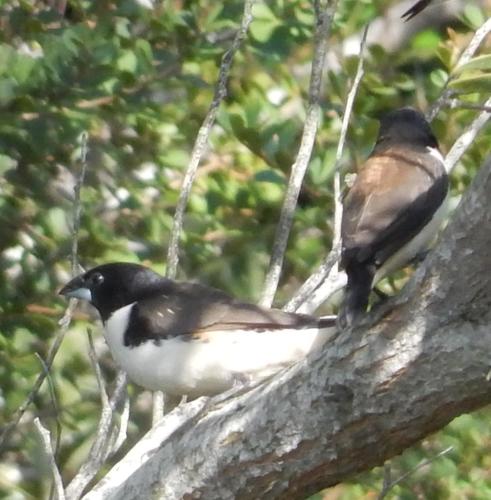
Capucin pie (Spermestes fringilloides) Capucin pie
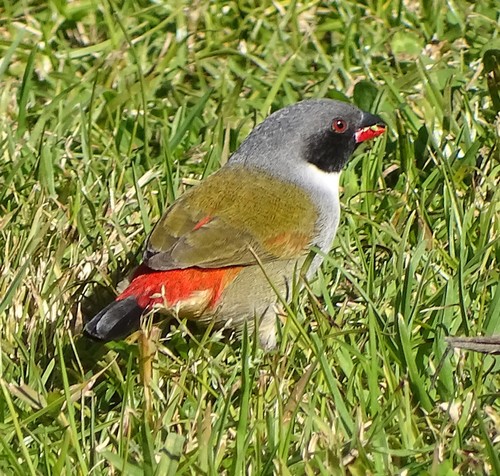
Astrild à joues noires (Coccopygia melanotis) Astrild à joues noires

Médias

Chargement…

En bref

The most reliable field mark to separate Magpie Mannikin from Swee Waxbill is overall plumage pattern: Magpie Mannikin shows a striking black-and-white contrast, while Swee Waxbill is much more subtly colored with olive, grey, and yellow tones, and a distinctive red rump. Juvenile Swee Waxbills can be confusingly dull, but they lack the bold black-and-white pattern of Magpie Mannikin. Bill color and face pattern are also helpful, especially in adults. Both are small estrildid finches, but Swee Waxbill is slightly smaller and more common in southern Africa, often in small groups.

Conseils d’identification

  1. Plumage contrast is key: Magpie Mannikin always shows a bold black-and-white pattern, with dark head and flanks and white belly and rump. Swee Waxbill is never this sharply patterned, even in juveniles.
  2. Face pattern (adult males): Male Swee Waxbill has a black face contrasting with a grey head and breast, while Magpie Mannikin's head is part of the overall black-and-white pattern. Female Swee Waxbill has a grey face, which can be confused with duller mannikins at a distance, but lacks the stark contrast.
  3. Bill color: Adult Swee Waxbill has a bicolored bill (black upper, red lower), while juveniles have an all-black bill. Bill color is less useful for Magpie Mannikin, but the absence of a red lower mandible is a clue against Swee Waxbill.
  4. Juvenile confusion: Young Swee Waxbills are dull and have an all-black bill, but still lack the magpie-like pattern. If you see a very plain, olive-grey finch with no strong black-and-white contrast, it's likely a juvenile Swee Waxbill.
  5. Rump color: Swee Waxbill (all ages) shows a red lower back and rump, which is visible in good light or in flight. Magpie Mannikin does not have a red rump.
  6. Underparts: Swee Waxbill has a pale yellow belly, while Magpie Mannikin's belly is white. In poor light, this can be subtle, but the yellow wash is absent in Magpie Mannikin.
  7. Back and wing color: Swee Waxbill has olive back and wings; Magpie Mannikin's back is darker and more uniform with the head and flanks.
  8. Tail color: Both species have dark tails, but Swee Waxbill's is black and contrasts with the red rump, while Magpie Mannikin's tail blends into the black-and-white body.
  9. Size and structure: Swee Waxbill is slightly smaller and may appear daintier, but size overlap is considerable. Use only as a supporting mark.
  10. Behavior: Swee Waxbill is common, tame, and often in small groups, sometimes in gardens. Magpie Mannikin is sparser and less likely in cultivated areas.
  11. Habitat: In southern Africa, Swee Waxbill is much more likely, especially in gardens and upland shrub. Magpie Mannikin prefers more natural, lowland shrubland and grassland.
  12. Voice: If you hear a soft 'swee, swee', this is diagnostic for Swee Waxbill. Silence or unfamiliar calls do not confirm Magpie Mannikin.
  13. Sex differences: Only male Swee Waxbill has a black face; females and juveniles are greyer and can be confused with other dull estrildids, but not with the bold Magpie Mannikin.
  14. No strong flight marks: Neither species shows a distinctive upperwing or flight pattern in the sources, so rely on overall color and rump in flight.
  15. Season and molt: No seasonal plumage changes are described for either species; the main confusion is with dull juveniles, especially Swee Waxbill.

Taille

Both species are small estrildid finches, but Swee Waxbill is slightly lighter, with a typical adult body mass of 7.8 g [wikidata]. No direct mass data is provided for Magpie Mannikin, but both are similar in size to other small waxbills and mannikins. In the field, size alone is not a strong separator, but Swee Waxbill may appear a touch daintier.

Plumage

Magpie Mannikin of all ages shows a bold black-and-white plumage, with a strong contrast between the dark head, breast, and flanks, and white belly and rump. This pattern is distinctive and visible even in flight or at a distance. Swee Waxbill adults are much more subtly colored: males have a grey head and breast, black face, olive back and wings, pale yellow belly, red lower back and rump, and a black tail. Females lack the black face, showing a grey face instead. Juvenile Swee Waxbills are duller overall and have an all-black bill, but still lack the magpie-like black-and-white pattern of Magpie Mannikin. No age-specific upperwing or flight pattern marks are described for either species in the sources.

Comportement

Swee Waxbill is typically seen in small parties and is described as tame and common, often foraging in open areas or large gardens. Magpie Mannikin is sparser and less likely to be encountered in large numbers. Neither species forms large flocks, but Swee Waxbill is more likely to be seen in groups. Both species feed on seeds and forage low in vegetation.

Habitat

Magpie Mannikin is found in subtropical and tropical lowland moist shrubland, forest, and dry grassland across Sub-Saharan Africa [wikipedia]. Swee Waxbill is native to Southern Africa and prefers upland dry shrubland and open forest, but some subspecies also occur in lowlands and even large gardens. Swee Waxbill is much more likely in southern regions and in cultivated or garden habitats, while Magpie Mannikin is more restricted to natural shrubland and grassland.

Voix

Swee Waxbill has a soft 'swee, swee' call, which is distinctive if heard [wikipedia]. No vocalization description is provided for Magpie Mannikin in the sources. Thus, Swee Waxbill's call can be a useful supporting mark if heard, but silence or unfamiliar calls should not be used to confirm Magpie Mannikin.

Envoyer une meilleure description

Utilise les mêmes sections que la comparaison. Ton texte est publié tout de suite.

The most reliable field mark to separate Magpie Mannikin from Swee Waxbill is overall plumage pattern: Magpie Mannikin shows a striking black-and-white contrast, while Swee Waxbill is much more subtly colored with olive, grey, and yellow tones, and a distinctive red rump. Juvenile Swee Waxbills can be confusingly dull, but they lack the bold black-and-white pattern of Magpie Mannikin. Bill color and face pattern are also helpful, especially in adults. Both are small estrildid finches, but Swee Waxbill is slightly smaller and more common in southern Africa, often in small groups.

  1. Plumage contrast is key: Magpie Mannikin always shows a bold black-and-white pattern, with dark head and flanks and white belly and rump. Swee Waxbill is never this sharply patterned, even in juveniles.
  2. Face pattern (adult males): Male Swee Waxbill has a black face contrasting with a grey head and breast, while Magpie Mannikin's head is part of the overall black-and-white pattern. Female Swee Waxbill has a grey face, which can be confused with duller mannikins at a distance, but lacks the stark contrast.
  3. Bill color: Adult Swee Waxbill has a bicolored bill (black upper, red lower), while juveniles have an all-black bill. Bill color is less useful for Magpie Mannikin, but the absence of a red lower mandible is a clue against Swee Waxbill.
  4. Juvenile confusion: Young Swee Waxbills are dull and have an all-black bill, but still lack the magpie-like pattern. If you see a very plain, olive-grey finch with no strong black-and-white contrast, it's likely a juvenile Swee Waxbill.
  5. Rump color: Swee Waxbill (all ages) shows a red lower back and rump, which is visible in good light or in flight. Magpie Mannikin does not have a red rump.
  6. Underparts: Swee Waxbill has a pale yellow belly, while Magpie Mannikin's belly is white. In poor light, this can be subtle, but the yellow wash is absent in Magpie Mannikin.
  7. Back and wing color: Swee Waxbill has olive back and wings; Magpie Mannikin's back is darker and more uniform with the head and flanks.
  8. Tail color: Both species have dark tails, but Swee Waxbill's is black and contrasts with the red rump, while Magpie Mannikin's tail blends into the black-and-white body.
  9. Size and structure: Swee Waxbill is slightly smaller and may appear daintier, but size overlap is considerable. Use only as a supporting mark.
  10. Behavior: Swee Waxbill is common, tame, and often in small groups, sometimes in gardens. Magpie Mannikin is sparser and less likely in cultivated areas.
  11. Habitat: In southern Africa, Swee Waxbill is much more likely, especially in gardens and upland shrub. Magpie Mannikin prefers more natural, lowland shrubland and grassland.
  12. Voice: If you hear a soft 'swee, swee', this is diagnostic for Swee Waxbill. Silence or unfamiliar calls do not confirm Magpie Mannikin.
  13. Sex differences: Only male Swee Waxbill has a black face; females and juveniles are greyer and can be confused with other dull estrildids, but not with the bold Magpie Mannikin.
  14. No strong flight marks: Neither species shows a distinctive upperwing or flight pattern in the sources, so rely on overall color and rump in flight.
  15. Season and molt: No seasonal plumage changes are described for either species; the main confusion is with dull juveniles, especially Swee Waxbill.

Both species are small estrildid finches, but Swee Waxbill is slightly lighter, with a typical adult body mass of 7.8 g [wikidata]. No direct mass data is provided for Magpie Mannikin, but both are similar in size to other small waxbills and mannikins. In the field, size alone is not a strong separator, but Swee Waxbill may appear a touch daintier.

Magpie Mannikin of all ages shows a bold black-and-white plumage, with a strong contrast between the dark head, breast, and flanks, and white belly and rump. This pattern is distinctive and visible even in flight or at a distance. Swee Waxbill adults are much more subtly colored: males have a grey head and breast, black face, olive back and wings, pale yellow belly, red lower back and rump, and a black tail. Females lack the black face, showing a grey face instead. Juvenile Swee Waxbills are duller overall and have an all-black bill, but still lack the magpie-like black-and-white pattern of Magpie Mannikin. No age-specific upperwing or flight pattern marks are described for either species in the sources.

Swee Waxbill is typically seen in small parties and is described as tame and common, often foraging in open areas or large gardens. Magpie Mannikin is sparser and less likely to be encountered in large numbers. Neither species forms large flocks, but Swee Waxbill is more likely to be seen in groups. Both species feed on seeds and forage low in vegetation.

Magpie Mannikin is found in subtropical and tropical lowland moist shrubland, forest, and dry grassland across Sub-Saharan Africa [wikipedia]. Swee Waxbill is native to Southern Africa and prefers upland dry shrubland and open forest, but some subspecies also occur in lowlands and even large gardens. Swee Waxbill is much more likely in southern regions and in cultivated or garden habitats, while Magpie Mannikin is more restricted to natural shrubland and grassland.

Swee Waxbill has a soft 'swee, swee' call, which is distinctive if heard [wikipedia]. No vocalization description is provided for Magpie Mannikin in the sources. Thus, Swee Waxbill's call can be a useful supporting mark if heard, but silence or unfamiliar calls should not be used to confirm Magpie Mannikin.

Abandonner tes modifications ?

Tu as des modifications non enregistrées. Si tu pars maintenant, elles seront perdues.

Capucin pie · Astrild à joues noires · Mes oiseaux difficiles