

Bernache du Canada vs Traquet d'Arabie
Branta canadensis contre Oenanthe lugentoides
Faire un quiz avec Bernache du Canada et Traquet d'Arabie
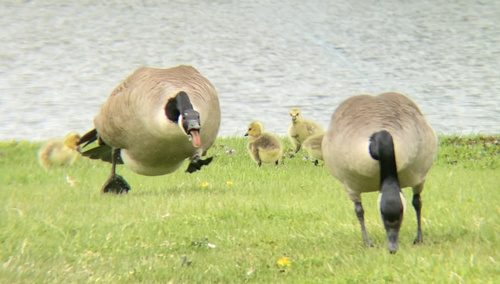 Bernache du Canada
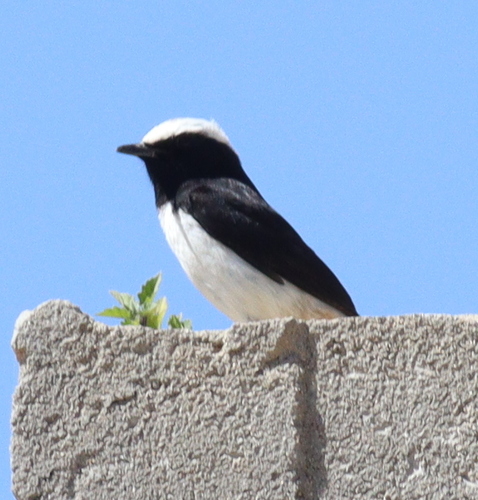 Traquet d'Arabie
En bref
The Canada Goose and Arabian Wheatear are so different in size, structure, and overall appearance that confusion is only likely in a quiz or with extremely poor views. The Canada Goose is a massive waterfowl with a long neck and bold black-and-white head pattern, while the Arabian Wheatear is a small, upright perching songbird. No age-specific wing or flight pattern overlap exists between these species. If you see a large brown bird with a black neck and white chinstrap, it is a Canada Goose; any small, upright, insect-eating bird in Arabia is the wheatear. Even at a distance, the size and jizz are unmistakable.
Conseils d’identification
- Size is the most immediate clue: Canada Goose is a huge, heavy-bodied bird; Arabian Wheatear is tiny and delicate. If you can see both in the same binocular view, the difference is overwhelming.
- Head and neck pattern: Canada Goose always shows a black head and neck with a white cheek patch and chinstrap—unique among birds in its range except for Cackling and Barnacle Geese (not the wheatear).
- Body color: Canada Goose is brown-bodied with pale underparts; Arabian Wheatear is never brown all over and shows contrasting dark and pale areas typical of wheatears.
- Bill shape: Canada Goose has a broad, flat bill for grazing; Arabian Wheatear has a thin, pointed bill for catching insects.
- Posture and movement: Geese are horizontal, often on water or grazing; wheatears are upright, perching on rocks or wires and making short flights.
- Flight style: Canada Goose is powerful, with slow wingbeats and long glides, often in formation; Arabian Wheatear is quick and flits between perches.
- Habitat: If you are in a wetland, lake, or grassy field in North America or Europe, expect Canada Goose; if in rocky, arid regions of Arabia, expect Arabian Wheatear.
- Voice: Loud honking or hissing means Canada Goose; any soft, ticking, or short song is more likely the wheatear.
- Flock size: Canada Geese are usually in flocks, especially in migration; Arabian Wheatear is usually solitary or in pairs.
- Age/sex confusion: No age or sex of Arabian Wheatear ever resembles a Canada Goose, and vice versa.
- Flight pattern: No wheatear shows the long neck and trailing legs of a goose in flight.
- Potential quiz pitfalls: Only a silhouette quiz with no size reference could possibly confuse these, and even then, the neck length and body shape are diagnostic.
- Unusual plumages: Even leucistic or variant Canada Geese retain the basic head pattern; no wheatear ever shows this.
- Geographic context: If you are outside Arabia, you are extremely unlikely to see Arabian Wheatear; Canada Goose is widespread but not in Arabia except as a rare vagrant.
- Summary tip: If you see a black-and-white-headed, long-necked bird, it is a goose; if you see a small, upright, tail-flicking bird, it is a wheatear.
Taille
Canada Goose is vastly larger, averaging over 3500g in mass [wikidata], with a length of 75–110 cm and a wingspan of 127–185 cm [wikipedia]. Arabian Wheatear is a small passerine (not measured here, but typical wheatears are under 30g and about 15 cm long). In the field, the goose is a hulking, long-necked bird, while the wheatear is sparrow-sized and perches upright on rocks or wires. There is no conceivable overlap in size or silhouette.
Plumage
No age or flight plumage confusion is possible. Canada Goose of all ages and sexes shows a distinctive black head and neck with a white cheek patch and chinstrap, brownish body, and pale underparts. Even leucistic or variant individuals retain the basic pattern. Arabian Wheatear, in all plumages, lacks any black-and-white head pattern and instead shows typical wheatear coloration: dark or blackish face and throat, pale underparts, and often a white rump and tail with a black terminal band (not detailed in these notes, but consistent with the genus). Juvenile or immature Canada Geese do not develop any plumage remotely similar to a wheatear, and vice versa.
Comportement
Canada Goose is usually seen swimming or grazing in flocks near water, walking on land, or flying in noisy V-formations. Arabian Wheatear is a solitary or paired bird, perching upright on rocks, posts, or low shrubs, and making short sallies to catch insects. Their movement, feeding, and social behavior are entirely different.
Habitat
Canada Goose is native to North America but introduced widely; it is found in wetlands, lakes, rivers, and grassy fields, always near water [wikipedia]. Arabian Wheatear is restricted to arid regions of Oman, Saudi Arabia, and Yemen, favoring rocky hillsides and dry scrub. The two do not overlap in natural range or habitat preference.
Voix
Canada Goose is highly vocal, with loud honking calls (male) and higher-pitched hrink calls (female) [wikipedia]. Arabian Wheatear, like other wheatears, gives short, sharp calls and simple songs, but no details are provided here. In any case, the goose's calls are unmistakable and much louder.
Bernache du Canada · Traquet d'Arabie · Mes oiseaux difficiles