

Cacholote brun vs Synallaxe damier
Pseudoseisura lophotes contre Schoeniophylax phryganophilus
Faire un quiz avec Cacholote brun et Synallaxe damier
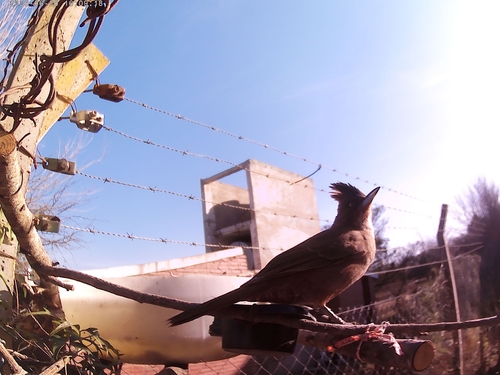 Cacholote brun
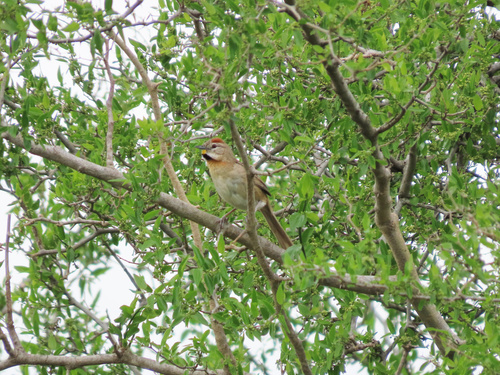 Synallaxe damier
En bref
The most reliable field mark to separate Brown Cacholote from Chotoy Spinetail is overall coloration and head pattern: Brown Cacholote is a uniform rufous bird with a prominent dark crest, while Chotoy Spinetail is paler, streaked above, and shows a striking white supercilium and a unique black-and-white throat patch. Juvenile Chotoy Spinetails are duller but still lack the cacholote’s solid rufous tones and crest. In flight or perched, cacholote’s bulk, dark wings, and jay-like jizz contrast with the slimmer, longer-tailed spinetail. Both species may be found in similar regions, but cacholote favors more wooded areas and is notably larger and heavier.
Conseils d’identification
- Uniform Rufous vs. Streaked and Patterned: Brown Cacholote is entirely rufous with little contrast, while Chotoy Spinetail is sandy brown above with strong dark streaks and a paler, patterned face. This is the fastest way to separate them at any age.
- Crest and Head Shape: Cacholote has a prominent, dark, jay-like crest, especially obvious when raised. Chotoy Spinetail lacks a crest and has a smoother, rounded crown.
- Face Pattern: Chotoy Spinetail shows a bold white supercilium and pale brown ear coverts, which stand out against its streaked crown and back. Cacholote’s face is plain rufous, with only a slightly darker lores and throat.
- Throat and Breast: Cacholote’s throat is vibrant rufous, blending into a paler breast. Chotoy Spinetail has a bright yellow chin/upper throat, a crisp black square on the lower throat surrounded by white, and an apricot upper breast—this throat pattern is unique and visible even at a distance.
- Tail and Wing Structure: Cacholote has a broad, rounded tail and heavy wings, giving a chunky, powerful look. Spinetail’s tail is long, narrow, and graduated, often flicked or cocked, and its wings are proportionally shorter and lighter.
- Bill and Iris: Cacholote’s bill is all black and robust; iris is yellow. Spinetail’s bill is bicolored (blackish maxilla, gray/bluish mandible), and iris is red to brown. These are subtle but can help at close range.
- Size and Bulk: Cacholote is much larger and heavier; if you see both together, the difference is striking. Even singly, cacholote’s bulk and posture are distinctive.
- Juvenile Pitfalls: Young Chotoy Spinetails are duller and less streaked but still show a pale supercilium and lack the cacholote’s uniform rufous and crest. Juvenile cacholotes are always rufous and never streaked.
- Perched vs. In Flight: Cacholote perches upright, often high in trees, sometimes with fanned tail and drooped wings. Spinetail is more restless, foraging lower and moving quickly through shrubs.
- Nest Structure (if visible): Cacholote builds a massive, oval stick nest high in trees (up to 17 m), while spinetail’s nest is a smaller ball with a side entrance, usually lower (to 3.5 m).
- Habitat Context: In mature woodland or tall isolated trees, expect cacholote; in shrubby, open, or marshy edges, spinetail is more likely.
- Vocalization: Cacholote’s duet is long, noisy, and rough; spinetail’s song is a series of low 'cho' notes, deeper than expected for its size.
- Sex and Season: Both species are sexually monomorphic; plumage does not vary by season.
- Regional Abundance: Both are fairly common where ranges overlap, so do not rely on abundance alone.
- Confusion Risk: In poor light, cacholote’s uniform rufous and large size still contrast with the spinetail’s streaked, patterned look and smaller, slimmer build.
Taille
Brown Cacholote is much larger and heavier: 24–26 cm in length and 63–79 g in weight, making it one of the largest furnariids. Chotoy Spinetail is noticeably smaller and lighter at 20–22 cm and 15–22.5 g. Cacholote’s wings and tail are also longer in absolute terms, and its body is bulkier and more robust, while Chotoy Spinetail is slender, with a long, narrow tail and a lighter build. This size difference is often apparent even at a distance or in mixed flocks.
Plumage
- Juvenile/Immature: Juvenile Chotoy Spinetails are paler, with less sharp streaking above, a brown crown, a whitish chin, and an indistinct black throat patch. They still show a pale supercilium and lack the cacholote’s uniform rufous coloration and dark crest. Juvenile Brown Cacholotes resemble adults but have duller, more monotone legs and bill, and a greener iris, but remain overall rufous.
- Adult: Brown Cacholote is entirely rufous, with a darker crest, face, and wings, and a paler breast. The Chotoy Spinetail adult is sandy brown above with strong dark streaks, a chestnut crown, white supercilium, pale brown ear coverts, and a distinctive black-and-white throat patch (black square on lower throat, white around it, yellow chin and upper throat). Its underparts are apricot to buffy white, with a rufescent undertail. Cacholote’s iris is yellow, bill black, legs grayish-olive; Chotoy’s iris is red to brown, bill bicolored, legs pale gray to brownish. The cacholote’s uniformity and dark crest are unique; the spinetail’s face pattern and throat are diagnostic.
Comportement
Brown Cacholote is often seen perched high in trees, sometimes in pairs, performing duets with fanned tails and spread wings. It is more robust and moves with a heavier, more deliberate jizz, reminiscent of a jay. Chotoy Spinetail is more active, foraging in low bushes or small trees, often flicking its long tail and moving quickly through vegetation. Cacholote’s nest is much larger and higher up (up to 17 m), while the spinetail nests lower (usually up to 3.5 m) in dense shrubs or small trees. Both species may sing from exposed perches, but cacholote’s display is more conspicuous and involves more body posturing.
Habitat
Both species overlap in range (Argentina, Bolivia, Brazil, Paraguay, Uruguay), but Brown Cacholote prefers forests, woodland edges, and parks with larger trees, often building large stick nests high above ground. Chotoy Spinetail favors open to semi-open habitats: treed savannas, gallery forests, scrub along watercourses, monte woodlands, and marsh edges, usually at lower elevations (to 500 m). In mixed habitats, cacholote is more likely in mature woodland or isolated tall trees, spinetail in shrubby or edge habitats.
Voix
Brown Cacholote’s song is a long, noisy, and coarse duet, often lasting over 25 seconds, with about two notes per second, and calls are loud 'krok' or 'cluck' notes. Chotoy Spinetail’s song is a distinctive series of low-pitched 'cho' notes, sounding deeper than expected for its size, and its call is a hurried chatter. Cacholote’s vocalizations are longer, rougher, and more raucous, while spinetail’s are more rhythmic and lower-pitched.