

Courlis d'Alaska vs Chevalier de Sibérie
Numenius tahitiensis contre Tringa brevipes
Faire un quiz avec Courlis d'Alaska et Chevalier de Sibérie
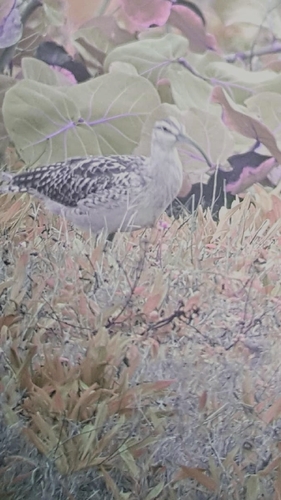 Courlis d'Alaska
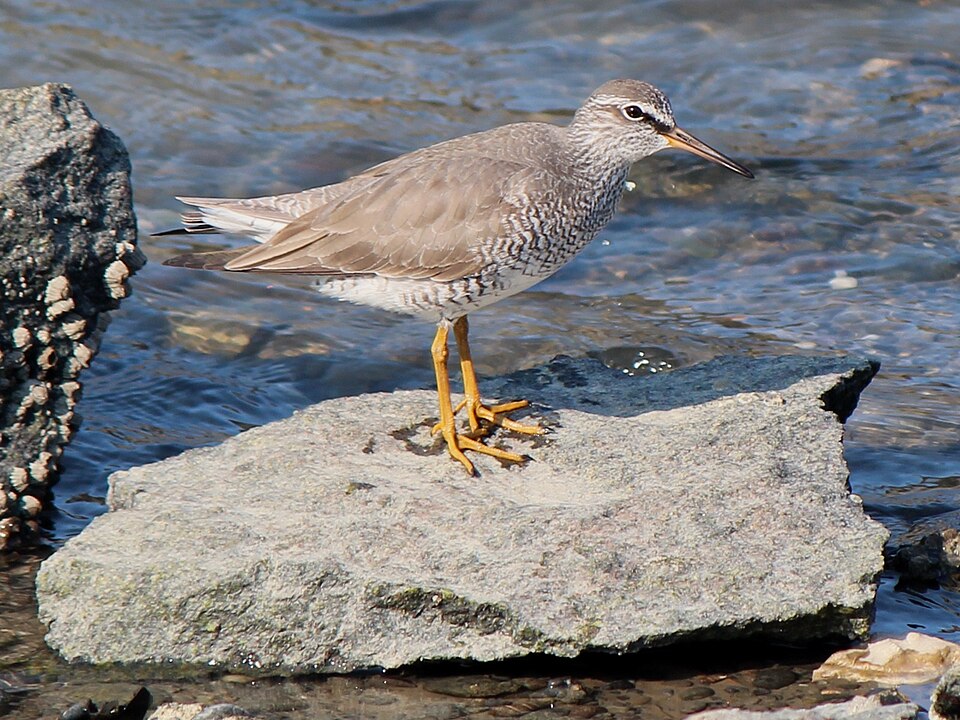 Chevalier de Sibérie
En bref
The most reliable field mark between Bristle-thighed Curlew and Grey-tailed Tattler is overall structure: the curlew is much larger, with a long, strongly decurved bill, while the tattler is small and straight-billed. In flight or at rest, the curlew shows a buffy-orange rump and tail with large buff spots above, whereas the tattler is plain grey above with a white belly and a weak supercilium. Juvenile and nonbreeding tattlers lack any buff tones or bristled thighs, and their upperparts are unpatterned compared to the curlew's bold spotting. Even at a distance, the curlew's size and bill shape are immediately distinctive, while the tattler’s smaller, compact shape and short yellowish legs stand out. Confusion is most likely with distant, lone birds or in poor light, but attention to size, bill, and upperpart pattern is decisive.
Conseils d’identification
- Size and structure: Bristle-thighed Curlew is much larger and bulkier than Grey-tailed Tattler. If the bird appears close to Whimbrel size, it is a curlew; if it is Redshank-sized or smaller, it is a tattler.
- Bill shape: Curlew has a long, strongly decurved bill, easily visible even at a distance. Tattler has a straight, medium-length bill with a pale base and dark tip. Bill shape is the single most decisive mark.
- Upperpart pattern (all ages): Curlew shows large buff spots on the upperparts, especially obvious in flight or at rest. Tattler is plain grey above, with no spots or contrasting pattern.
- Rump and tail in flight: Curlew has a pale buffy-orange rump and tail, which contrasts with the rest of the upperparts. Tattler’s rump and tail are not contrasting—plain grey above, white below.
- Underparts: Curlew has an unmarked light belly and barely marked flanks. Tattler has a white belly; in breeding plumage, the breast and sometimes belly are finely scaled, but never with the curlew’s buffy tones.
- Leg color: Tattler has short yellowish legs, which can be a helpful mark if seen well. Curlew’s legs are not described as yellowish and are proportionally longer.
- Supercilium: Tattler shows a weak supercilium (eyebrow), especially in breeding plumage, while curlew lacks this feature.
- Bristled thighs: Curlew has bristled feathers at the base of the legs (hard to see unless close or in good light), absent in tattler.
- Behavior: Tattler may tail-bob and is more active, sometimes perching in trees. Curlew is slower, more methodical, and never perches in trees.
- Habitat context: If seen on a remote Pacific island, curlew is more likely; in southeast Asia or Australia, tattler is expected. Both can overlap on migration, so rely on structure and plumage.
- Vocalization: If the bird is calling, a sharp, disyllabic whistle points to tattler. Curlew is generally less vocal and does not give this call.
- Group size: Curlew may be in small groups or alone; tattler is usually solitary or in small numbers, except at roosts.
- Pitfalls: Distant, lone birds on mudflats can be tricky—always check bill shape and size first, then look for upperpart pattern and rump color in flight.
- Age/season: Juvenile and nonbreeding tattlers are even plainer above, lacking any buff or bristled features, while curlews retain their spotted upperparts and buffy rump/tail year-round.
- Sex: No strong sexual dimorphism in field marks for either species; females curlew average slightly larger, but this is not reliable in the field.
Taille
Bristle-thighed Curlew is a medium-sized shorebird, about 40–44 cm in length with an 84 cm wingspan, making it substantially larger than the Grey-tailed Tattler, which is a small Tringa species (comparable to a Redshank, but exact measurements not provided here). The curlew's size is close to a Whimbrel, while the tattler is much more compact and slender overall. Even at a distance, the curlew's bulk and long bill are apparent, whereas the tattler appears dainty with proportionally shorter legs and bill.
Plumage
- Juvenile/immature/fresh nonbreeding birds: Bristle-thighed Curlew shows large buff spots on the upperparts, a pale buffy-orange rump and tail, and an unmarked light belly with barely marked flanks. Grey-tailed Tattler is plain grey above, with no buff tones, and has a white belly. In breeding plumage, tattlers show scaly breast markings that may extend onto the belly, but their upperparts remain unpatterned and greyish. The curlew’s tail is rust-colored or buffy, contrasting with the tattler’s plain grey upperparts and white underparts.
- Adults: Curlew always shows bristled feathers at the base of the legs (hard to see at distance), a long decurved bill, and a warm buffy wash on the rump and tail. Tattler adults have a weak supercilium, short yellowish legs, and a bill with a pale base and dark tip, but no strong patterning above or below except for the scaly breast in breeding plumage.
- In flight: Curlew’s upperwing and tail pattern are distinctive—look for the buffy rump and tail and large upperpart spots. Tattler in flight is plain grey above, with no contrasting rump or tail, and lacks any strong wing pattern.
Comportement
Curlews are often seen probing with their long bills in mud or sand, moving slowly and methodically. They may be found singly or in small groups, especially on migration or wintering grounds. Tattlers are more active and often forage by picking at the surface, sometimes tail-bobbing, and are less gregarious, typically seen alone or in small numbers except at roosts. Tattlers may perch in trees, especially near breeding grounds, a behavior not typical of curlews.
Habitat
Bristle-thighed Curlew breeds in Alaska and winters on remote Pacific islands, usually found on open coasts, mudflats, or sandy beaches. Grey-tailed Tattler breeds on stony riverbeds in northeast Siberia and winters on muddy and sandy coasts from southeast Asia to Australia. In the nonbreeding season, both may occur on similar coastal habitats, but the curlew is more likely on remote Pacific islands, while the tattler is regular in southeast Asia and Australia. Both are rare vagrants outside their core ranges.
Voix
Grey-tailed Tattler is named for its noisy, disyllabic whistle, which is a key field mark (though not compared directly to curlew here). The curlew’s call is not described in the notes, but tattlers are generally much more vocal and their call is diagnostic among Tringa. If you hear a sharp, repeated whistle, it is likely a tattler.
Courlis d'Alaska · Chevalier de Sibérie · Mes oiseaux difficiles