

Glaréole à ailes noires vs Labbe à longue queue
Glareola nordmanni contre Stercorarius longicaudus
Faire un quiz avec Glaréole à ailes noires et Labbe à longue queue
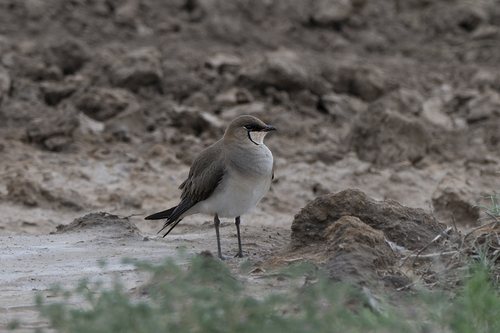 Glaréole à ailes noires
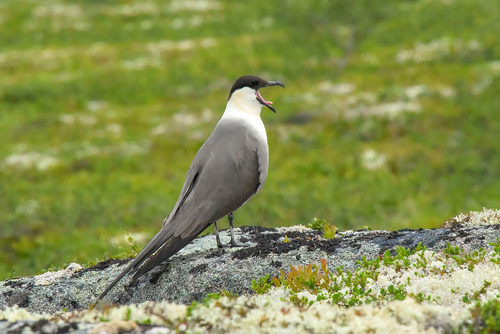 Labbe à longue queue
En bref
The most reliable field mark is the underwing color in flight: Black-winged Pratincole shows all-dark (blackish) underwings, while Long-tailed Skua (especially adults) has paler underwings with dark primary feathers but not wholly black. Juvenile/immature plumages are trickier, but the skua is always colder-toned and more tern-like, with a much longer tail and heavier build. Structure is a major clue: pratincole is compact, short-legged, and swallow-like, while the skua is much larger, bulkier, and has a dramatically long tail (especially adults). Both species can be seen hawking insects or food on the wing, but their proportions, flight style, and wing/tail patterns are quite different when studied closely.
Conseils d’identification
- Underwing color in flight: Pratincole shows all-dark (blackish) underwings at all ages; skua has dark primaries but paler coverts, never wholly black. This is the single most reliable mark if seen well.
- Tail shape and length: Adult Long-tailed Skua has extremely long, pointed tail streamers (up to 15 cm), making the tail appear much longer than the body. Pratincole has a short, shallowly forked tail, never with streamers.
- Overall size and structure: Skua is much larger, bulkier, and longer-winged, with a wingspan over 1 meter. Pratincole is compact, with shorter wings and a smaller, more delicate build.
- Flight style: Pratincole is agile, swallow-like, and quick; skua is more powerful, tern-like, and often hovers or glides. In direct comparison, skua looks heavier and more robust.
- Upperwing pattern: Pratincole lacks a white trailing edge to the wing, which can be a subtle but useful mark; skua's upperwing is more uniform, with dark primaries but no white flash.
- Plumage tone (immatures): Juvenile skuas are colder-toned (greyish), never warm brown like pratincole. Pratincole is brown above, with a white belly; skua is grey-backed with less contrast below.
- Head pattern: Adult skua has a black cap; pratincole does not. Pratincole's head is brown, blending into the back.
- Bill shape: Pratincole has a short, fine bill suited to aerial insect feeding; skua's bill is heavier and hooked, adapted for predation and kleptoparasitism.
- Leg length: Pratincole is longer-legged relative to body size, but legs are still short compared to most waders; skua's legs are proportionally short and stout.
- Habitat context: Pratincole is found in warm, open lowlands near water; skua is an Arctic breeder and pelagic migrant, rarely near water in the same context as pratincole except as a rare migrant.
- Behavioral clues: Skuas may chase other birds to steal food, which pratincoles never do. Pratincoles are more likely to be seen hawking insects low over fields or water.
- Voice: Not diagnostic from the provided notes.
- Perched appearance: Pratincole perches upright with a compact, swallow-like look; skua is bulkier and sits more like a gull or tern.
- Pitfalls: At distance or in poor light, the pratincole's black underwing and the skua's dark primaries can both look blackish; only close, well-lit views reliably separate them. Juvenile skuas are especially tricky and may require multiple field marks for confident ID.
- Seasonal context: Pratincole is present in Europe/Asia in summer, Africa in winter; skua is in the Arctic in summer, at sea in the southern hemisphere in winter. Out-of-range records should be scrutinized carefully.
Taille
Long-tailed Skua is much heavier (average adult mass ~289 g) than Black-winged Pratincole (~97 g), and is also longer overall (38–58 cm vs. 24–28 cm), though up to half the skua's length is its tail streamers. The skua's wingspan (102–117 cm) far exceeds the pratincole's, making the skua appear much larger and more powerful in flight. Pratincole is more compact, with shorter legs and a shorter tail relative to body size.
Plumage
Immature/juvenile birds are the main pitfall. Black-winged Pratincole of all ages shows blackish underwings and lacks a white trailing edge to the wing; this is diagnostic if seen well. The upperparts are brown, the belly is white, and the flight feathers are black. Long-tailed Skua juveniles are variable but usually colder-toned (greyer), never warm brown, and have a more tern-like appearance; their underwing is not wholly black, and adults have dark primary feathers but paler coverts. Adults are unmistakable: skua has a grey back, black cap, and very long tail streamers, with dark primaries but no white wing flash. Pratincole adults are brown above, with a short forked tail and lack the skua's bold cap or tail streamers. The pratincole's white belly and blackish underwing contrast with the skua's more muted underparts and less contrasting underwing.
Comportement
Both species are aerial feeders, but their flight styles differ: pratincole is agile, swallow-like, and often seen hawking insects low over open ground or water. Long-tailed Skua is more powerful, with a buoyant, tern-like flight, often hovering or gliding over tundra or open sea. Skuas are also kleptoparasitic, chasing other birds to steal food, which pratincoles never do. On migration, juvenile skuas may hunt over fields and are notably fearless of humans, while pratincoles stick to open country and water edges.
Habitat
Black-winged Pratincole is found in open country, often near water, and breeds in warmer parts of southeast Europe and southwest Asia, wintering in tropical Africa. Long-tailed Skua breeds in the high Arctic tundra and winters at sea in the southern oceans; on migration, juveniles may appear over fields or golf courses but are rarely found near water in the same way as pratincoles. Thus, context and location can help: pratincole is a bird of warm, open lowlands; skua is a bird of tundra and open ocean, with migrants sometimes inland.
Glaréole à ailes noires · Labbe à longue queue · Mes oiseaux difficiles