

Urubu noir
Coragyps atratus
New World Vultures (Cathartidae) · Cathartiformes · Vautours, rapaces, etc.
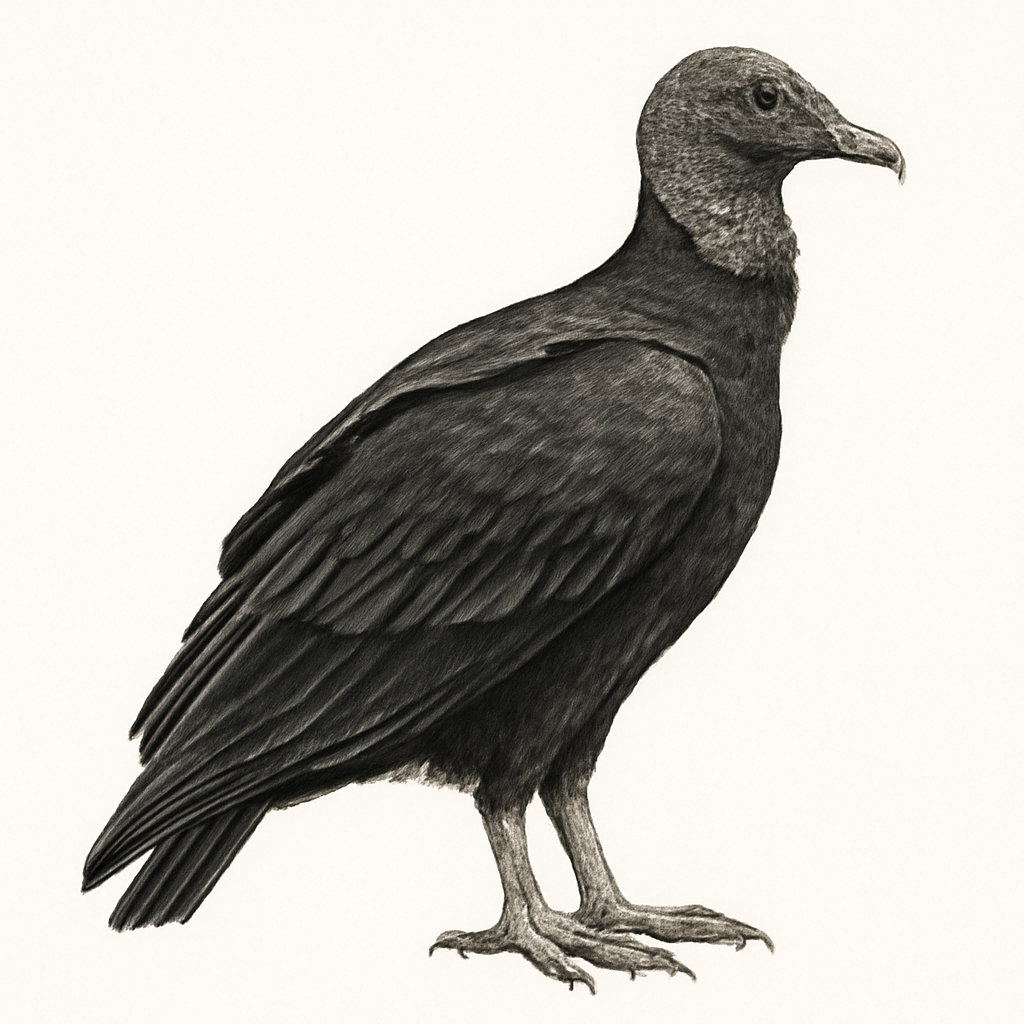
Faire un quiz avec Urubu noir et des espèces similaires
Voir toutes les photos, vidéos et sons
Relecture nécessaire
Motmot est un projet communautaire, et beaucoup de photos attendent encore un œil humain. Si tu connais cet oiseau, tu peux aider en relisant ses images.
O-o, on n’a plus de crédits IA. Je développe Motmot sur mon temps libre, et il n’y a pas de financement pour l’instant. Si tu as envie d’aider à le faire grandir, écris-moi à info@motmot.club.
Comment identifier Urubu noir
Rédaction des notes d’identification…
Cela cherche des notes d’identification dans des sources ouvertes, puis demande au modèle de les rédiger. Cela peut prendre une minute.
Connecte-toi pour générer des notes d’identification pour cet oiseau.
Souvent mélangé avec
Dans les quiz, les joueurs confondent le plus souvent Urubu noir avec ces oiseaux—soit cette espèce a été choisie par erreur, soit l’inverse.
| Espèces | Confusions |
|---|---|
| Urubu à tête rouge Cathartes aura | 6 |
| Condor de Californie Gymnogyps californianus | 3 |
| Buse à gros bec Rupornis magnirostris | 2 |
| Tangara à bec d'argent Ramphocelus carbo | 2 |
| Macreuse à ailes blanches Melanitta deglandi | 1 |
Famille
Cathartidae, commonly known as New World vultures and condors, are a family of birds of prey consisting of seven extant species in five genera. It includes five extant vultures and two extant condors found in the Americas. They are known as "New World" vultures to distinguish them from Old World vultures, with which the Cathartidae does not form a single clade despite the two being similar in appearance and behavior as a result of convergent evolution.
Ordre
Cathartiformes is a former order of scavenging birds which included the New World vultures and the now-extinct Teratornithidae. Unlike many Old World vultures, Cathartiformes lack talons and musculature in their feet suitable for seizing prey. In the past, they were considered to be a sister group to the storks of the order Ciconiiformes based on DNA–DNA hybridization and morphology.