

Tejedor Gorrión Cejiblanco vs Gorrión de El Cabo
Plocepasser mahali frente a Passer melanurus
Juega un quiz con Tejedor Gorrión Cejiblanco y Gorrión de El Cabo
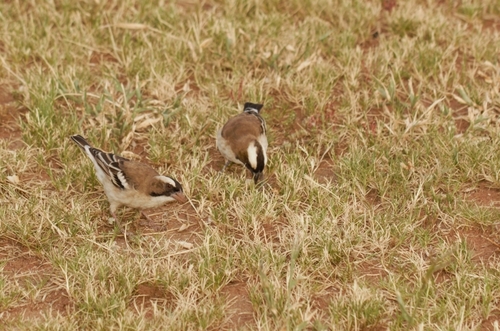 Tejedor Gorrión Cejiblanco
 Gorrión de El Cabo
En breve
La marca de campo más confiable para separar al Tejedor Gorrión Cejiblanco del Gorrión de El Cabo es la ancha franja de ceja blanca y el rabadilla blanca en vuelo del Tejedor, en comparación con el patrón de cabeza audaz del Gorrión de El Cabo, que tiene una cabeza negra (macho) y una ancha franja blanca en la cara. El Tejedor también es notablemente más grande y pesado, con un pico más robusto, a menudo negro (macho), en comparación con el tamaño más pequeño y el pico marrón rosado del Gorrión de El Cabo. Los gorriones de El Cabo juveniles y hembras carecen de la cabeza negra del macho, pero aún muestran una franja de cabeza pálida, mientras que la ceja del Tejedor se mantiene prominente en todas las edades. El color del pico y el patrón de la cabeza son clave en todas las edades y sexos, pero especialmente nota la rabadilla blanca del Tejedor en vuelo y su mayor tamaño cuando los pájaros están en movimiento o a distancia.
Consejos de identificación
- Ancha ceja blanca (supercilio): El Tejedor Gorrión Cejiblanco de todas las edades y sexos muestra una audaz y brillante franja de ceja blanca desde el pico hasta encima del ojo, mucho más ancha y blanca que la del Gorrión de El Cabo.
- Rabadilla blanca en vuelo: El Tejedor muestra una rabadilla blanca al volar, ausente en el Gorrión de El Cabo; verifica esto especialmente en aves asustadas o volando.
- Color del pico: El macho Tejedor tiene un pico negro, la hembra de color cuerno, el juvenil marrón rosado. El pico del Gorrión de El Cabo es siempre marrón rosado, nunca negro.
- Patrón de cabeza (macho Gorrión de El Cabo): El macho Gorrión de El Cabo tiene una cabeza mayormente negra con una ancha franja blanca que se curva desde detrás del ojo hasta la garganta, además de un babero negro. El Tejedor nunca muestra este patrón.
- Patrón de cabeza (hembra/juvenil Gorrión de El Cabo): Las hembras y los juveniles de Gorrión de El Cabo tienen una cabeza gris más apagada con una franja pálida, pero es más estrecha y menos llamativa que la ceja del Tejedor. Los jóvenes machos de Gorrión de El Cabo pueden mostrar algo de negro en la cabeza temprano.
- Espalda y hombros castaños: Solo el Gorrión de El Cabo (especialmente los machos) muestra un brillante castaño en la espalda y los hombros; el Tejedor es marrón uniforme por encima.
- Partes inferiores: El Tejedor tiene partes inferiores blancas, a veces con manchas marrones tenues (notablemente en Zimbabue); las del Gorrión de El Cabo son grisáceas, más oscuras en los flancos.
- Barras alares: Los machos de Gorrión de El Cabo tienen una barra alar blanca y negra debajo del hombro, que el Tejedor carece. Sin embargo, esto es sutil y menos confiable que las marcas de cabeza y rabadilla.
- Tamaño y volumen: El Tejedor es mucho más grande y pesado (49 g vs. 29 g), con un cuerpo más largo y una construcción más robusta. Usa esto cuando ambas especies estén presentes o comparadas con otros gorriones.
- Color de los pies: El Tejedor tiene pies negros; los del Gorrión de El Cabo son rosados (no siempre visibles, pero pueden ayudar a corta distancia).
- Tamaño del grupo y comportamiento: El Tejedor suele estar en pequeños grupos familiares compactos; el Gorrión de El Cabo a menudo en colonias más grandes y sueltas.
- Hábitat: El Tejedor prefiere sabanas secas y espinosas, evita bosques de hojas anchas; el Gorrión de El Cabo es más generalista y a menudo se encuentra en pueblos y jardines.
- Voz: Los llamados del Gorrión de El Cabo son más musicales y distintivos; la voz del Tejedor no se describe aquí, así que usa la canción del Gorrión de El Cabo si se escucha.
- Diferencias sexuales: Solo el macho Tejedor tiene un pico negro; ambos sexos del Gorrión de El Cabo tienen un color de pico similar pero difieren en el patrón de la cabeza.
- Trampas: Las hembras y los juveniles de Gorrión de El Cabo pueden parecer superficialmente como Tejedores debido a las franjas de cabeza pálidas, pero la ceja siempre es más estrecha y menos blanca, y el tamaño general es más pequeño.
Tamaño
Tejedor Gorrión Cejiblanco is significantly larger and heavier (49 g vs. 29 g) than Gorrión de El Cabo. In the field, this translates to a bulkier, more robust bird with a longer body (17–19 cm vs. 14–16 cm). The Sparrow-Weaver’s size is especially apparent when both species are seen together or near other sparrows. Gorrión de El Cabo is more compact and lighter, with a more typical sparrow build.
Plumaje
-
Juveniles and Females: Both species have pale head stripes, but the Tejedor Gorrión Cejiblanco’s is broader and brighter white, running from the bill over the eye, while the Gorrión de El Cabo’s is narrower and buffier in females and juveniles. Juvenile Sparrow-Weavers have a pinkish-brown bill; Gorrión de El Cabo juveniles resemble dull females but young males begin to show black on the head early.
-
Adult Males: Sparrow-Weaver males have a black bill and broad white eyebrow; Gorrión de El Cabo males have a striking black head with a curling white stripe from behind the eye to the throat, plus a black bib and chestnut back. The Sparrow-Weaver’s underparts are white with faint brown spotting (notably in Zimbabwe), while the Gorrión de El Cabo’s are greyish and darker on the flanks.
-
Flight/Upperwing: The Sparrow-Weaver shows a white rump in flight, which is absent in Gorrión de El Cabo. Gorrión de El Cabo males have a white and a black wing bar, but no white rump. Both species have brown upperparts, but the Sparrow-Weaver lacks the Gorrión de El Cabo’s chestnut shoulders and back.
-
Bill Color: Male Sparrow-Weaver has a black bill, female is horn-colored, juvenile is pinkish-brown. Gorrión de El Cabo’s bill is pinkish-brown in all ages.
Comportamiento
Los Tejedores Gorrión Cejiblanco se ven típicamente en pequeños grupos familiares (2–11), a menudo moviéndose juntos y forrajeando en el suelo o bajo en arbustos. Es más probable que se vean posados de manera erguida y conspicua, a veces mostrando su ceja y rabadilla blancas. Los Gorriones de El Cabo también son sociales, pero a menudo forman colonias más grandes y sueltas (50–100 aves) y pueden verse alimentándose en el suelo o en vegetación baja, a veces en bandadas mixtas. La estructura del grupo del Tejedor es más unida, mientras que los Gorriones de El Cabo son más gregarios y coloniales.
Hábitat
El Tejedor Gorrión Cejiblanco prefiere sabanas secas, espinosas y bosques abiertos, especialmente en el centro y el sur-central de África. Evita los bosques de hojas anchas, donde puede ocurrir el Gorrión de El Cabo. El Gorrión de El Cabo es común en el sur de África y es más adaptable, encontrado en una variedad de hábitats abiertos, incluidos pueblos, tierras agrícolas y jardines. Si se ve en bosques de hojas anchas, es más probable que sea un Gorrión de El Cabo; en espinosas secas o arbustos abiertos, ambos son posibles, pero el Tejedor es más típico.
Voz
El Gorrión de El Cabo tiene una serie de trinos musicales y suaves y un llamado distintivo y fuerte ("tweeng" o "twileeng"), a veces extendido en una canción entrecortada. Las vocalizaciones del Tejedor Gorrión Cejiblanco no se describen en las notas proporcionadas, por lo que la voz es menos confiable para la separación a menos que se reconozcan los llamados distintivos del Gorrión de El Cabo.
Tejedor Gorrión Cejiblanco · Gorrión de El Cabo · Mis aves difíciles