

Bisbita Alpino vs Bisbita Norteamericano
Anthus spinoletta frente a Anthus rubescens
Juega un quiz con Bisbita Alpino y Bisbita Norteamericano
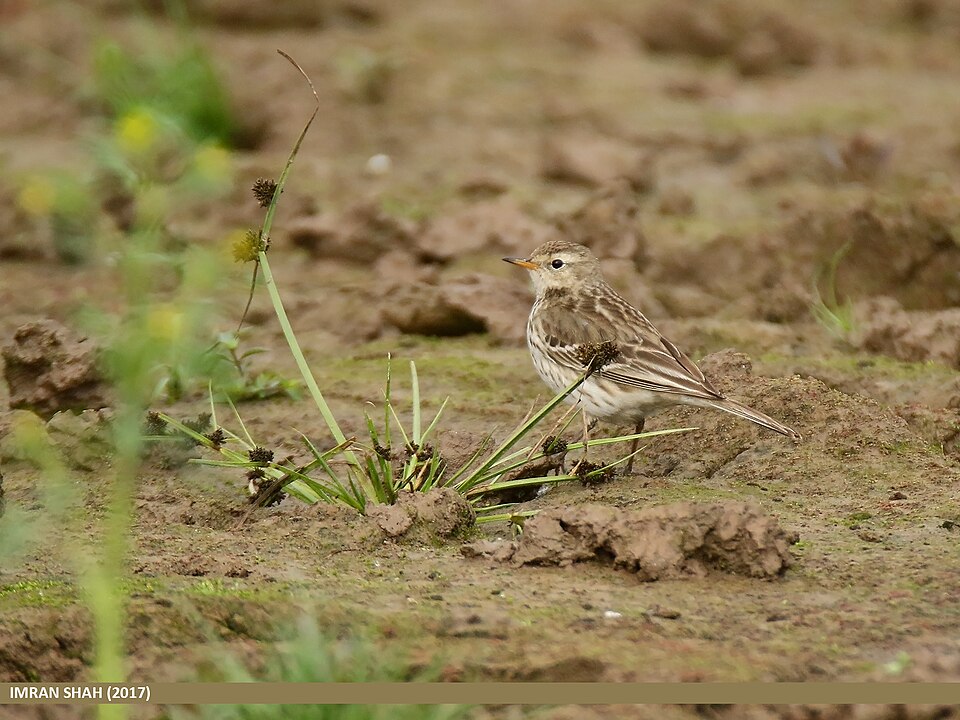 Bisbita Alpino
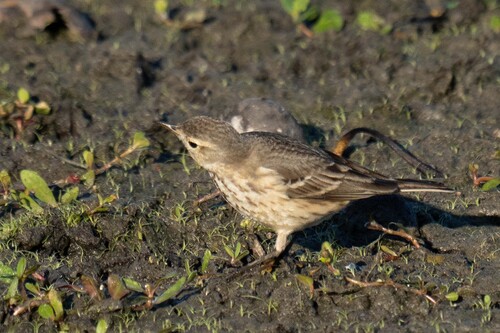 Bisbita Norteamericano
En breve
The most reliable field mark between Water Pipit and Buff-bellied Pipit is the Water Pipit's strong white supercilium and whiter outer tail feathers, especially in breeding plumage. Juvenile and non-breeding birds are trickier, but Water Pipit is generally paler below with less diffuse streaking, and has a greyer head than Buff-bellied. Both can look very similar in autumn and winter, so focus on the supercilium, tail pattern, and subtle differences in underpart coloration and streaking. Structural differences are minor but Water Pipit tends to be slightly longer-winged and longer-tailed.
Consejos de identificación
- Supercilium: Water Pipit has a strong, broad white supercilium in breeding plumage and a still noticeable but less distinct one in winter; Buff-bellied Pipit’s supercilium is faint or absent in all plumages. This is the single best mark in most conditions.
- Outer Tail Feathers: Water Pipit shows white outer tail feathers (sometimes with a hint of grey in some subspecies), visible in flight or when the tail is spread; Buff-bellied Pipit does not have this feature described and typically lacks it. Check this when birds flush or preen.
- Underpart Color: Water Pipit in breeding plumage has pale pink-buff underparts fading to whitish on the lower belly, with little or faint streaking. Buff-bellied Pipit is buff on the breast/flanks with diffuse streaking and a whitish belly, but lacks the pinkish wash.
- Head Color: Water Pipit’s head is grey (especially in males), contrasting with the upperparts, and the supercilium stands out. Buff-bellied’s head is more uniformly grey-brown, blending with the back.
- Underpart Streaking: Water Pipit is less streaked below, especially in breeding plumage; Buff-bellied is more diffusely streaked on the buff breast and flanks in all plumages.
- Juvenile/First-winter Birds: Both are browner and more streaked, but Water Pipit juveniles are paler below and may show a stronger supercilium. Buff-bellied juveniles are more uniformly streaked and lack a strong supercilium.
- Leg Color: Water Pipit has dark (not pinkish) legs, matching Buff-bellied, so this is not a separator.
- Bill Color: Both have dark bills; not a separator.
- Structure: Water Pipit is slightly longer-winged and longer-tailed, but this is subtle and not reliable except in direct comparison.
- Flight Views: In flight, look for the white outer tail feathers of Water Pipit. Buff-bellied does not show this.
- Sex Differences: Water Pipit females are on average greyer-headed than males, but both sexes show the key marks above. Buff-bellied shows little sexual dimorphism in field marks.
- Seasonal Variation: Water Pipit’s supercilium is strongest in spring, less so in autumn/winter but still present. Buff-bellied’s is always faint.
- Habitat/Range: In North America, expect Buff-bellied; in Europe/Asia, Water Pipit is default except for rare vagrants. In open tundra or high mountains, check context.
- Voice: Buff-bellied’s call is a squeaky 'sip'; Water Pipit’s call is not described here, so use with caution.
- Pitfalls: Both species can look very similar in autumn/winter or as juveniles. In these cases, rely on the supercilium and tail pattern, and use range/habitat context as a backup.
Tamaño
Both species are small pipits and very close in size, with Water Pipit at 15–17 cm in length and weighing 18.7–23 g [wikipedia]. Buff-bellied Pipit is described as a small songbird, but no precise measurements are given in the notes. In the field, size is not a reliable separator between these two—any difference is subtle and easily masked by posture or distance.
Plumaje
-
Juvenile/First-winter: Both species are browner and more heavily streaked above and below than adults. Water Pipit juveniles have prominent underpart streaking but tend to be paler below than Buff-bellied, with a hint of a stronger supercilium. Buff-bellied juveniles are diffusely streaked on the buff breast and flanks, with a whitish belly, and lack a strong supercilium.
-
Non-breeding/Autumn: Water Pipit becomes greyer-brown above, with a less distinct but still present supercilium, and white outer tail feathers. Underparts are white with light brown streaking on breast/flanks. Buff-bellied is grey-brown above, diffusely streaked below on buff breast/flanks, with a whitish belly; the supercilium is faint or absent.
-
Breeding/Spring: Water Pipit shows greyish-brown upperparts, weak streaking, pale pink-buff underparts fading to whitish belly, and a broad white supercilium. Buff-bellied is lightly streaked grey-brown above, diffusely streaked below on buff breast/flanks, and has a whitish belly but lacks the strong supercilium and pink-buff wash. Water Pipit’s outer tail feathers are white; Buff-bellied’s are not described as such, so this is a key mark.
Comportamiento
Both species forage on the ground, running or walking with a similar pipit jizz. Water Pipit is described as 'much warier' than Rock Pipit, but no direct behavioral contrast is given for Buff-bellied. Both nest on the ground in open areas and form flocks outside the breeding season. In general, behavior is not a strong separator between these two.
Hábitat
Water Pipit breeds in high mountains of southern Europe and across the Palearctic, moving to lowlands or wet open areas in winter. Buff-bellied Pipit (American Pipit) breeds on tundra and winters in open, lightly vegetated areas, including meadows and fields, similar to Water Pipit’s wintering habitat. In Europe, Buff-bellied is a rare vagrant, so context can help: in North America, Buff-bellied is expected; in Europe/Asia, Water Pipit is the default except in rare vagrancy situations.
Voz
Buff-bellied Pipit’s call is a squeaky 'sip.' No vocal description is given for Water Pipit in these notes, so voice is not a reliable separator based on this information.
Bisbita Alpino · Bisbita Norteamericano · Mis aves difíciles