

Motmot

Andarríos Solitario vs Playero Aliblanco

Tringa solitaria frente a Tringa semipalmata

Juega un quiz con Andarríos Solitario y Playero Aliblanco
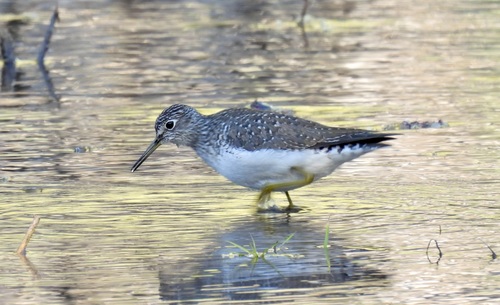
Andarríos Solitario (Tringa solitaria) Andarríos Solitario
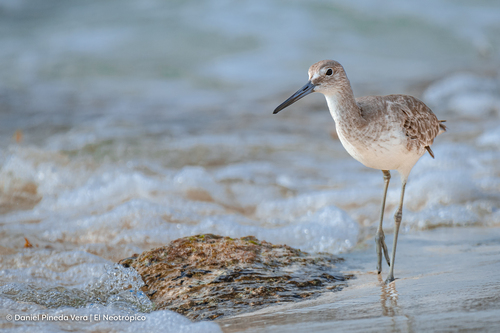
Playero Aliblanco (Tringa semipalmata) Playero Aliblanco

Medios

Cargando…

En breve

The most reliable field mark between Solitary Sandpiper and Willet is the striking wing pattern visible in flight: Willet shows a bold white wing stripe and white rump, while Solitary Sandpiper has uniformly dark wings above and below with a dark rump and tail center. Willet is also much larger and bulkier, with a heavier bill and longer legs. When perched, Solitary Sandpiper appears compact and dark-backed, while Willet is pale gray above with a more robust build. Age-related wing patterns are not described for Solitary Sandpiper or Willet, so adult flight marks are key. Both species may be found in similar wetland habitats, but Willet favors more open coastal areas.

Consejos de identificación

  1. Flight pattern is diagnostic: Willet shows a bold white wing stripe and white rump, visible from above and below in all ages and seasons. Solitary Sandpiper has uniformly dark wings and a dark rump and tail center—never any white panel or rump. Always check birds in flight for this contrast.
  2. Size and structure: Willet is much larger, longer-legged, and heavier-billed than Solitary Sandpiper. If you see both together, Willet will dwarf the Solitary. Even alone, Willet's robust build and long legs are distinctive.
  3. Perched appearance: Solitary Sandpiper is compact, with a dark greenish-brown back and fine light spots on the upperwings. Willet is pale gray above, white below, and has a heavier, straight bill and longer legs.
  4. Rump and tail: In flight, Willet's white rump and gray tail band are obvious. Solitary Sandpiper has a dark rump and tail center, which helps separate it from any Tringa with a white rump (including Willet).
  5. Upperwing pattern: Solitary Sandpiper's upperwings are dark with small light spots; Willet's are boldly patterned with white and black. This is visible even at a distance in good light.
  6. Head and face: Willet shows a white area above the lores and a narrow whitish eye ring, giving a 'spectacled' look. Solitary Sandpiper has a more uniform grayish head and breast, with less facial contrast.
  7. Leg color: Willet has gray legs; Solitary Sandpiper's legs are greenish, but this can be subtle in poor light.
  8. Bill shape: Willet's bill is thick, straight, and proportionally long. Solitary Sandpiper has a finer, shorter bill.
  9. Breeding vs non-breeding plumage: Willet develops brown barring on the upperparts in breeding season, but remains pale gray otherwise. Solitary Sandpiper keeps its spotted upperwing pattern year-round.
  10. Habitat context: Willet is most often found in open, coastal wetlands; Solitary Sandpiper prefers wooded ponds and quieter freshwater habitats. If you are in a shaded woodland pond, Willet is unlikely.
  11. Behavior: Willet often stands tall and walks steadily in open areas, sometimes in small groups. Solitary Sandpiper is more solitary, often bobbing its tail and feeding along pond edges.
  12. Vocalization: Listen for Solitary Sandpiper's three-note whistle in flight; Willet's call is louder and more ringing, often given in alarm.
  13. Group size: Solitary Sandpiper is usually alone or in very small numbers; Willet may be seen in loose flocks, especially on migration or wintering grounds.
  14. Jizz in flight: Willet's flight is strong and direct, with stiff, downcurved wings showing the white stripe. Solitary Sandpiper's flight is more fluttery and less direct, with no white in the wings.
  15. Pitfalls: Immature and non-breeding Willets are plainer but always show the white wing stripe in flight. Solitary Sandpiper never shows this, regardless of age or season.

Tamaño

Willet is dramatically larger and heavier than Solitary Sandpiper. Willet averages about 287 g in body mass and measures 31–41 cm in length, making it the largest Tringa sandpiper. Solitary Sandpiper is much smaller and lighter, averaging 48.6 g and measuring 18–23 cm. In the field, Willet's size is obvious, appearing nearly twice as long and several times bulkier than Solitary Sandpiper. Willet also has a thicker, longer bill and longer legs, while Solitary Sandpiper is compact and dainty by comparison.

Plumaje

In flight, Willet is unmistakable due to its broad, bold white wing stripe running across blackish primaries and coverts, with white secondaries and a white rump separated by a gray tail band. This pattern is present in all ages and seasons. Solitary Sandpiper, by contrast, has dark wings above and below without any white stripe, and a dark rump and tail center—never showing the white rump or wing panel of Willet. On the ground, Solitary Sandpiper is dark greenish-brown above with fine light spotting on the wings, a grayish head and breast, and white underparts. Willet is pale gray above, white below, with a white rump and a distinct white area above the lores and a narrow whitish eye ring. In breeding plumage, Willet shows brown barring on the upperparts, while Solitary Sandpiper maintains its spotted upperwing pattern. Non-breeding Willets are plainer gray. No age-specific upperwing marks are described for either species, so these contrasts apply to all plumages.

Comportamiento

Willet is robust and often stands tall, walking steadily with a heavy, straight bill and long gray legs. It may wade up to its belly and is frequently seen in small groups, especially in winter. Solitary Sandpiper is more likely to be seen alone, often bobbing its tail, and appears more delicate and compact. Willet is vigilant and quick to give alarm calls, while Solitary Sandpiper is quieter and more retiring. Willet may perch on rocks or posts, but Solitary Sandpiper is more likely to be found along wooded pond edges or quieter wetlands.

Hábitat

Willet prefers open coastal habitats such as saltmarshes, mudflats, and sandy beaches, but can also be found in inland wetlands. Solitary Sandpiper is more often found in freshwater habitats, especially wooded ponds, marshes, and quiet streams, and is less likely to be seen in open coastal environments. Overlap can occur during migration, but Willet is rarely found in the wooded, shaded wetlands favored by Solitary Sandpiper.

Voz

Solitary Sandpiper gives a distinctive three-note whistle in flight, which is a useful clue if heard. Willet is known for its loud, ringing calls, especially when alarmed, but specific vocal differences are not detailed in the notes. Both can be vocal, but Solitary Sandpiper's call is more subdued and less likely to draw attention than Willet's.

Enviar una descripción mejor

Usa las mismas secciones que la comparación. El texto se publica al momento.

The most reliable field mark between Solitary Sandpiper and Willet is the striking wing pattern visible in flight: Willet shows a bold white wing stripe and white rump, while Solitary Sandpiper has uniformly dark wings above and below with a dark rump and tail center. Willet is also much larger and bulkier, with a heavier bill and longer legs. When perched, Solitary Sandpiper appears compact and dark-backed, while Willet is pale gray above with a more robust build. Age-related wing patterns are not described for Solitary Sandpiper or Willet, so adult flight marks are key. Both species may be found in similar wetland habitats, but Willet favors more open coastal areas.

  1. Flight pattern is diagnostic: Willet shows a bold white wing stripe and white rump, visible from above and below in all ages and seasons. Solitary Sandpiper has uniformly dark wings and a dark rump and tail center—never any white panel or rump. Always check birds in flight for this contrast.
  2. Size and structure: Willet is much larger, longer-legged, and heavier-billed than Solitary Sandpiper. If you see both together, Willet will dwarf the Solitary. Even alone, Willet's robust build and long legs are distinctive.
  3. Perched appearance: Solitary Sandpiper is compact, with a dark greenish-brown back and fine light spots on the upperwings. Willet is pale gray above, white below, and has a heavier, straight bill and longer legs.
  4. Rump and tail: In flight, Willet's white rump and gray tail band are obvious. Solitary Sandpiper has a dark rump and tail center, which helps separate it from any Tringa with a white rump (including Willet).
  5. Upperwing pattern: Solitary Sandpiper's upperwings are dark with small light spots; Willet's are boldly patterned with white and black. This is visible even at a distance in good light.
  6. Head and face: Willet shows a white area above the lores and a narrow whitish eye ring, giving a 'spectacled' look. Solitary Sandpiper has a more uniform grayish head and breast, with less facial contrast.
  7. Leg color: Willet has gray legs; Solitary Sandpiper's legs are greenish, but this can be subtle in poor light.
  8. Bill shape: Willet's bill is thick, straight, and proportionally long. Solitary Sandpiper has a finer, shorter bill.
  9. Breeding vs non-breeding plumage: Willet develops brown barring on the upperparts in breeding season, but remains pale gray otherwise. Solitary Sandpiper keeps its spotted upperwing pattern year-round.
  10. Habitat context: Willet is most often found in open, coastal wetlands; Solitary Sandpiper prefers wooded ponds and quieter freshwater habitats. If you are in a shaded woodland pond, Willet is unlikely.
  11. Behavior: Willet often stands tall and walks steadily in open areas, sometimes in small groups. Solitary Sandpiper is more solitary, often bobbing its tail and feeding along pond edges.
  12. Vocalization: Listen for Solitary Sandpiper's three-note whistle in flight; Willet's call is louder and more ringing, often given in alarm.
  13. Group size: Solitary Sandpiper is usually alone or in very small numbers; Willet may be seen in loose flocks, especially on migration or wintering grounds.
  14. Jizz in flight: Willet's flight is strong and direct, with stiff, downcurved wings showing the white stripe. Solitary Sandpiper's flight is more fluttery and less direct, with no white in the wings.
  15. Pitfalls: Immature and non-breeding Willets are plainer but always show the white wing stripe in flight. Solitary Sandpiper never shows this, regardless of age or season.

Willet is dramatically larger and heavier than Solitary Sandpiper. Willet averages about 287 g in body mass and measures 31–41 cm in length, making it the largest Tringa sandpiper. Solitary Sandpiper is much smaller and lighter, averaging 48.6 g and measuring 18–23 cm. In the field, Willet's size is obvious, appearing nearly twice as long and several times bulkier than Solitary Sandpiper. Willet also has a thicker, longer bill and longer legs, while Solitary Sandpiper is compact and dainty by comparison.

In flight, Willet is unmistakable due to its broad, bold white wing stripe running across blackish primaries and coverts, with white secondaries and a white rump separated by a gray tail band. This pattern is present in all ages and seasons. Solitary Sandpiper, by contrast, has dark wings above and below without any white stripe, and a dark rump and tail center—never showing the white rump or wing panel of Willet. On the ground, Solitary Sandpiper is dark greenish-brown above with fine light spotting on the wings, a grayish head and breast, and white underparts. Willet is pale gray above, white below, with a white rump and a distinct white area above the lores and a narrow whitish eye ring. In breeding plumage, Willet shows brown barring on the upperparts, while Solitary Sandpiper maintains its spotted upperwing pattern. Non-breeding Willets are plainer gray. No age-specific upperwing marks are described for either species, so these contrasts apply to all plumages.

Willet is robust and often stands tall, walking steadily with a heavy, straight bill and long gray legs. It may wade up to its belly and is frequently seen in small groups, especially in winter. Solitary Sandpiper is more likely to be seen alone, often bobbing its tail, and appears more delicate and compact. Willet is vigilant and quick to give alarm calls, while Solitary Sandpiper is quieter and more retiring. Willet may perch on rocks or posts, but Solitary Sandpiper is more likely to be found along wooded pond edges or quieter wetlands.

Willet prefers open coastal habitats such as saltmarshes, mudflats, and sandy beaches, but can also be found in inland wetlands. Solitary Sandpiper is more often found in freshwater habitats, especially wooded ponds, marshes, and quiet streams, and is less likely to be seen in open coastal environments. Overlap can occur during migration, but Willet is rarely found in the wooded, shaded wetlands favored by Solitary Sandpiper.

Solitary Sandpiper gives a distinctive three-note whistle in flight, which is a useful clue if heard. Willet is known for its loud, ringing calls, especially when alarmed, but specific vocal differences are not detailed in the notes. Both can be vocal, but Solitary Sandpiper's call is more subdued and less likely to draw attention than Willet's.

¿Descartar los cambios?

Tienes ediciones sin guardar. Si sales ahora, se perderán.

Andarríos Solitario · Playero Aliblanco · Mis aves difíciles