

Motmot

Ánsar Nival vs Mérgulo Jaspeado Americano

Anser caerulescens frente a Brachyramphus marmoratus

Juega un quiz con Ánsar Nival y Mérgulo Jaspeado Americano
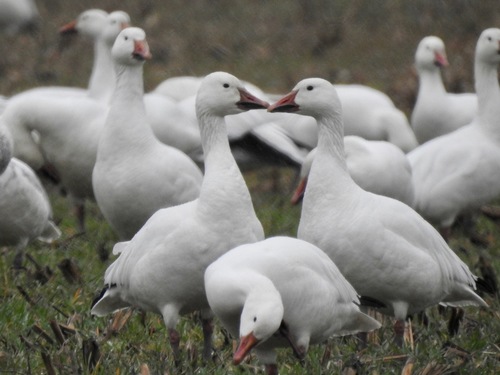
Ánsar Nival (Anser caerulescens) Ánsar Nival
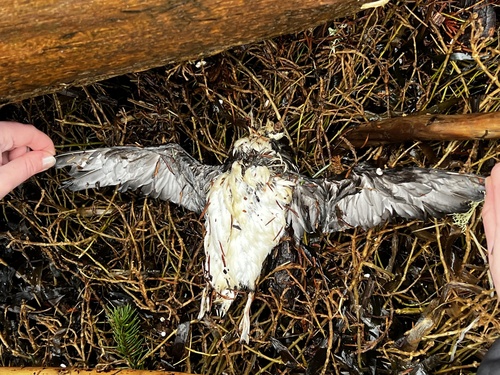
Mérgulo Jaspeado Americano (Brachyramphus marmoratus) Mérgulo Jaspeado Americano

Medios

Cargando…

En breve

The most reliable field mark between Snow Goose and Marbled Murrelet is overall size and shape: Snow Goose is a large, long-necked waterfowl, while Marbled Murrelet is a small, chunky seabird with pointed wings and a short bill. In flight or at rest, Snow Goose (of either color morph) is much bulkier and longer-necked, with a pink bill and legs, while Marbled Murrelet is compact, short-necked, and has a slender black bill. Plumage differences are stark: Snow Goose is either all white with black wingtips or dark blue-gray with a white head, while Marbled Murrelet is mottled brown in breeding season and black-and-white in winter. Habitat is also a strong clue: Snow Goose is found in open wetlands or agricultural fields, Marbled Murrelet at sea or near old-growth coastal forests.

Consejos de identificación

  1. Size is the first check: If the bird is anywhere near the size of a domestic goose or large duck, it is a Snow Goose; Marbled Murrelet is much smaller, closer to a pigeon or small duck.
  2. Neck length: Snow Goose has a long, extended neck, especially obvious when alert or swimming; Marbled Murrelet has a short, stubby neck.
  3. Bill shape and color: Snow Goose has a large, triangular pink bill with a black 'grin patch' (visible even at a distance); Marbled Murrelet has a thin, short, black bill.
  4. Leg color: Snow Goose has rose-red legs and feet (duller in immatures); Marbled Murrelet has dark legs, usually not visible at sea.
  5. Plumage pattern: Adult Snow Goose is either all white with black wingtips (white morph) or blue-gray with a white head and neck (blue morph). Marbled Murrelet is never all white or blue-gray; breeding birds are mottled brown, winter birds are black above and white below.
  6. Juvenile confusion: Immature blue-morph Snow Geese are drab gray with little white, but still show a pale head and black wingtips; Marbled Murrelet juveniles are similar to adults and never show this pattern.
  7. Wing shape in flight: Snow Goose has broad, rounded wings with black tips; Marbled Murrelet has pointed wings and a rapid, fluttery flight.
  8. Flock size and behavior: Snow Geese are in large, noisy flocks, often flying in V-formations or feeding in groups; Marbled Murrelets are solitary or in pairs, rarely in groups.
  9. Habitat context: Snow Goose is found in open wetlands, lakes, or fields; Marbled Murrelet is almost always on the ocean or near mature coastal forests.
  10. Vocalization: Loud honking = Snow Goose; silence or faint, high-pitched calls = Marbled Murrelet.
  11. Head pattern: Snow Goose (all ages) has a plain white or pale head (sometimes stained rusty); Marbled Murrelet never has a white head, always brown or blackish on the crown.
  12. Tail and body shape: Snow Goose has a full, rounded body and a relatively short tail; Marbled Murrelet is compact, with a short tail and chunky appearance.
  13. Seasonal plumage: Snow Goose does not show strong seasonal change; Marbled Murrelet shifts from mottled brown (breeding) to black-and-white (non-breeding), but never matches the goose's patterns.
  14. Feeding behavior: Snow Goose grazes on land or in shallow water; Marbled Murrelet dives for fish at sea.
  15. Geographic overlap: If seen far from the ocean or old-growth forest, Marbled Murrelet is highly unlikely; if seen in a field or marsh with other geese, it's almost certainly Snow Goose.

Tamaño

Snow Goose is vastly larger, with an average body mass of 2630 g [wikidata], standing 64–79 cm tall (lesser) or up to 79 cm (greater) [wikipedia]. Marbled Murrelet is much smaller, about 25 cm in length [wikipedia], and is described as 'small and chunky.' The difference is so great that even distant views should reveal the goose as a large, heavy-bodied bird, while the murrelet is closer in size to a pigeon or small duck. Bill size is also a giveaway: Snow Goose has a large, pink bill with a black 'grin patch,' while Marbled Murrelet has a thin, short, black bill.

Plumaje

Juvenile and immature Snow Geese (especially blue morph) can appear drab gray or slate, with little white on the head or belly, but always show a contrasting white or pale head (except in the youngest immatures) and black wingtips in flight. Adult white-morph Snow Geese are pure white with black primaries, while blue-morph adults are mostly blue-gray with a white head and neck. All ages have rose-red legs and a pink bill with a black 'grin patch.' Marbled Murrelet, in breeding plumage, is mottled brown overall with no white head or body; in non-breeding (winter) plumage, it is black above and white below, with a black crown, nape, wings, and back, and a white collar. The murrelet never shows the all-white or blue-and-white patterns of Snow Goose, nor the pink bill or legs. In flight, Snow Goose shows broad wings with black tips, while Marbled Murrelet has pointed wings and a compact body. No age or season of Marbled Murrelet resembles either morph of Snow Goose.

Comportamiento

Snow Geese are typically seen in large, noisy flocks, often feeding in open fields or flying in V-formations. They are social and conspicuous, usually on the ground or swimming. Marbled Murrelets are usually seen singly or in pairs on the ocean, diving for fish, or flying rapidly and low over the water. They are rarely seen inland except near nesting sites and do not form large flocks. Their flight is fast and direct, with rapid wingbeats, unlike the slower, heavier flight of a goose.

Hábitat

Snow Goose is found in open wetlands, lakes, marshes, and agricultural fields, especially during migration and winter. They are rarely seen far from water or open ground. Marbled Murrelet is a coastal seabird, usually seen on the ocean near shore, and nests in old-growth forests or, at high latitudes, on the ground among rocks. It is not found in open fields or freshwater habitats, and is strongly associated with marine environments and, during breeding, mature coastal forests.

Voz

Snow Goose is very vocal, with loud, honking calls that can be heard from a great distance. Marbled Murrelet is generally quiet at sea, with only soft, high-pitched calls, and is not likely to be heard unless near a nest site. The loud, flocking honks of Snow Goose are diagnostic and never matched by Marbled Murrelet.

Enviar una descripción mejor

Usa las mismas secciones que la comparación. El texto se publica al momento.

The most reliable field mark between Snow Goose and Marbled Murrelet is overall size and shape: Snow Goose is a large, long-necked waterfowl, while Marbled Murrelet is a small, chunky seabird with pointed wings and a short bill. In flight or at rest, Snow Goose (of either color morph) is much bulkier and longer-necked, with a pink bill and legs, while Marbled Murrelet is compact, short-necked, and has a slender black bill. Plumage differences are stark: Snow Goose is either all white with black wingtips or dark blue-gray with a white head, while Marbled Murrelet is mottled brown in breeding season and black-and-white in winter. Habitat is also a strong clue: Snow Goose is found in open wetlands or agricultural fields, Marbled Murrelet at sea or near old-growth coastal forests.

  1. Size is the first check: If the bird is anywhere near the size of a domestic goose or large duck, it is a Snow Goose; Marbled Murrelet is much smaller, closer to a pigeon or small duck.
  2. Neck length: Snow Goose has a long, extended neck, especially obvious when alert or swimming; Marbled Murrelet has a short, stubby neck.
  3. Bill shape and color: Snow Goose has a large, triangular pink bill with a black 'grin patch' (visible even at a distance); Marbled Murrelet has a thin, short, black bill.
  4. Leg color: Snow Goose has rose-red legs and feet (duller in immatures); Marbled Murrelet has dark legs, usually not visible at sea.
  5. Plumage pattern: Adult Snow Goose is either all white with black wingtips (white morph) or blue-gray with a white head and neck (blue morph). Marbled Murrelet is never all white or blue-gray; breeding birds are mottled brown, winter birds are black above and white below.
  6. Juvenile confusion: Immature blue-morph Snow Geese are drab gray with little white, but still show a pale head and black wingtips; Marbled Murrelet juveniles are similar to adults and never show this pattern.
  7. Wing shape in flight: Snow Goose has broad, rounded wings with black tips; Marbled Murrelet has pointed wings and a rapid, fluttery flight.
  8. Flock size and behavior: Snow Geese are in large, noisy flocks, often flying in V-formations or feeding in groups; Marbled Murrelets are solitary or in pairs, rarely in groups.
  9. Habitat context: Snow Goose is found in open wetlands, lakes, or fields; Marbled Murrelet is almost always on the ocean or near mature coastal forests.
  10. Vocalization: Loud honking = Snow Goose; silence or faint, high-pitched calls = Marbled Murrelet.
  11. Head pattern: Snow Goose (all ages) has a plain white or pale head (sometimes stained rusty); Marbled Murrelet never has a white head, always brown or blackish on the crown.
  12. Tail and body shape: Snow Goose has a full, rounded body and a relatively short tail; Marbled Murrelet is compact, with a short tail and chunky appearance.
  13. Seasonal plumage: Snow Goose does not show strong seasonal change; Marbled Murrelet shifts from mottled brown (breeding) to black-and-white (non-breeding), but never matches the goose's patterns.
  14. Feeding behavior: Snow Goose grazes on land or in shallow water; Marbled Murrelet dives for fish at sea.
  15. Geographic overlap: If seen far from the ocean or old-growth forest, Marbled Murrelet is highly unlikely; if seen in a field or marsh with other geese, it's almost certainly Snow Goose.

Snow Goose is vastly larger, with an average body mass of 2630 g [wikidata], standing 64–79 cm tall (lesser) or up to 79 cm (greater) [wikipedia]. Marbled Murrelet is much smaller, about 25 cm in length [wikipedia], and is described as 'small and chunky.' The difference is so great that even distant views should reveal the goose as a large, heavy-bodied bird, while the murrelet is closer in size to a pigeon or small duck. Bill size is also a giveaway: Snow Goose has a large, pink bill with a black 'grin patch,' while Marbled Murrelet has a thin, short, black bill.

Juvenile and immature Snow Geese (especially blue morph) can appear drab gray or slate, with little white on the head or belly, but always show a contrasting white or pale head (except in the youngest immatures) and black wingtips in flight. Adult white-morph Snow Geese are pure white with black primaries, while blue-morph adults are mostly blue-gray with a white head and neck. All ages have rose-red legs and a pink bill with a black 'grin patch.' Marbled Murrelet, in breeding plumage, is mottled brown overall with no white head or body; in non-breeding (winter) plumage, it is black above and white below, with a black crown, nape, wings, and back, and a white collar. The murrelet never shows the all-white or blue-and-white patterns of Snow Goose, nor the pink bill or legs. In flight, Snow Goose shows broad wings with black tips, while Marbled Murrelet has pointed wings and a compact body. No age or season of Marbled Murrelet resembles either morph of Snow Goose.

Snow Geese are typically seen in large, noisy flocks, often feeding in open fields or flying in V-formations. They are social and conspicuous, usually on the ground or swimming. Marbled Murrelets are usually seen singly or in pairs on the ocean, diving for fish, or flying rapidly and low over the water. They are rarely seen inland except near nesting sites and do not form large flocks. Their flight is fast and direct, with rapid wingbeats, unlike the slower, heavier flight of a goose.

Snow Goose is found in open wetlands, lakes, marshes, and agricultural fields, especially during migration and winter. They are rarely seen far from water or open ground. Marbled Murrelet is a coastal seabird, usually seen on the ocean near shore, and nests in old-growth forests or, at high latitudes, on the ground among rocks. It is not found in open fields or freshwater habitats, and is strongly associated with marine environments and, during breeding, mature coastal forests.

Snow Goose is very vocal, with loud, honking calls that can be heard from a great distance. Marbled Murrelet is generally quiet at sea, with only soft, high-pitched calls, and is not likely to be heard unless near a nest site. The loud, flocking honks of Snow Goose are diagnostic and never matched by Marbled Murrelet.

¿Descartar los cambios?

Tienes ediciones sin guardar. Si sales ahora, se perderán.

Ánsar Nival · Mérgulo Jaspeado Americano · Mis aves difíciles