
Gavilán Chikra vs Gavilán Común
Tachyspiza badia frente a Accipiter nisus
Juega un quiz con Gavilán Chikra y Gavilán Común
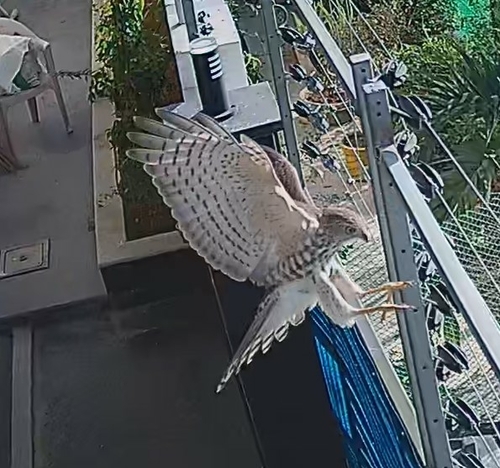 Gavilán Chikra
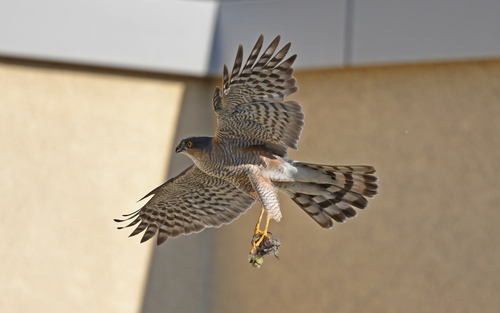 Gavilán Común
En breve
La marca de campo más confiable entre el Gavilán Chikra y el Gavilán Común es el patrón de la cola y las partes inferiores, especialmente en vuelo y en juveniles. Los juveniles de Gavilán Chikra tienen una cola estrecha y oscura con las plumas centrales mayormente sin bandas, excepto por una banda terminal, mientras que los juveniles de Gavilán Común muestran una cola más uniformemente y fuertemente barrada. Los adultos difieren en el color del iris y el barrado de las partes inferiores: los machos de Gavilán Chikra tienen un iris rojo y un barrado rufoso fino, mientras que los machos de Gavilán Común tienen iris de color naranja a rojo y un barrado naranja más amplio. Las hembras y los juveniles de ambos pueden ser confusos, pero el Gavilán Chikra es más pequeño y tiene una estructura menos robusta. Usa las vistas de vuelo y el color del iris para la separación más confiable.
Consejos de identificación
- Patrón de cola juvenil: Los juveniles de Gavilán Chikra tienen plumas centrales de la cola que están mayormente sin bandas, excepto por una banda terminal, mientras que los juveniles de Gavilán Común tienen una cola más uniformemente y fuertemente barrada. Esto se ve mejor en vuelo o cuando la cola está extendida.
- Partes inferiores juveniles: Los juveniles de Gavilán Chikra muestran rayas y manchas oscuras en el pecho superior con un barrado estrecho en el ala; los juveniles de Gavilán Común están gruesamente barrados o manchados de marrón por debajo y carecen del patrón del Gavilán Chikra.
- Color del iris en machos adultos: Los machos de Gavilán Chikra tienen un iris rojo llamativo, mientras que los machos de Gavilán Común tienen iris de color naranja a rojo. Esto es visible a corta distancia o con buena luz.
- Color del iris en hembras adultas: Las hembras de Gavilán Chikra tienen un iris amarillo-naranja; las hembras de Gavilán Común tienen iris de color amarillo a naranja. Esto es sutil y puede superponerse, pero puede ayudar con la experiencia.
- Barrado de las partes inferiores en machos adultos: Los machos de Gavilán Chikra tienen barras rufosas finas sobre un fondo blanquecino; los machos de Gavilán Común tienen un barrado naranja más amplio que puede parecer simplemente naranja desde la distancia.
- Color de las partes superiores: Los machos de Gavilán Chikra son grises por encima; los machos de Gavilán Común son gris-azulados (a veces tendiendo a azul). Las hembras de Gavilán Chikra son marrones; las hembras de Gavilán Común son marrón oscuro o marrón grisáceo.
- Muslos y abdomen inferior: El Gavilán Chikra tiene muslos blanquecinos y menos barrado en el abdomen inferior; el Gavilán Común muestra un barrado más extenso, incluyendo en los muslos.
- Bajo ala en vuelo: Los machos de Gavilán Chikra muestran un forro de bajo ala claro y puntas de alas negruzcas; los Gavilán Común tienen un bajo ala más uniformemente barrado.
- Forma y patrón de la cola: Las bandas de la cola del Gavilán Chikra son tenues en las plumas exteriores y las plumas centrales son mayormente lisas; la cola del Gavilán Común está más uniformemente y fuertemente barrada en todas las plumas.
- Tamaño y estructura: El Gavilán Chikra es más pequeño y más ligero, con una cola más estrecha y larga; el Gavilán Común es más robusto, especialmente la hembra, y tiene una cola de extremo cuadrado y alas más anchas.
- Estilo de vuelo: Ambos utilizan aleteo-aleteo-planeo, pero el Gavilán Chikra a menudo parece más ligero y menos potente que el Gavilán Común, que es más directo y rápido.
- Contexto de hábitat: En áreas abiertas o urbanas, es más probable ver al Gavilán Chikra; en bosques densos, es más probable ver al Gavilán Común, aunque ambos pueden superponerse en jardines.
- Postura posada: El Gavilán Chikra a menudo se posa de manera más abierta y erguida; el Gavilán Común es más reservado y a menudo se posa en la cobertura.
- Voz: Si se escucha, los llamados pee-wee o kik-ki agudos del Gavilán Chikra son distintivos, pero la voz rara vez es diagnóstica a menos que se compare directamente.
- Trampas: Las hembras y los juveniles de ambas especies son los más frecuentemente confundidos; siempre verifica el patrón de la cola y el color del iris si es posible, y utiliza múltiples marcas para una identificación confiable.
Tamaño
El Gavilán Común es notablemente más grande y robusto, especialmente en hembras. Las hembras adultas de Gavilán Común pueden medir hasta 41 cm de largo y pesar hasta 342 g, mientras que el Gavilán Chikra es más pequeño, midiendo entre 26 y 30 cm (sin masa dada, pero siempre más pequeño que el Gavilán Común). Los machos de ambos son más similares en tamaño, pero el Gavilán Común aún tiene la ventaja. En el campo, el Gavilán Chikra parece más pequeño y ligero, con una cola más estrecha y larga en relación con el tamaño del cuerpo.
Plumaje
Los juveniles de Gavilán Chikra muestran rayas y manchas oscuras en el pecho superior, con un ala estrechamente barrada y una cola con bandas oscuras estrechas; crucialmente, las plumas centrales de la cola están mayormente sin bandas, excepto por una banda terminal oscura. Los juveniles de Gavilán Común son marrones por encima con bordes oxidados, gruesamente barrados o manchados de marrón por debajo, y tienen una cola más uniformemente y fuertemente barrada. Los machos adultos de Gavilán Chikra son grises por encima, blanquecinos por debajo con barras rufosas finas, y tienen un iris rojo; los machos adultos de Gavilán Común son gris-azulados por encima, barrados de naranja por debajo, y tienen iris de color naranja a rojo. Las hembras de Gavilán Chikra son marrones por encima con un barrado más pesado por debajo y un iris amarillo-naranja, mientras que las hembras de Gavilán Común son marrón oscuro o marrón grisáceo por encima, barradas de marrón por debajo, y tienen iris de color amarillo a naranja. El abdomen inferior del Gavilán Chikra está menos barrado y los muslos son blanquecinos, mientras que los Gavilán Común muestran un barrado más extenso. En vuelo, los machos de Gavilán Chikra muestran un forro de bajo ala claro y puntas de alas negruzcas; los Gavilán Común tienen un bajo ala más uniformemente barrado.
Comportamiento
Ambas especies utilizan un estilo de vuelo de aleteo-aleteo-planeo, pero el Gavilán Chikra es más probable que se vea en una gama más amplia de hábitats abiertos, incluyendo áreas urbanas, y a menudo se posa de manera más abierta. El Gavilán Común es un especialista del bosque, volando con aleteos rápidos y planeos, y es más reservado, a menudo visto atravesando árboles. Ambos pueden planear durante la temporada de cría, pero el Gavilán Común es más probable que cace por sorpresa en cobertura densa.
Hábitat
El Gavilán Chikra es altamente adaptable, encontrado en bosques, tierras agrícolas y áreas urbanas a través de Asia y África. El Gavilán Común prefiere bosques y bordes de bosques, pero también se puede encontrar en jardines y parques, especialmente cuando caza. En zonas de superposición, el Gavilán Chikra es más probable que se encuentre en entornos abiertos o urbanos, mientras que el Gavilán Común se mantiene más cerca de la cobertura densa.
Voz
El Gavilán Chikra emite un llamado pee-wee, con la primera nota más alta y la segunda más larga; en vuelo, emite notas agudas kik-ki...kik-ki. El llamado del Gavilán Común no se describe en las notas, pero se sabe que difiere. En la práctica, las vocalizaciones no suelen ser diagnósticas a menos que el llamado se escuche bien y se compare directamente.