
Águila Ventrirroja vs Águila Calzada
Lophotriorchis kienerii frente a Hieraaetus pennatus
Juega un quiz con Águila Ventrirroja y Águila Calzada
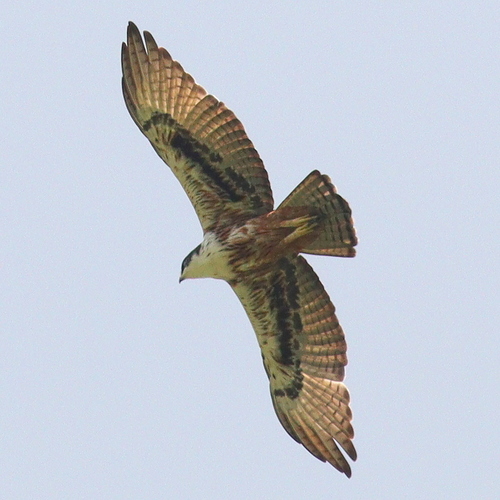 Águila Ventrirroja
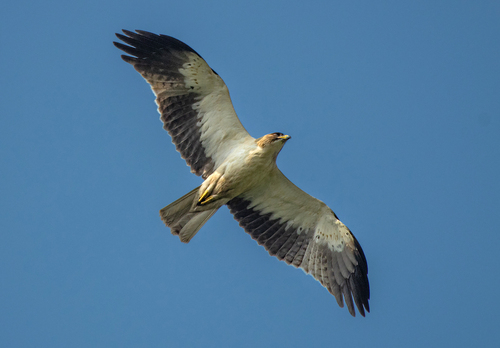 Águila Calzada
En breve
La separación más confiable entre el Águila Ventrirroja y el Águila Calzada—especialmente para inmaduros—es el patrón de las partes inferiores y las alas inferiores en vuelo. Los juveniles de Águila Ventrirroja muestran partes inferiores notablemente blancas con cabeza oscura y bordes oscuros en las alas inferiores, mientras que las Águilas Calzadas (especialmente los morfos pálidos) tienen mucho menos contraste y carecen del aspecto de capucha negra. Los adultos también son distintivos: las Águilas Ventrirrojas tienen una capucha negra audaz, partes inferiores castañas y una garganta blanca, a diferencia de cualquier morfo de Águila Calzada. La estructura y el comportamiento ofrecen pistas adicionales: el Águila Ventrirroja se posa erguido con alas largas que casi alcanzan la cola, y es un especialista en bosques, mientras que el Águila Calzada es más de campo abierto y variable en color. El tamaño es similar, pero el Águila Calzada es ligeramente más pesada en promedio.
Consejos de identificación
- Patrón de alas inferiores juveniles: En vuelo, los juveniles de Águila Ventrirroja muestran partes inferiores muy blancas con una máscara oscura en la cabeza, marcas oscuras en los lados y un borde negro en las cobertoras de las alas inferiores. Los juveniles de Águila Calzada (especialmente los morfos pálidos) carecen de este fuerte contraste y no tienen capucha o máscara negras.
- Patrón de cabeza de adultos: Las Águilas Ventrirrojas adultas tienen una capucha negra audaz y una cresta corta, con una garganta y pecho blancos. Las Águilas Calzadas nunca muestran una capucha o cresta negras, independientemente del morfo.
- Color de las partes inferiores: Las Águilas Ventrirrojas adultas tienen partes inferiores castañas ricas y cobertoras de alas, marcadamente diferenciadas de la garganta blanca. Las Águilas Calzadas (morfos pálidos) son mucho más pálidas por debajo, y los morfos oscuros son uniformemente marrones, nunca castaños.
- Postura de posado: El Águila Ventrirroja se posa muy erguido, con alas casi alcanzando la cola. El Águila Calzada se posa menos erguido y parece más compacto.
- Tarso: El Águila Ventrirroja tiene tarsos completamente emplumados; el Águila Calzada también tiene tarsos emplumados, pero esto no es un fuerte separador en el campo.
- Patrón de cola: Ambas especies tienen colas barradas, pero la de la Ventrirroja es más oscura y más distintivamente barrada, especialmente en juveniles.
- Forma de las alas en vuelo: Ambas son de alas anchas, pero el Águila Ventrirroja puede parecer más similar a un halcón debido a su patrón contrastante y alas más largas en relación con la cola.
- Morfos de color: El Águila Calzada viene en morfos pálidos y oscuros, pero ninguno coincide con el contraste rufo y negro del Águila Ventrirroja adulta. El morfo oscuro del Águila Calzada puede confundirse con otros rapaces, pero no con el patrón único del Águila Ventrirroja.
- Hábitat: El Águila Ventrirroja está casi siempre en bosques cerrados; el Águila Calzada es más probable que se encuentre en hábitats abiertos o de borde.
- Comportamiento de vuelo: El Águila Ventrirroja vuela alto sobre el bosque, a menudo zambulléndose bruscamente; el Águila Calzada vuela más bajo y puede ser vista cazando sobre terreno abierto.
- Vocalización: Si se escucha, el Águila Ventrirroja emite notas agudas de 'fwick'; el Águila Calzada emite un 'kli-kli-kli' estridente.
- Diferencias sexuales: Ambas especies son sexualmente similares en plumaje; la hembra de Águila Ventrirroja puede tener un poco más de negro en la cara, pero esto es sutil.
- Tamaño: El Águila Calzada es ligeramente más pesada, pero esto no es obvio en el campo.
- Riesgo de confusión: El juvenil de Águila Ventrirroja puede confundirse con el Águila Calzada, pero las partes inferiores blancas audaces y los bordes oscuros de la cabeza/alas inferiores son diagnósticos para el Águila Ventrirroja.
- Temporada/contexto: En Asia tropical, el Águila Calzada es a menudo un migrante o visitante invernal, mientras que el Águila Ventrirroja es residente en áreas boscosas. Considera la temporada y el hábitat al identificar.
Tamaño
Ambas especies son águilas pequeñas, pero el Águila Calzada es ligeramente más pesada, con hembras que promedian 840–1,025 g y machos 510–770 g [wikidata]. No hay datos de masa directa disponibles para el Águila Ventrirroja, pero se describe como relativamente pequeña para un águila. En el campo, el tamaño por sí solo no es un separador confiable; enfócate en el plumaje y la estructura en su lugar.
Plumaje
-
Juveniles/immaduros: Los juveniles de Águila Ventrirroja son muy blancos por debajo, con marcas oscuras en los lados, una máscara oscura en la cabeza y un borde oscuro en las cobertoras de las alas inferiores. El forro de las alas inferiores es oscuro, con cobertoras mayores negras y plumas de vuelo finamente barradas con bordes negros. La cola es oscura y barrada. Los juveniles de Águila Calzada (especialmente los morfos pálidos) son mucho menos contrastantes, con partes inferiores pálidas y marcas oscuras menos definidas; los Águilas Calzadas de morfo oscuro son más marrones en general y carecen de la capucha negra y la garganta blanca.
-
Adultos: Las Águilas Ventrirrojas adultas tienen una capucha negra llamativa y una cresta corta, partes inferiores castañas y cobertoras de alas, garganta y pecho blancos, y tarsos completamente emplumados. Las Águilas Calzadas vienen en morfos pálidos y oscuros: los morfos pálidos son de color gris claro con cabeza y plumas de vuelo más oscuras, mientras que los morfos oscuros son de color marrón medio con plumas de vuelo gris oscuro. Ningún morfo muestra la capucha negra audaz o el vientre castaño del Águila Ventrirroja. Los sexos son similares en ambas especies, aunque las hembras de Águila Ventrirroja pueden tener un poco más de negro en la cara.
Comportamiento
Las Águilas Ventrirrojas se ven típicamente planeando alto sobre los doseles del bosque, a menudo zambulléndose para atrapar presas en el dosel o en el suelo del bosque. Se posan muy erguidas, con alas que casi alcanzan la cola. Las Águilas Calzadas suelen verse volando a alturas más bajas, a menudo en parejas o solas, y es más probable que se encuentren en hábitats abiertos o de borde. Las Águilas Calzadas también cazan en vuelo, zambulléndose rápidamente con las alas plegadas y los pies extendidos. Ambas especies pueden ser vistas realizando vuelos de exhibición, pero la exhibición del Águila Ventrirroja incluye zambullidas y temblores de alas.
Hábitat
El Águila Ventrirroja es un especialista en bosques, encontrado en regiones boscosas de Asia tropical. Rara vez se ve lejos de bosques densos o maduros. El Águila Calzada, en contraste, tiene una tolerancia de hábitat mucho más amplia, reproduciéndose en el Paleártico y el sur de Asia, invernando en África y Asia, y a menudo encontrado en campo abierto, bordes de bosques e incluso en regiones semiáridas. En áreas de superposición, el Águila Ventrirroja está mucho más ligado al bosque cerrado.
Voz
El Águila Ventrirroja emite una serie de notas agudas de 'fwick, fwick...' seguidas de un delgado 'sweek!'. El llamado del Águila Calzada es un 'kli-kli-kli' estridente. Las vocalizaciones no son generalmente la primera pista en la separación de campo, pero si se escuchan bien, la diferencia en tono y patrón es notable.