

Motmot

Ermitaño Barbudo Coliblanco vs Ermitaño Coliancho

Threnetes leucurus frente a Anopetia gounellei

Juega un quiz con Ermitaño Barbudo Coliblanco y Ermitaño Coliancho
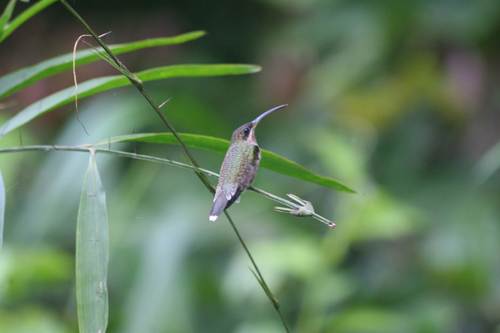
Ermitaño Barbudo Coliblanco (Threnetes leucurus) Ermitaño Barbudo Coliblanco
Ermitaño Coliancho (Anopetia gounellei) Ermitaño Coliancho

Medios

Cargando…

En breve

The most reliable field mark between Pale-tailed Barbthroat and Broad-tipped Hermit is the tail: Pale-tailed Barbthroat shows a mostly dark tail with varying pale or ochre tones on the outer feathers, while Broad-tipped Hermit has two noticeably elongated inner tail feathers and all tail feathers tipped white. Both have bronzy-green upperparts and facial stripes, but Broad-tipped Hermit is smaller, lighter, and has a unique broad, overlapping bill. Juvenile-specific upperwing patterns are not described for either species, so tail and structural features are key. Be cautious with throat and belly color, as both can show ochre or rufous tones, but the tail and bill shape are consistently diagnostic.

Consejos de identificación

  1. Tail structure is the most decisive field mark: Broad-tipped Hermit always shows two noticeably elongated inner tail feathers and all tail feathers tipped white. Pale-tailed Barbthroat lacks elongated inner tail feathers and instead shows a mostly dark tail with variable pale or ochre outer feather edges (subspecies-dependent).
  2. Bill shape: Broad-tipped Hermit has a unique broad-tipped bill, with the maxilla overlapping the mandible and both sexes showing similar curvature. Pale-tailed Barbthroat has a nearly straight bill (male) or slightly more decurved (female), but never as broad-tipped as Broad-tipped Hermit.
  3. Size and build: Broad-tipped Hermit is much lighter (2.6–3.4 g) and appears more delicate than the heavier, bulkier Pale-tailed Barbthroat (4–7 g). This difference is most obvious when seen side by side or at feeders.
  4. Facial pattern: Both have a pale malar stripe, but Broad-tipped Hermit features a striking black mask and a white supercilium, making its face appear more boldly marked. Pale-tailed Barbthroat's face is less contrasting, with a dark ear patch and paler malar stripe.
  5. Throat and underparts: Pale-tailed Barbthroat males have a dark throat with a reddish patch below, and a grayish belly with ochre tints. Broad-tipped Hermit has a dark brown throat with an orangy border and more uniformly ochraceous underparts. However, both can show ochre tones, so this is a supporting mark only.
  6. Juvenile plumage: Pale-tailed Barbthroat juveniles have ochraceous feather edges, but this is subtle and not usually diagnostic in the field. No distinctive juvenile marks are described for Broad-tipped Hermit.
  7. Sex differences: Both species show minimal sexual dimorphism in plumage, but female Pale-tailed Barbthroat has a slightly more decurved bill and less contrast between throat, breast, and belly. This is subtle and not a primary field mark.
  8. Flight views: In flight, focus on the tail: Broad-tipped Hermit's elongated inner tail feathers and white tips are visible even in brief views. Pale-tailed Barbthroat's tail appears more uniform and lacks the strong contrast of white tips.
  9. Perched views: When perched, Broad-tipped Hermit's tail shape and white tips are often obvious, while Pale-tailed Barbthroat's tail appears shorter and less contrasting.
  10. Habitat context: If seen outside the Amazon Basin or in drier Brazilian habitats, Broad-tipped Hermit is more likely. In humid Amazonian lowlands, Pale-tailed Barbthroat is more expected.
  11. Subspecies variation: Be aware that Pale-tailed Barbthroat subspecies vary in the amount of pale or ochre on the tail and belly, but none show the elongated inner tail feathers or all-white tail tips of Broad-tipped Hermit.
  12. Pitfalls: Both species can show bronzy-green upperparts and ochre tones below, so do not rely on overall color alone. Always check tail structure and tips.
  13. Bill curvature: If you get a good look at the bill, Broad-tipped Hermit's broad, overlapping maxilla is unique among hermits in the region.
  14. Voice: No vocal differences are described in the sources, so do not rely on song or call for separation.
  15. Seasonal and age effects: No seasonal plumage changes are described for either species; age-related marks are subtle and not strong field characters.

Tamaño

Pale-tailed Barbthroat is distinctly heavier and bulkier (males 4–7 g, females 4–6.5 g, length 10–12.2 cm) than Broad-tipped Hermit (2.6–3.4 g, 11–12.6 cm). Despite similar lengths, Broad-tipped Hermit is much lighter and more delicate overall. In the field, Broad-tipped Hermit may appear daintier and less robust, especially in direct comparison or at feeders.

Plumaje

No distinctive juvenile or immature upperwing patterns are described for either species. For adults, Pale-tailed Barbthroat has bronze-green upperparts, a dark ear patch, pale malar stripe, and a grayish-ochre belly. Its tail is mostly dark, with variable pale or ochre shades on the outer feathers depending on subspecies. Broad-tipped Hermit also has bronzy-green upperparts, but the underparts are more uniformly light brownish to ochraceous. Its throat is dark brown with an orangy border, and it features a striking black mask with a white supercilium and malar stripe. The tail is a key difference: Broad-tipped Hermit has two elongated inner tail feathers and all tail feathers are tipped white, while Pale-tailed Barbthroat lacks these features and instead shows variable pale on the outer tail feathers. Juveniles of Pale-tailed Barbthroat have ochraceous feather edges, but this is subtle and not a strong field mark.

Comportamiento

Both species are typical hermit hummingbirds, often seen feeding low in the understory or at forest edges. No major behavioral differences are described in the sources that would reliably separate them in the field.

Hábitat

Pale-tailed Barbthroat is widespread in the Amazon Basin, found in humid lowland and tropical forests, including gallery forest, várzea, igapó, and plantations, from sea level up to 1,800 m depending on region. Broad-tipped Hermit is endemic to Brazil, but the notes do not specify habitat differences beyond this. In regions where both could occur, Pale-tailed Barbthroat is more likely in wetter Amazonian habitats, while Broad-tipped Hermit may be more localized.

Enviar una descripción mejor

Usa las mismas secciones que la comparación. El texto se publica al momento.

The most reliable field mark between Pale-tailed Barbthroat and Broad-tipped Hermit is the tail: Pale-tailed Barbthroat shows a mostly dark tail with varying pale or ochre tones on the outer feathers, while Broad-tipped Hermit has two noticeably elongated inner tail feathers and all tail feathers tipped white. Both have bronzy-green upperparts and facial stripes, but Broad-tipped Hermit is smaller, lighter, and has a unique broad, overlapping bill. Juvenile-specific upperwing patterns are not described for either species, so tail and structural features are key. Be cautious with throat and belly color, as both can show ochre or rufous tones, but the tail and bill shape are consistently diagnostic.

  1. Tail structure is the most decisive field mark: Broad-tipped Hermit always shows two noticeably elongated inner tail feathers and all tail feathers tipped white. Pale-tailed Barbthroat lacks elongated inner tail feathers and instead shows a mostly dark tail with variable pale or ochre outer feather edges (subspecies-dependent).
  2. Bill shape: Broad-tipped Hermit has a unique broad-tipped bill, with the maxilla overlapping the mandible and both sexes showing similar curvature. Pale-tailed Barbthroat has a nearly straight bill (male) or slightly more decurved (female), but never as broad-tipped as Broad-tipped Hermit.
  3. Size and build: Broad-tipped Hermit is much lighter (2.6–3.4 g) and appears more delicate than the heavier, bulkier Pale-tailed Barbthroat (4–7 g). This difference is most obvious when seen side by side or at feeders.
  4. Facial pattern: Both have a pale malar stripe, but Broad-tipped Hermit features a striking black mask and a white supercilium, making its face appear more boldly marked. Pale-tailed Barbthroat's face is less contrasting, with a dark ear patch and paler malar stripe.
  5. Throat and underparts: Pale-tailed Barbthroat males have a dark throat with a reddish patch below, and a grayish belly with ochre tints. Broad-tipped Hermit has a dark brown throat with an orangy border and more uniformly ochraceous underparts. However, both can show ochre tones, so this is a supporting mark only.
  6. Juvenile plumage: Pale-tailed Barbthroat juveniles have ochraceous feather edges, but this is subtle and not usually diagnostic in the field. No distinctive juvenile marks are described for Broad-tipped Hermit.
  7. Sex differences: Both species show minimal sexual dimorphism in plumage, but female Pale-tailed Barbthroat has a slightly more decurved bill and less contrast between throat, breast, and belly. This is subtle and not a primary field mark.
  8. Flight views: In flight, focus on the tail: Broad-tipped Hermit's elongated inner tail feathers and white tips are visible even in brief views. Pale-tailed Barbthroat's tail appears more uniform and lacks the strong contrast of white tips.
  9. Perched views: When perched, Broad-tipped Hermit's tail shape and white tips are often obvious, while Pale-tailed Barbthroat's tail appears shorter and less contrasting.
  10. Habitat context: If seen outside the Amazon Basin or in drier Brazilian habitats, Broad-tipped Hermit is more likely. In humid Amazonian lowlands, Pale-tailed Barbthroat is more expected.
  11. Subspecies variation: Be aware that Pale-tailed Barbthroat subspecies vary in the amount of pale or ochre on the tail and belly, but none show the elongated inner tail feathers or all-white tail tips of Broad-tipped Hermit.
  12. Pitfalls: Both species can show bronzy-green upperparts and ochre tones below, so do not rely on overall color alone. Always check tail structure and tips.
  13. Bill curvature: If you get a good look at the bill, Broad-tipped Hermit's broad, overlapping maxilla is unique among hermits in the region.
  14. Voice: No vocal differences are described in the sources, so do not rely on song or call for separation.
  15. Seasonal and age effects: No seasonal plumage changes are described for either species; age-related marks are subtle and not strong field characters.

Pale-tailed Barbthroat is distinctly heavier and bulkier (males 4–7 g, females 4–6.5 g, length 10–12.2 cm) than Broad-tipped Hermit (2.6–3.4 g, 11–12.6 cm). Despite similar lengths, Broad-tipped Hermit is much lighter and more delicate overall. In the field, Broad-tipped Hermit may appear daintier and less robust, especially in direct comparison or at feeders.

No distinctive juvenile or immature upperwing patterns are described for either species. For adults, Pale-tailed Barbthroat has bronze-green upperparts, a dark ear patch, pale malar stripe, and a grayish-ochre belly. Its tail is mostly dark, with variable pale or ochre shades on the outer feathers depending on subspecies. Broad-tipped Hermit also has bronzy-green upperparts, but the underparts are more uniformly light brownish to ochraceous. Its throat is dark brown with an orangy border, and it features a striking black mask with a white supercilium and malar stripe. The tail is a key difference: Broad-tipped Hermit has two elongated inner tail feathers and all tail feathers are tipped white, while Pale-tailed Barbthroat lacks these features and instead shows variable pale on the outer tail feathers. Juveniles of Pale-tailed Barbthroat have ochraceous feather edges, but this is subtle and not a strong field mark.

Both species are typical hermit hummingbirds, often seen feeding low in the understory or at forest edges. No major behavioral differences are described in the sources that would reliably separate them in the field.

Pale-tailed Barbthroat is widespread in the Amazon Basin, found in humid lowland and tropical forests, including gallery forest, várzea, igapó, and plantations, from sea level up to 1,800 m depending on region. Broad-tipped Hermit is endemic to Brazil, but the notes do not specify habitat differences beyond this. In regions where both could occur, Pale-tailed Barbthroat is more likely in wetter Amazonian habitats, while Broad-tipped Hermit may be more localized.

¿Descartar los cambios?

Tienes ediciones sin guardar. Si sales ahora, se perderán.

Ermitaño Barbudo Coliblanco · Ermitaño Coliancho · Mis aves difíciles