
Azor Lagartijero Claro vs Gavilán Gabar
Melierax canorus frente a Micronisus gabar
Juega un quiz con Azor Lagartijero Claro y Gavilán Gabar
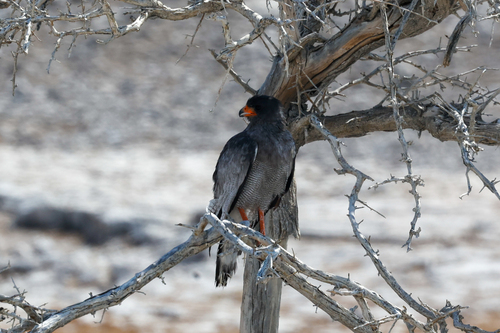 Azor Lagartijero Claro
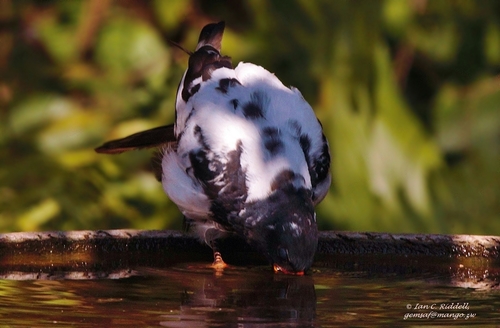 Gavilán Gabar
En breve
La marca de campo más confiable entre el Azor Lagartijero Claro y el Gavilán Gabar es el tamaño: el Azor Lagartijero Claro es mucho más grande y robusto, con una masa casi cinco veces mayor que la del Gavilán Gabar. Para los inmaduros, verifica la parte inferior del ala y la cola en vuelo: los juveniles del Azor Lagartijero Claro muestran plumas de vuelo blancas y una cola con barrado negro, mientras que los inmaduros del Gavilán Gabar son más marrones y tienen un barrado más desordenado. Los adultos de ambas especies tienen partes superiores grises y rumps blancos, pero el Azor Lagartijero Claro es más pálido en general, con patas rojas más largas y una postura más pesada y erguida. El Gavilán Gabar es mucho más pequeño, más compacto, y puede parecer casi completamente negro en su morfo oscuro, una característica que nunca muestra el Azor Lagartijero Claro.
Consejos de identificación
- El tamaño es la pista más inmediata: el Azor Lagartijero Claro es mucho más grande y robusto que el Gavilán Gabar; si el ave parece del tamaño de un cuervo o más grande, no es un Gabar.
- Longitud y color de las patas: el Azor Lagartijero Claro tiene patas muy largas y de un rojo brillante (adultos); las patas del Gavilán Gabar también son largas pero más delgadas, y amarillas en los inmaduros.
- Color del pico y la cera: el Azor Lagartijero Claro adulto muestra una base de pico roja y cera; los adultos del Gavilán Gabar tienen una cera roja, pero los inmaduros tienen amarilla.
- Postura erguida: el Azor Lagartijero Claro a menudo se mantiene muy erguido y alto, especialmente cuando está posado, mientras que el Gavilán Gabar es más compacto y menos erguido.
- Plumaje en inmaduros (vuelo): el juvenil del Azor Lagartijero Claro muestra plumas de vuelo blancas y cola con barrado negro desde abajo, y partes inferiores rufo; los inmaduros del Gavilán Gabar son más marrones con un barrado más desordenado, y patas/cera amarillas.
- Partes superiores de los adultos: ambos son grises por encima con un rump blanco, pero el Azor Lagartijero Claro es más pálido en general y más grande; el Gavilán Gabar es de un gris más oscuro y más compacto.
- Patrón de la cola: el Azor Lagartijero Claro tiene plumas centrales de la cola con puntas negras y plumas exteriores de la cola con barrado gris y blanco; la cola del Gavilán Gabar es de un gris oscuro con barrado.
- Partes inferiores (adultos): los adultos del Azor Lagartijero Claro tienen partes inferiores finamente barradas de gris oscuro y blanco; los adultos del morfo pálido del Gavilán Gabar tienen barrado blanco y gris en el pecho, muslos y partes inferiores.
- Morfo oscuro: solo el Gavilán Gabar puede ser casi completamente negro (morfo oscuro), algo que nunca muestra el Azor Lagartijero Claro.
- Color de los ojos: el adulto del Azor Lagartijero Claro tiene ojos marrones oscuros; los adultos del Gavilán Gabar también tienen ojos oscuros, pero los inmaduros tienen ojos amarillos pálidos (Azor Lagartijero Claro) frente a cera/patas amarillas (Gabar).
- Comportamiento de posado: el Azor Lagartijero Claro a menudo se posa en postes expuestos o copas de árboles en campo abierto; el Gavilán Gabar se encuentra más a menudo en árboles o hábitats más densos.
- Estilo de vuelo: el Azor Lagartijero Claro es estable y directo, a menudo planeando con alas largas; el Gavilán Gabar es ágil, rápido y más propenso a moverse rápidamente entre los árboles.
- Contexto de hábitat: el país abierto y árido favorece al Azor Lagartijero Claro; áreas boscosas o arbustivas favorecen al Gavilán Gabar.
- Vocalización: si escuchas un melodioso 'kleeu-kleeu-kleeu-ku-ku-ku' desde un alto posadero, es el Azor Lagartijero Claro.
- Dimorfismo sexual: las hembras del Gavilán Gabar son más grandes que los machos, pero ambos sexos son aún mucho más pequeños que cualquier Azor Lagartijero Claro.
Tamaño
El Azor Lagartijero Claro es un gran ave de presa (masa corporal ~810g, longitud ~55 cm, envergadura ~110 cm), mientras que el Gavilán Gabar es mucho más pequeño (masa corporal ~165g, longitud 28–36 cm, envergadura ~63 cm). En el campo, el Azor Lagartijero Claro parece tener patas largas y esbelto, a menudo eclipsando a las aves de presa cercanas, mientras que el Gavilán Gabar es compacto y notablemente más pequeño, más cercano en tamaño a una paloma o un cuervo pequeño. Esta diferencia de tamaño es a menudo obvia incluso a distancia o en vuelo, y es un punto clave de separación.
Plumaje
Para los inmaduros: los juveniles del Azor Lagartijero Claro tienen partes superiores marrones, un rump blanco y cola con barrado negro; desde abajo, las plumas de vuelo y la cola son blancas con barrado negro, y las partes inferiores son rufo con una garganta blanca manchada de oscuro. Los inmaduros del Gavilán Gabar son generalmente más marrones en general, con patas y cera amarillas, y el morfo pálido tiene un barrado más desordenado en el pecho en comparación con los adultos. En los adultos, ambas especies muestran partes superiores grises y un rump blanco, pero el Azor Lagartijero Claro es más pálido, con partes inferiores finamente barradas y una base de pico roja distintiva, cera y patas largas. Los adultos del Gavilán Gabar tienen un ojo oscuro, cera y patas rojas, y un aspecto más compacto y menos erguido. El morfo oscuro del Gavilán Gabar es casi completamente negro, algo que nunca iguala el Azor Lagartijero Claro. En vuelo, los adultos del Azor Lagartijero Claro muestran primarias negras, secundarias muy pálidas (casi blancas) y alas delanteras grises; los adultos del Gavilán Gabar tienen barrado blanco y gris en el pecho, muslos y partes inferiores, y una cola de un gris oscuro con barrado.
Comportamiento
El Azor Lagartijero Claro se ve a menudo posado conspicuamente en postes telefónicos o altos en campo abierto, escaneando en busca de presas, y tiende a ser más sedentario y visible. El Gavilán Gabar es más probable que se vea solo o en parejas, a menudo cazando persistentemente a través de los árboles o haciendo persecuciones enérgicas de presas, y es menos probable que se pose en abierto durante largos períodos. También se puede observar al Gavilán Gabar atacando nidos de tejedoras o utilizando telarañas en la construcción de nidos, comportamientos que no se han notado para el Azor Lagartijero Claro.
Hábitat
El Azor Lagartijero Claro es residente de semi-desiertos secos y abiertos y sabanas áridas con menos de 75 cm de lluvia anual, a menudo visto en paisajes muy abiertos y escasamente arbolados y a lo largo de caminos. El Gavilán Gabar es más flexible, encontrado en una variedad de hábitats boscosos a través de África y Arabia, incluyendo bosques de acacia y áreas con más cobertura arbórea que las utilizadas típicamente por el Azor Lagartijero Claro. Por lo tanto, un ave en un país muy abierto y árido es más probable que sea un Azor Lagartijero Claro, mientras que una en un bosque más denso podría ser un Gavilán Gabar.
Voz
El Azor Lagartijero Claro emite un llamado melodioso y silbante 'kleeu-kleeu-kleeu-ku-ku-ku', generalmente desde un alto posadero durante la temporada de cría. Las vocalizaciones del Gavilán Gabar no están descritas en las notas proporcionadas, por lo que la voz no es un separador confiable a menos que se escuche el distintivo llamado del Azor Lagartijero Claro.