

Salangana de la Sonda vs Salangana Nidonegro
Aerodramus salangana frente a Aerodramus maximus
Juega un quiz con Salangana de la Sonda y Salangana Nidonegro
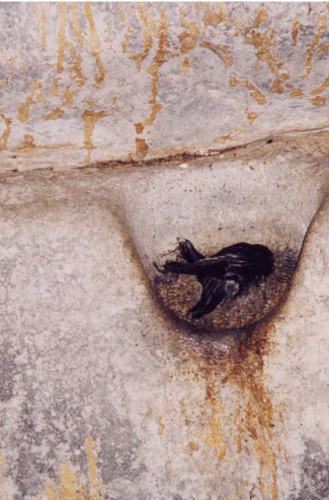 Salangana de la Sonda
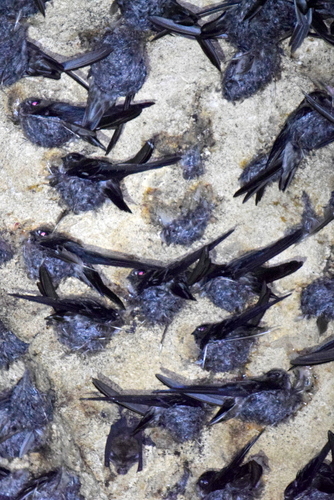 Salangana Nidonegro
En breve
Separating Mossy-nest Swiftlet from Black-nest Swiftlet in the field is extremely challenging, as both are small, dark swifts with overlapping ranges in northern Borneo and parts of Indonesia. The most reliable separation comes from range and subtle differences in habitat preference, as direct plumage or structural differences are not well documented in the available sources. Both species lack distinctive age-specific wing or plumage marks in the literature, and their overall appearance is very similar. When in doubt, focus on precise locality and known distribution, as well as any subtle differences in habitat use.
Consejos de identificación
- Check precise location first: Mossy-nest Swiftlet is only found in northern Borneo, Natuna and Derawan Islands, and Nias. If you are outside these areas, rule it out in favor of Black-nest Swiftlet.
- Habitat context: Both species use forested habitats, but Black-nest Swiftlet is more likely in a wider range of lowland and montane forests across Southeast Asia. In strictly montane or unusual forest types outside Mossy-nest's range, Black-nest is more probable.
- No diagnostic plumage marks: Both species are described as small, dark swifts without distinctive pale or patterned areas. Do not rely on rump, throat, or underpart color for separation.
- No age-specific wing or tail pattern: There are no reported differences in juvenile or immature upperwing or tail patterns between the two species. All ages appear similar in the field.
- Structure and jizz: Both are typical Aerodramus swiftlets, with similar proportions and flight style. Bill, tail, and wing shape are not described as differing.
- Behavior: Both species forage in fast, agile flight and are rarely seen perched. No behavioral cues are noted for separation.
- Voice: No vocal differences are described in the sources. Do not rely on calls or songs for identification.
- Season and sex: No seasonal or sexual dimorphism is noted for either species. All individuals look alike year-round.
- Colony location: If you know of a nesting colony, check local records—some colonies are species-specific and well-documented.
- Consult local checklists: In areas of overlap, local birding resources may have more up-to-date information on which species is present.
- Beware of taxonomic confusion: Some authorities consider Mossy-nest Swiftlet a subspecies of Uniform Swiftlet, so check the latest taxonomy for your region.
- Do not use size: No reliable size difference is documented; apparent size in the field is not a safe mark.
- Photograph for expert review: If uncertain, document the bird and consult regional experts, as field separation is often not possible without close study or genetic analysis.
- Avoid overconfidence: Given the lack of field marks, many records are best left as Aerodramus sp. when outside clear range or colony context.
- Summary: In practice, separation is almost entirely based on range and known colonies; visual field marks are not reliable for these two swiftlets.
Tamaño
There is no direct measurement data in the provided sources to distinguish Mossy-nest Swiftlet from Black-nest Swiftlet by size. Both are small swifts in the Aerodramus genus, and any size difference is likely negligible in the field. Do not rely on size for separation.
Plumaje
No sources describe diagnostic plumage differences between Mossy-nest Swiftlet and Black-nest Swiftlet for any age or season. Both species are described as typical small, dark swifts without mention of contrasting rump, throat, or underpart patterns. No age-specific upperwing or tail pattern is noted for either species. If you see a uniform, dark swift without obvious pale areas or distinctive wing markings, you are within the expected range for both species.
Comportamiento
Both species are typical swiftlets, usually seen in fast, agile flight high above forests or near nesting sites. There are no documented behavioral differences in flight style, foraging, or perching that would reliably separate these two species in the field.
Hábitat
Mossy-nest Swiftlet is restricted to northern Borneo, the Natuna and Derawan Islands, and Nias off western Sumatra. Black-nest Swiftlet is more widespread, found throughout Brunei, Indonesia, Malaysia, Myanmar, the Philippines, Singapore, Thailand, and Vietnam. While both occur in lowland and montane forests, Black-nest Swiftlet is more likely in a broader range of subtropical and tropical moist forests, including montane areas. If you are outside the limited range of Mossy-nest Swiftlet, Black-nest Swiftlet is far more likely. Within overlap zones, careful attention to local distribution and known colonies is crucial.
Salangana de la Sonda · Salangana Nidonegro · Mis aves difíciles