

Motmot

Chingolo de Lincoln vs Toquí Pardo

Melospiza lincolnii frente a Melozone fusca

Juega un quiz con Chingolo de Lincoln y Toquí Pardo
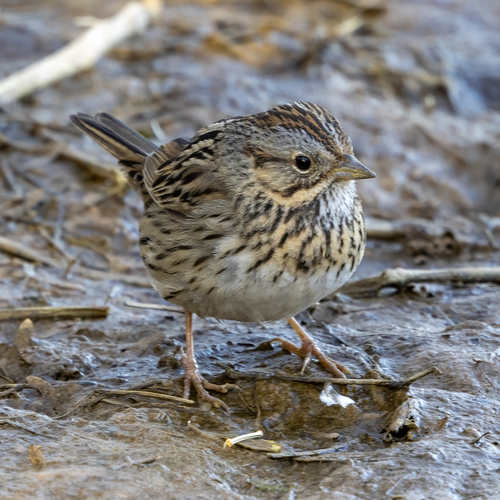
Chingolo de Lincoln (Melospiza lincolnii) Chingolo de Lincoln
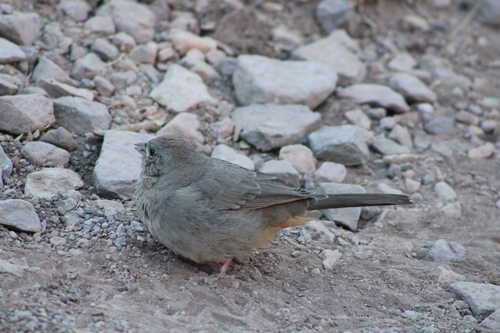
Toquí Pardo (Melozone fusca) Toquí Pardo

Medios

Cargando…

En breve

The most reliable field mark between Lincoln's Sparrow and Canyon Towhee is overall size and structure: Canyon Towhee is much larger, bulkier, and longer-tailed, while Lincoln's Sparrow is a small, slim, fine-billed sparrow. In all plumages, Lincoln's Sparrow shows crisp, fine streaking on the breast and a buffy mustache, whereas Canyon Towhee is plainer, with a uniform earthy brown body and a rufous cap (except in some Mexican birds). Juvenile Lincoln's Sparrows can be confused with other streaky sparrows but not with the plain-faced, unstreaked Canyon Towhee. In flight or perched, the towhee's long tail and heavy build are immediately apparent. Habitat and behavior also differ: Lincoln's is secretive in dense cover, while Canyon Towhee is often seen foraging openly on the ground.

Consejos de identificación

  1. Size and Structure: Canyon Towhee is much larger and bulkier than Lincoln's Sparrow, with a noticeably long tail; Lincoln's is small, slim, and short-tailed. If you see a sparrow-sized bird with a tail nearly as long as its body, it's not a Lincoln's.
  2. Bill Shape: Lincoln's Sparrow has a fine, delicate bill suited to a typical sparrow, while Canyon Towhee's bill is heavier and more conical, matching its larger head.
  3. Breast Pattern: Lincoln's Sparrow always shows fine, crisp dark streaks on a buffy or light brown breast and a white belly. Canyon Towhee is plain below, with no streaking at any age.
  4. Facial Pattern: Lincoln's Sparrow has a gray face with brown cheeks, a buffy mustache, a brown eye-line, and a narrow eye ring. Canyon Towhee's face is plain, lacking a mustache or eye ring.
  5. Crown: Lincoln's Sparrow has a brown cap with a gray median stripe; Canyon Towhee has a rufous cap (except some Mexican birds), but otherwise a uniform head.
  6. Under-tail Color: Canyon Towhee shows a slightly reddish area beneath the tail, which Lincoln's Sparrow lacks.
  7. Juvenile Plumage: Even juvenile Lincoln's Sparrows are streaky below and show some facial pattern; Canyon Towhee juveniles are plain and unstreaked.
  8. Tail Length and Shape: Canyon Towhee's tail is extremely long and broad, often fanned or drooped; Lincoln's Sparrow's tail is short and narrow.
  9. Behavior: Lincoln's Sparrow is secretive and quick, usually in dense cover. Canyon Towhee is bold, foraging openly on the ground and perching in the open.
  10. Habitat: Lincoln's Sparrow is found in dense, moist, shrubby areas; Canyon Towhee prefers open, arid, brushy habitats and is often near human habitation in the Southwest.
  11. Song: If you hear a sweet, complex, wrenlike song, it's Lincoln's Sparrow. Canyon Towhee's vocalizations are much simpler and less musical.
  12. Perched vs. Ground: Lincoln's Sparrow is more likely to be seen perched low or quickly diving into cover; Canyon Towhee is often seen walking or running on the ground in the open.
  13. Sex and Age: Both species show little sexual dimorphism; all ages of Canyon Towhee are plain, all ages of Lincoln's Sparrow are streaky and patterned.
  14. Common Pitfall: Do not confuse a streaky sparrow with a plain, brown, long-tailed towhee—size and breast pattern are the quickest checks.
  15. Flight View: Lincoln's Sparrow in flight is small and compact; Canyon Towhee is large and heavy with a broad, long tail.

Tamaño

Lincoln's Sparrow is a small sparrow, averaging about 18.8 g in body mass and measuring 13–15 cm in length. In contrast, Canyon Towhee is much larger and heavier, with a length of 19–25 cm and a weight averaging around 45 g (range 36.5–67 g). The towhee's tail alone can be as long as the entire Lincoln's Sparrow, and its body is much bulkier. When seen side by side or with size context, the difference is striking: Canyon Towhee is nearly twice as heavy and significantly longer, especially in the tail.

Plumaje

Juvenile and adult Lincoln's Sparrows always show fine, crisp dark streaks on a buffy or light brown breast, with a white belly and a white throat. Their face is gray with brown cheeks, a buffy mustache, and a brown line through the eye, plus a brown cap with a gray median stripe. Juveniles may be more streaky overall but still show the same pattern. In contrast, Canyon Towhee of all ages is plain and uniform: earthy brown above and below, with a slightly paler belly, a darker head, and a rufous cap (except in some Mexican populations where the cap is not distinct). The only color accent is a slightly reddish area under the tail. There is no streaking on the underparts, and the face is plain, lacking the mustache and eye ring of Lincoln's. Lincoln's Sparrow is always trimmer and more patterned; Canyon Towhee is always plainer and more robust.

Comportamiento

Lincoln's Sparrow is secretive, often staying hidden under dense ground cover and only occasionally singing from exposed perches. It forages low or on the ground but is quick to dive back into cover. Canyon Towhee is much bolder, typically foraging openly on the ground in open habitats, walking or running rather than hopping, and often perching on fences or low shrubs. Its movements are slower and more deliberate, matching its heavier build, while Lincoln's is quick and nervous.

Hábitat

Lincoln's Sparrow prefers dense, moist ground cover, often in shrubby or grassy areas near water, and is usually found in thickets or undergrowth. It is rarely seen in open country. Canyon Towhee, on the other hand, is a bird of open, arid habitats such as canyons, scrub, and brushy slopes, often near human habitation in the Southwest. It is much more likely to be seen in the open, on bare ground, or along roadsides.

Voz

Lincoln's Sparrow has a distinctive, sweet, wrenlike song with rapid, high-pitched introductory notes and a complex, gurgling trill. Its calls include a soft, high-pitched 'zeet' and a flat 'chip.' Canyon Towhee's vocalizations are not described in the provided notes, but they are not known for a musical or complex song; their calls are typically simple and less distinctive. In the field, a musical, complex song points to Lincoln's Sparrow.

Enviar una descripción mejor

Usa las mismas secciones que la comparación. El texto se publica al momento.

The most reliable field mark between Lincoln's Sparrow and Canyon Towhee is overall size and structure: Canyon Towhee is much larger, bulkier, and longer-tailed, while Lincoln's Sparrow is a small, slim, fine-billed sparrow. In all plumages, Lincoln's Sparrow shows crisp, fine streaking on the breast and a buffy mustache, whereas Canyon Towhee is plainer, with a uniform earthy brown body and a rufous cap (except in some Mexican birds). Juvenile Lincoln's Sparrows can be confused with other streaky sparrows but not with the plain-faced, unstreaked Canyon Towhee. In flight or perched, the towhee's long tail and heavy build are immediately apparent. Habitat and behavior also differ: Lincoln's is secretive in dense cover, while Canyon Towhee is often seen foraging openly on the ground.

  1. Size and Structure: Canyon Towhee is much larger and bulkier than Lincoln's Sparrow, with a noticeably long tail; Lincoln's is small, slim, and short-tailed. If you see a sparrow-sized bird with a tail nearly as long as its body, it's not a Lincoln's.
  2. Bill Shape: Lincoln's Sparrow has a fine, delicate bill suited to a typical sparrow, while Canyon Towhee's bill is heavier and more conical, matching its larger head.
  3. Breast Pattern: Lincoln's Sparrow always shows fine, crisp dark streaks on a buffy or light brown breast and a white belly. Canyon Towhee is plain below, with no streaking at any age.
  4. Facial Pattern: Lincoln's Sparrow has a gray face with brown cheeks, a buffy mustache, a brown eye-line, and a narrow eye ring. Canyon Towhee's face is plain, lacking a mustache or eye ring.
  5. Crown: Lincoln's Sparrow has a brown cap with a gray median stripe; Canyon Towhee has a rufous cap (except some Mexican birds), but otherwise a uniform head.
  6. Under-tail Color: Canyon Towhee shows a slightly reddish area beneath the tail, which Lincoln's Sparrow lacks.
  7. Juvenile Plumage: Even juvenile Lincoln's Sparrows are streaky below and show some facial pattern; Canyon Towhee juveniles are plain and unstreaked.
  8. Tail Length and Shape: Canyon Towhee's tail is extremely long and broad, often fanned or drooped; Lincoln's Sparrow's tail is short and narrow.
  9. Behavior: Lincoln's Sparrow is secretive and quick, usually in dense cover. Canyon Towhee is bold, foraging openly on the ground and perching in the open.
  10. Habitat: Lincoln's Sparrow is found in dense, moist, shrubby areas; Canyon Towhee prefers open, arid, brushy habitats and is often near human habitation in the Southwest.
  11. Song: If you hear a sweet, complex, wrenlike song, it's Lincoln's Sparrow. Canyon Towhee's vocalizations are much simpler and less musical.
  12. Perched vs. Ground: Lincoln's Sparrow is more likely to be seen perched low or quickly diving into cover; Canyon Towhee is often seen walking or running on the ground in the open.
  13. Sex and Age: Both species show little sexual dimorphism; all ages of Canyon Towhee are plain, all ages of Lincoln's Sparrow are streaky and patterned.
  14. Common Pitfall: Do not confuse a streaky sparrow with a plain, brown, long-tailed towhee—size and breast pattern are the quickest checks.
  15. Flight View: Lincoln's Sparrow in flight is small and compact; Canyon Towhee is large and heavy with a broad, long tail.

Lincoln's Sparrow is a small sparrow, averaging about 18.8 g in body mass and measuring 13–15 cm in length. In contrast, Canyon Towhee is much larger and heavier, with a length of 19–25 cm and a weight averaging around 45 g (range 36.5–67 g). The towhee's tail alone can be as long as the entire Lincoln's Sparrow, and its body is much bulkier. When seen side by side or with size context, the difference is striking: Canyon Towhee is nearly twice as heavy and significantly longer, especially in the tail.

Juvenile and adult Lincoln's Sparrows always show fine, crisp dark streaks on a buffy or light brown breast, with a white belly and a white throat. Their face is gray with brown cheeks, a buffy mustache, and a brown line through the eye, plus a brown cap with a gray median stripe. Juveniles may be more streaky overall but still show the same pattern. In contrast, Canyon Towhee of all ages is plain and uniform: earthy brown above and below, with a slightly paler belly, a darker head, and a rufous cap (except in some Mexican populations where the cap is not distinct). The only color accent is a slightly reddish area under the tail. There is no streaking on the underparts, and the face is plain, lacking the mustache and eye ring of Lincoln's. Lincoln's Sparrow is always trimmer and more patterned; Canyon Towhee is always plainer and more robust.

Lincoln's Sparrow is secretive, often staying hidden under dense ground cover and only occasionally singing from exposed perches. It forages low or on the ground but is quick to dive back into cover. Canyon Towhee is much bolder, typically foraging openly on the ground in open habitats, walking or running rather than hopping, and often perching on fences or low shrubs. Its movements are slower and more deliberate, matching its heavier build, while Lincoln's is quick and nervous.

Lincoln's Sparrow prefers dense, moist ground cover, often in shrubby or grassy areas near water, and is usually found in thickets or undergrowth. It is rarely seen in open country. Canyon Towhee, on the other hand, is a bird of open, arid habitats such as canyons, scrub, and brushy slopes, often near human habitation in the Southwest. It is much more likely to be seen in the open, on bare ground, or along roadsides.

Lincoln's Sparrow has a distinctive, sweet, wrenlike song with rapid, high-pitched introductory notes and a complex, gurgling trill. Its calls include a soft, high-pitched 'zeet' and a flat 'chip.' Canyon Towhee's vocalizations are not described in the provided notes, but they are not known for a musical or complex song; their calls are typically simple and less distinctive. In the field, a musical, complex song points to Lincoln's Sparrow.

¿Descartar los cambios?

Tienes ediciones sin guardar. Si sales ahora, se perderán.

Chingolo de Lincoln · Toquí Pardo · Mis aves difíciles