

Archibebe Patigualdo Chico vs Archibebe Claro
Tringa flavipes frente a Tringa nebularia
Juega un quiz con Archibebe Patigualdo Chico y Archibebe Claro
 Archibebe Patigualdo Chico
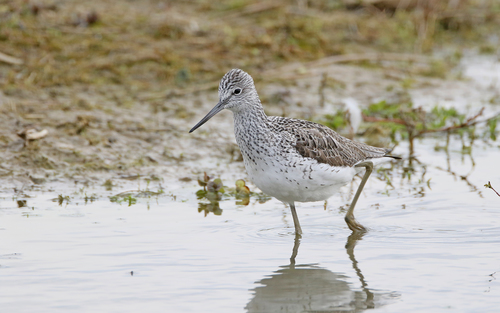 Archibebe Claro
En breve
La forma más confiable de separar el Archibebe Patigualdo Chico del Archibebe Claro es por el color de las patas y la forma del pico: el Archibebe Patigualdo Chico tiene patas amarillas brillantes y un pico delgado, recto y oscuro, aproximadamente del mismo largo que su cabeza, mientras que el Archibebe Claro muestra patas verdosas y un pico más largo, ligeramente curvado hacia arriba, con una base pálida. En vuelo, el Archibebe Claro exhibe una cuña blanca distintiva en la parte posterior, que el Archibebe Patigualdo Chico no tiene. El Archibebe Patigualdo Chico también es mucho más ligero y más delicado en general. Si ves un limícola de tamaño mediano con patas amarillas y un pico fino y recto, es un Archibebe Patigualdo Chico; un ave más grande y pesada con patas verdosas y un pico más largo y curvado hacia arriba es un Archibebe Claro.
Consejos de identificación
- Color de las patas: El Archibebe Patigualdo Chico siempre muestra patas amarillas brillantes; las patas del Archibebe Claro son verdosas. Esta es la verificación más rápida en buena luz.
- Forma y longitud del pico: El Archibebe Patigualdo Chico tiene un pico delgado, recto y uniformemente oscuro, aproximadamente del mismo largo que su cabeza. El pico del Archibebe Claro es más largo, ligeramente curvado hacia arriba y tiene una base pálida—especialmente obvio a corta distancia o en buena luz.
- Patrón de vuelo: El Archibebe Claro en todas las edades muestra una cuña blanca en la parte posterior en vuelo, una marca clave ausente en el Archibebe Patigualdo Chico. Busca esto cuando los pájaros se asusten o pasen volando.
- Tamaño y estructura: El Archibebe Patigualdo Chico es mucho más pequeño y ligero (81 g frente a 173 g), con una apariencia delicada y de pasos altos. El Archibebe Claro es más robusto, más alto y con un pico más pesado.
- Patrón del pecho y cuello: En plumaje de cría, el Archibebe Patigualdo Chico tiene finas y densas estrías en el cuello y el pecho; el Archibebe Claro muestra un patrón de pecho más grueso, oscuro y nítido.
- Plumaje no reproductivo: Ambas especies se vuelven más grises por encima, pero el Archibebe Patigualdo Chico se mantiene más uniforme y limpio por debajo, mientras que el Archibebe Claro puede retener un pecho más nítido.
- Color del pico: El pico del Archibebe Patigualdo Chico es completamente oscuro; el pico del Archibebe Claro tiene una base pálida, especialmente obvio en plumaje fresco o en buena luz.
- Comportamiento de forrajeo: El Archibebe Patigualdo Chico se mueve rápidamente con un andar de pasos altos, luciendo más delicado y ágil que el más pesado Archibebe Claro.
- Voz: El llamado del Archibebe Claro es un distintivo 'teu-teu-teu' de tres notas; el Archibebe Patigualdo Chico es más suave y menos contundente. Usa esto si los pájaros son vocales.
- Hábitat y rango: El Archibebe Patigualdo Chico cría solo en América del Norte; el Archibebe Claro es euroasiático. La superposición es posible solo en migración o en áreas de invernada.
- Sexo y edad: Ambas especies son similares entre sexos; no hay un fuerte dimorfismo sexual. Las marcas relacionadas con la edad no son fuertemente diagnósticas excepto por la cuña de vuelo del Archibebe Claro.
- Trampas: En mala luz, el color de las patas puede parecer apagado o engañoso. La forma del pico se juzga mejor de perfil. El tamaño es difícil de juzgar sin comparación directa.
- Cuando las marcas fallan: Si solo hay vistas distantes o en silueta disponibles, confía en el patrón de vuelo (cuña blanca para el Archibebe Claro) y la estructura general (Archibebe Claro más robusto, con patas más largas). Si el pájaro está en silencio, el color de las patas y la forma del pico son los más confiables.
- Aves juveniles/inmaduras: No se describen marcas específicas de alas superiores o de vuelo juveniles para el Archibebe Patigualdo Chico; la cuña blanca del Archibebe Claro está presente en todas las edades.
- Consejo resumen: Si ves un limícola de tamaño mediano con patas amarillas y un pico fino y recto, es un Archibebe Patigualdo Chico. Si es más grande, con patas verdosas y un pico más largo y curvado hacia arriba, y especialmente si muestra una cuña blanca en la parte posterior en vuelo, es un Archibebe Claro.
Tamaño
El Archibebe Patigualdo Chico es significativamente más pequeño y ligero, promediando 81 g, en comparación con los 173 g del Archibebe Claro. Esta diferencia es obvia en el campo: el Archibebe Patigualdo Chico parece delgado, delicado y de pasos altos, mientras que el Archibebe Claro se ve más robusto y fuerte. El Archibebe Claro también tiene un pico y patas más largos, y generalmente se mantiene más alto. Si ambas especies están presentes, la diferencia de tamaño es notable, pero ten cuidado con aves solitarias o vistas pobres donde el tamaño puede ser engañoso.
Plumaje
No se describen marcas específicas de alas superiores o de vuelo relacionadas con la edad para el Archibebe Patigualdo Chico, pero el Archibebe Claro en todos los plumajes muestra una cuña blanca clara en la parte posterior en vuelo—una marca clave. En plumaje de cría, el Archibebe Patigualdo Chico tiene partes inferiores finamente estriadas en marrón y blanco y un cuello densamente patrón; mientras que el Archibebe Claro es más marrón por encima con un patrón de pecho más grueso y oscuro. En plumaje no reproductivo, ambos son marrón grisáceo por encima, pero el Archibebe Patigualdo Chico se mantiene más uniforme y limpio por debajo, mientras que el Archibebe Claro es más robusto y a menudo muestra un pecho más nítido. El color de las patas es siempre amarillo en el Archibebe Patigualdo Chico y verdoso en el Archibebe Claro. El color del pico también difiere: el Archibebe Patigualdo Chico tiene un pico recto y oscuro; el pico del Archibebe Claro es más largo, ligeramente curvado hacia arriba y tiene una base pálida.
Comportamiento
El Archibebe Patigualdo Chico es muy activo al forrajear, moviéndose rápidamente con un andar de pasos altos y el cuello estirado, picoteando a su presa. El Archibebe Claro también es un alimentador activo, pero tiende a verse más pesado y deliberado. Ambas especies buscan en aguas poco profundas y pueden sondear barro o agua en busca de invertebrados, pero el Archibebe Patigualdo Chico a menudo parece más delicado y ágil. El comportamiento social es similar, con ambas especies a veces vistas solas o en grupos sueltos.
Hábitat
El Archibebe Patigualdo Chico cría en los bosques boreales de América del Norte y inverna desde el sur de América del Norte hasta América del Sur, favoreciendo humedales de agua dulce o salobre poco profundos, campos inundados y márgenes fangosos. El Archibebe Claro es un criador euroasiático ampliamente distribuido, encontrado en hábitats pantanosos o de humedales, e inverna en ambientes similares de aguas poco profundas en África, Asia meridional y Australasia. Ambas especies se superponen en migración en algunas regiones, pero el Archibebe Patigualdo Chico es estrictamente un criador del Nuevo Mundo, mientras que el Archibebe Claro es del Viejo Mundo.
Voz
El Archibebe Patigualdo Chico tiene un llamado más suave en comparación con el Archibebe Claro. El llamado habitual del Archibebe Claro es una rápida serie de tres notas cortas y flautadas ('teu-teu-teu'), que es distintiva si se escucha bien. El llamado del Archibebe Patigualdo Chico es menos contundente y más sutil. La voz puede ser útil si los pájaros llaman, pero no siempre es diagnóstica en silencio.
Archibebe Patigualdo Chico · Archibebe Claro · Mis aves difíciles