
Charrán Bengalí vs Charrán Piquigualdo
Thalasseus bengalensis frente a Thalasseus bergii
Juega un quiz con Charrán Bengalí y Charrán Piquigualdo
 Charrán Bengalí
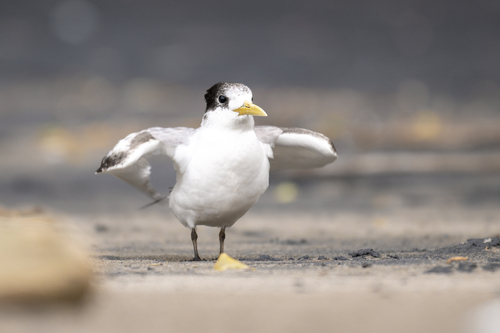 Charrán Piquigualdo
En breve
La marca de campo más confiable para separar el Charrán Bengalí del Charrán Piquigualdo es el color del pico: el Charrán Bengalí tiene un pico distintivamente naranja, mientras que el Charrán Piquigualdo muestra un pico más largo y pesado que es amarillo a amarillo verdoso. Las aves juveniles e inmaduras se separan mejor por sus patrones en el ala superior y el manto: los juveniles de Charrán Piquigualdo son mucho más variados arriba, con barras oscuras en el ala cerrada, mientras que los juveniles de Charrán Bengalí son más pálidos con solo débiles medios oscuros. En vuelo, el Charrán Bengalí muestra una rabadilla gris, mientras que el Charrán Piquigualdo es más oscuro en general. El Charrán Piquigualdo también es notablemente más grande y robusto, pero el tamaño puede ser difícil de juzgar a menos que ambos estén juntos.
Consejos de identificación
- El color del pico es la marca de campo más consistente: El Charrán Bengalí tiene un pico largo y afilado de color naranja; el Charrán Piquigualdo tiene un pico más largo y pesado que es amarillo a amarillo verdoso. Esto es confiable en todos los plumajes y edades.
- Patrón del ala superior juvenil/inmaduro: El juvenil Charrán Piquigualdo tiene un patrón fuerte arriba, con barras oscuras en las alas cerradas y un manto variado. El juvenil Charrán Bengalí es mucho más pálido, con solo débiles medios oscuros en las plumas del manto y un aspecto generalmente más limpio. Usa esto a finales de verano y otoño cuando predominan las aves jóvenes.
- Color de la rabadilla en vuelo: El Charrán Bengalí muestra una rabadilla gris, que es un separador útil del Charrán Piquigualdo, cuya rabadilla y cola no son tan distintivamente grises y cuyas partes superiores son más oscuras en general. Esto se ve mejor en adultos y en inmaduros mayores.
- Tono general de las partes superiores: El Charrán Piquigualdo es más oscuro arriba, con partes superiores de color gris acorazado, mientras que el Charrán Bengalí es de un gris más pálido arriba. Esto es más obvio en comparación directa o con buena luz.
- Tamaño y estructura: El Charrán Piquigualdo es aproximadamente un 25% más grande, con un cuerpo más robusto, cabeza más larga y pesada, y un pico proporcionalmente más largo. El Charrán Bengalí es más delgado y más delicado, pero el tamaño es difícil de juzgar a menos que ambos estén juntos.
- Patrón de la cresta y la frente: En plumaje de cría, el Charrán Piquigualdo tiene una cresta negra más desaliñada y una frente blanca, mientras que el Charrán Bengalí tiene una capucha negra completa. En invierno, ambos muestran blanco en la frente, pero la corona del Charrán Piquigualdo se vuelve moteada o salpicada de negro, mientras que la del Charrán Bengalí es más limpiamente blanca.
- Color de las patas: Ambos tienen patas negras, por lo que esto no es un separador útil.
- Forma del pico: El pico del Charrán Piquigualdo no solo es más largo, sino también más pesado y ligeramente curvado hacia abajo en la punta; el del Charrán Bengalí es más fino y recto.
- Color del pico juvenil: El juvenil Charrán Bengalí ya muestra un pico amarillo-naranja, mientras que los juveniles de Charrán Piquigualdo tienen un pico amarillento, pero la diferencia es menos pronunciada que en los adultos.
- Vuelo: Ambos tienen alas largas y puntiagudas y un vuelo ligero, pero el Charrán Piquigualdo parece más pesado y poderoso en vuelo, mientras que el Charrán Bengalí es más ágil y delicado.
- Voz: Los llamados son similares, ambos son ruidosos y chirriantes, pero el llamado principal del Charrán Piquigualdo se describe como más estridente y parecido al de un cuervo. No siempre es confiable sin experiencia.
- Contexto de colonia: Si se ve en una colonia mixta de charranes, verifica el tamaño y el color del pico: el Charrán Piquigualdo se destacará como el más grande, con un pico amarillento; el Charrán Bengalí será más pequeño, con un pico naranja.
- Cambios estacionales: En plumaje no reproductivo (invierno), ambas especies desarrollan blanco en la frente, pero la corona completa del Charrán Piquigualdo se vuelve moteada, mientras que la del Charrán Bengalí es más limpiamente blanca en la parte frontal.
- Confusión potencial: Ambos pueden confundirse con otros charranes de pico naranja/amarillo (por ejemplo, Charrán Real Africano, Charrán Patinegro), pero dentro de este par, enfócate en el color del pico, el tamaño y el patrón de las partes superiores.
- Cuando tengas dudas: Si el ave es grande, oscura arriba, con un pico amarillento y una frente blanca (incluso en cría), es el Charrán Piquigualdo. Si es más pequeña, más pálida arriba, con un pico naranja limpio y una rabadilla gris, es el Charrán Bengalí.
Tamaño
El Charrán Piquigualdo es significativamente más grande y pesado que el Charrán Bengalí. El Charrán Bengalí promedia alrededor de 209 g en masa corporal, mientras que el Charrán Piquigualdo pesa entre 325 y 397 g (según Wikipedia). En longitud, el Charrán Bengalí mide de 35 a 43 cm con una envergadura de 88 a 105 cm, mientras que el Charrán Piquigualdo mide de 46 a 49 cm de largo con una envergadura de 125 a 130 cm. La diferencia es de aproximadamente un 25% en tamaño general, con el Charrán Piquigualdo teniendo una cabeza y un pico más largos y pesados, y un cuerpo más robusto. Sin embargo, a menos que se vean uno al lado del otro, esto puede ser sutil en el campo.
Plumaje
Las aves juveniles e inmaduras se separan mejor por el patrón del ala superior y el manto: el juvenil Charrán Piquigualdo tiene un patrón fuerte arriba, con barras oscuras en las alas cerradas y un aspecto variado, mientras que el juvenil Charrán Bengalí es mucho más pálido, con solo débiles medios oscuros en las plumas del manto y un aspecto generalmente más limpio. En adultos, el Charrán Bengalí en verano tiene una capucha negra completa, patas negras, pico naranja, alas superiores y rabadilla grises, y partes inferiores blancas; en invierno, la frente se vuelve blanca. Los adultos de Charrán Piquigualdo en plumaje de cría tienen una cresta negra más desaliñada, frente blanca (incluso en cría), pico amarillo verdoso, y partes superiores más oscuras de color gris acorazado. En invierno, el Charrán Piquigualdo se vuelve más pálido arriba y la corona se motea de blanco. En vuelo, la rabadilla gris del Charrán Bengalí es una marca útil; la rabadilla y la cola del Charrán Piquigualdo no son tan distintivamente grises y las partes superiores son más oscuras en general. El color del pico es una diferencia clave durante todo el año: naranja (Bengalí) vs amarillo/amarillo verdoso (Piquigualdo).
Comportamiento
Ambas especies se alimentan zambulléndose para pescar, pero el Charrán Bengalí típicamente se zambulle directamente, mientras que el comportamiento del Charrán Piquigualdo no se describe como diferente en las fuentes. Ambas especies crían en colonias densas en costas e islas, a menudo en estrecha proximidad. El cortejo en el Charrán Bengalí implica que el macho ofrezca pescado a la hembra. Ambas son altamente coloniales y pueden verse en bandadas mixtas, pero el Charrán Piquigualdo es más robusto y puede dominar en grupos mixtos.
Hábitat
Ambas especies son costeras y crían en islas y playas de arena, a menudo en colonias mixtas. Hay una superposición significativa en sus rangos, especialmente alrededor del Océano Índico y el Mediterráneo para el Charrán Bengalí, y más ampliamente para el Charrán Piquigualdo, que se encuentra desde Sudáfrica hasta Australia y el Pacífico central. La preferencia de hábitat no es un separador confiable donde ambos ocurren.
Voz
El Charrán Bengalí emite un llamado fuerte y chirriante similar al del Charrán Patinegro. El Charrán Piquigualdo es altamente vocal, con un fuerte y estridente 'kerrak' como su llamado principal, y otras notas ásperas ('korrkorrkorr', 'wep wep'). Ambos pueden ser ruidosos en colonias, pero los llamados no se describen como separables de manera confiable en el campo.