

Grajilla Occidental vs Cuervo Desertícola
Coloeus monedula frente a Corvus ruficollis
Juega un quiz con Grajilla Occidental y Cuervo Desertícola
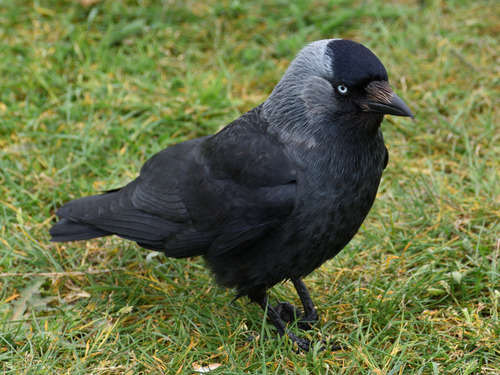 Grajilla Occidental
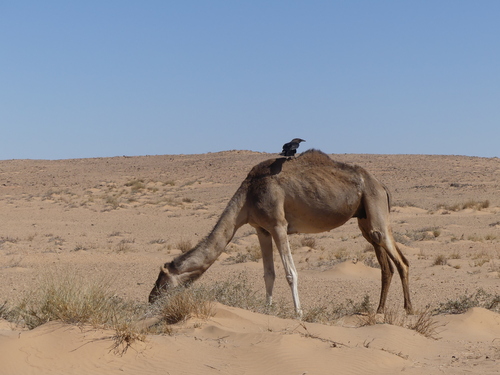 Cuervo Desertícola
En breve
The most reliable field mark to separate Eurasian Jackdaw from Brown-necked Raven is size and head pattern: Jackdaw is much smaller and shows a contrasting pale grey nape and cheeks, while Brown-necked Raven is much larger and has a uniform brownish-black head and throat. In flight, Jackdaw’s compact build, short bill, and fast, deep wingbeats contrast with the raven’s longer wings, heavier jizz, and more pointed wingtips. Juvenile Jackdaws are duller but still show some pale on the neck, while even faded Brown-necked Ravens never show a pale nape. Bill size and shape are also key: Jackdaw’s bill is short and stubby, Raven’s is longer and heavier. These differences are visible at distance with binoculars, especially in mixed corvid flocks.
Consejos de identificación
- Size: Jackdaw is much smaller (pigeon-sized) than Brown-necked Raven (crow-to-small-raven sized). If you see both together, the difference is unmistakable.
- Head and nape pattern: Adult Jackdaws have a pale grey or silvery nape and cheeks, sharply contrasting with the black crown and throat. Brown-necked Raven’s head and throat are uniform brownish-black, never pale.
- Bill shape and size: Jackdaw’s bill is short, stubby, and proportionally small—about 75% the length of the rest of the head. Brown-necked Raven’s bill is longer, heavier, and more pointed, though not as massive as Common Raven.
- Eye color: Adult Jackdaws have pale silvery-white eyes, juveniles have light blue eyes. Brown-necked Raven’s eyes are dark at all ages (not diagnostic at distance, but useful up close).
- Flight jizz: Jackdaw flies with rapid, deep, jerky wingbeats and often in tight, coordinated flocks. Raven flies with slower, heavier wingbeats, more soaring and gliding, and rarely in tight flocks.
- Wing and tail shape in flight: Jackdaw has proportionally shorter, narrower wings and a short tail. Raven’s wings are longer, more pointed, and tail is longer and more wedge-shaped.
- Juvenile plumage: Young Jackdaws are duller, with a sooty black head and less sharply defined pale nape, but still show some contrast. Young Ravens are uniformly dark or brownish-black, never with a pale nape.
- Gloss and fading: Jackdaw’s plumage is glossy black with purple or blue sheen on crown and secondaries, and green-blue on throat, but always with a pale nape. Raven’s plumage fades to brownish-black before molt, but never shows pale patches.
- Legs and feet: Both species have black legs and feet; not a useful separator.
- Habitat: Jackdaws are common in towns, farmland, and near people. Brown-necked Ravens prefer deserts and arid open country; rarely seen in urban settings.
- Vocalizations: Jackdaw gives sharp, metallic "chack" calls; Raven gives deeper croaks and harsh "karr-karr-karr" calls. If you hear a croak, think Raven.
- Social behavior: Jackdaws are highly social, often in large, tight flocks. Ravens are more solitary or in loose groups.
- Posture: Jackdaws have an upright stance and brisk, strutting gait. Ravens appear heavier, with a more horizontal posture.
- Seasonal variation: Jackdaw’s pale nape is most prominent after molt (late summer/fall); can fade and become less distinct before molt, but still visible. Raven’s plumage fades overall, but never develops pale patches.
- Geographic context: In true desert or remote arid regions, a large corvid is almost certainly a Brown-necked Raven. In urban or agricultural settings, especially in Europe, a small corvid with a pale nape is a Jackdaw.
Tamaño
Eurasian Jackdaw is a small corvid, measuring 34–39 cm in length and weighing around 240 grams. Brown-necked Raven is much larger, at 52–56 cm in length, and is one of the larger raven species, though not as massive as Common Raven. The difference in size is striking in the field: Jackdaw is pigeon-sized, while Brown-necked Raven is closer to a small raptor or large crow. Even at a distance, the Jackdaw’s compact, short-necked appearance contrasts with the Raven’s long body, wings, and tail.
Plumaje
- Juvenile/immature Jackdaw: Duller overall, with sooty black head and faint greenish sheen, but still shows a dark grey nape and paler underparts. The pale nape is usually visible even in young birds, though less sharply defined than in adults.
- Adult Jackdaw: Glossy black crown and throat, sharply contrasting pale grey to silver nape and cheeks, slate-grey underparts. Bill and legs always black. Eye is pale silvery-white in adults, light blue in juveniles.
- Brown-necked Raven (all ages): Head and throat are brownish-black, blending into the rest of the plumage. No pale nape or cheek patch at any age. Plumage is glossy black with purple or blue gloss, but fades quickly to brownish-black, so birds can look quite brown overall, especially before molt. Bill, legs, and feet always black.
- In flight: Jackdaw shows uniform dark wings and tail, lacking any pale panels or contrasting edges. Raven’s wings are longer and more pointed, but both species lack strong wing pattern contrasts in flight. The Jackdaw’s smaller size and compact shape are usually obvious in the air.
Comportamiento
Jackdaws are agile, social, and often seen in tight flocks, both on the ground and in flight. Their flight is characterized by rapid, jerky wingbeats and tight maneuvering, sometimes tumbling or gliding. On the ground, they strut briskly with an upright posture and feed with heads down or horizontal. Brown-necked Ravens are more solitary or in loose pairs/groups, with heavier, slower wingbeats and a more languid, soaring flight. They rarely form tight flocks like Jackdaws and appear bulkier and more powerful both in flight and on the ground.
Hábitat
Jackdaws are widespread in Europe, western Asia, and North Africa, favoring open country, farmland, towns, and cities—often around human habitation. Brown-necked Ravens are found in arid and semi-arid regions, deserts, and open country in North Africa and parts of the Middle East. Overlap is possible in North Africa, but Jackdaws are rarely found in true desert habitats. If you see a small corvid in a city or farmland, it is likely a Jackdaw; a large corvid in arid, open desert is more likely a Brown-necked Raven.
Voz
Jackdaw calls are sharp, metallic chacks and yelps, quite different from the deeper croaks of ravens. Brown-necked Raven’s voice is similar to Common Raven but higher-pitched, with croaks and harsh "karr-karr-karr" calls, and a "kuerk-kuerk" in flight. Jackdaw never croaks deeply like a raven. Vocal mimicry is rare in the wild for both, but more likely in the Raven.
Grajilla Occidental · Cuervo Desertícola · Mis aves difíciles