

Archibebe Claro vs Combatiente
Tringa nebularia frente a Calidris pugnax
Juega un quiz con Archibebe Claro y Combatiente
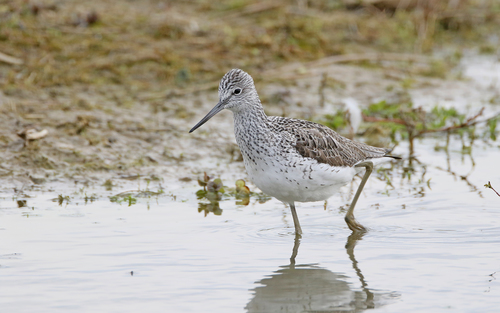 Archibebe Claro
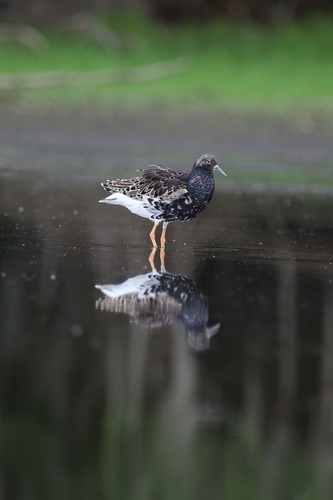 Combatiente
En breve
La marca de campo más confiable para separar el Archibebe Claro del Combatiente es el pico: el Archibebe Claro tiene un pico largo, ligeramente curvado hacia arriba, con una base gris, mientras que el Combatiente muestra un pico más corto, recto y más fino. En vuelo, el Archibebe Claro revela una cuña blanca audaz en la parte posterior, mientras que el Combatiente muestra solo una delgada y poco distintiva barra alar blanca y óvalos blancos en los lados de la cola. Estructuralmente, el Archibebe Claro es más grande, tiene patas más largas y es menos barrigón que el Combatiente, que parece tener una barriga redonda y una cabeza pequeña. Los plumajes juveniles y no reproductivos pueden ser confusos, pero las patas verdosas y el pico curvado hacia arriba del Archibebe Claro siguen siendo distintivos, mientras que las partes superiores con patrón escamoso del Combatiente y el color variable de las patas (a menudo naranja o rosa en los adultos) son clave. Ambas especies pueden encontrarse en hábitats de humedales similares, pero su forma y patrones de vuelo son notablemente diferentes.
Consejos de identificación
- Forma del pico: El Archibebe Claro tiene un pico largo, ligeramente curvado hacia arriba, con una base gris; el pico del Combatiente es más corto, recto y más fino. Esta es la marca más confiable a cualquier edad o estación.
- Patrón de vuelo: En todas las edades, el Archibebe Claro muestra una cuña blanca audaz en la parte posterior en vuelo, mientras que el Combatiente solo muestra una delgada y poco distintiva barra alar blanca y óvalos blancos en los lados de la cola. Usa esto cuando los pájaros se asusten o pasen volando.
- Color de las patas: Las patas del Archibebe Claro son siempre verdosas. Las patas del Combatiente son variables: verde oscuro en los juveniles, rosa a naranja en los adultos, y a veces rojo-naranja en los machos en época de cría. El color de las patas por sí solo puede ser engañoso, pero las patas verdosas en un gran limícola sugieren Archibebe Claro.
- Forma del cuerpo: El Archibebe Claro es más alto, tiene patas más largas y es más esbelto. El Combatiente es barrigón, con una cabeza pequeña y un cuerpo más redondeado y pesado. Esto es especialmente notable cuando ambas especies están juntas.
- Cabeza y cuello: El Archibebe Claro tiene una cabeza proporcionalmente más grande y un cuello más largo. La cabeza del Combatiente es pequeña y redonda, el cuello es largo pero a menudo parece encorvado.
- Plumaje (juvenil/no reproductivo): El juvenil Combatiente tiene un patrón superior escamoso y ordenado con centros de plumas oscuros y partes inferiores de color buff. Los juveniles de Archibebe Claro son más simples, de color marrón grisáceo por encima, careciendo del aspecto escamoso.
- Plumaje (reproductivo): El macho Combatiente en plumaje reproductivo es inconfundible con cuellos y mechones ornamentales, pero el Combatiente hembra y los no reproductivos pueden confundirse con el Archibebe Claro. Busca el pico y el color de las patas para separarlos.
- Patrón del pecho: El Archibebe Claro en plumaje reproductivo muestra un patrón de pecho oscuro y grueso y negro en los hombros/espalda. Las hembras de Combatiente y los pájaros no reproductivos tienen manchas negras variables, pero no tan nítidas o extensas.
- Comportamiento de forrajeo: El Archibebe Claro a menudo se alimenta solo o en pequeños grupos, vadear más profundo y moverse con pasos firmes y deliberados. El Combatiente suele estar en bandadas, alimentándose en aguas más superficiales o praderas húmedas.
- Estilo de vuelo: El Archibebe Claro tiene un vuelo más directo y deliberado; los aleteos del Combatiente son más profundos y lentos, y el pájaro parece más pesado en el aire.
- Voz: Si escuchas un rápido y flautado 'teu-teu-teu', es el Archibebe Claro. El llamado del Combatiente no se describe aquí, por lo que la ausencia de este llamado no es diagnóstica.
- Contexto: Grandes bandadas en praderas húmedas abiertas son más probablemente Combatientes; pájaros altos y solitarios en aguas más profundas son más probablemente Archibebes Claros.
- Dimorfismo sexual: Solo el Combatiente muestra un fuerte dimorfismo sexual (machos ornamentales, hembras simples); los sexos del Archibebe Claro son similares.
- Trampas: Los Combatientes no reproductivos y juveniles pueden parecer muy simples y pueden confundirse con el Archibebe Claro, especialmente a distancia. Siempre verifica la forma del pico y el patrón de vuelo.
- Cuando tengas dudas: Espera vistas de vuelo para ver la cuña blanca (Archibebe Claro) o verifica el aspecto barrigón y de cabeza pequeña (Combatiente).
Tamaño
Adult Archibebe Claro is noticeably heavier (173 g vs. 136 g for Combatiente) and appears larger and longer-legged in the field. Greenshank is also more robust and stands taller, while Combatiente is pot-bellied, shorter-necked, and has a smaller head. Female Ruffs (reeves) are smaller than males, but even the largest female Combatiente is generally lighter and more compact than Greenshank. When seen together, Greenshank’s size and elongated proportions stand out against the more rounded, squat appearance of Combatiente.
Plumaje
- Juvenile and non-breeding plumage: Combatiente juveniles have neat, scale-like patterned upperparts with dark feather centers and a strong buff tinge to the underparts. Greenshank juveniles and non-breeding birds are grey-brown above and lack the scaly pattern, appearing plainer overall.
- In flight: Greenshank of all ages shows a bold white wedge up the back, which is diagnostic. Combatiente in flight shows a thin, indistinct white wing bar and white ovals on the tail sides, but lacks the bold white wedge.
- Breeding plumage: Greenshank is brown above with a coarse, dark, crisp breast pattern and much black on the shoulders and back. Combatiente males in breeding plumage are highly variable and ornate, with colored ruffs and tufts, but females and non-breeding birds are more subdued, with grey-brown upperparts and variable black blotching on the breast and flanks.
- Leg color: Greenshank has long, greenish legs year-round. Combatiente’s leg color is variable: dark greenish in juveniles, pink to orange in adults, and sometimes reddish-orange in breeding males.
Comportamiento
El Archibebe Claro típicamente forrajea solo o en pequeños grupos, moviéndose con pasos deliberados y constantes y a menudo vadeando en aguas más profundas. Su estilo de alimentación es activo, sondeando con su largo pico y a veces persiguiendo presas. El Combatiente es altamente gregario, especialmente fuera de la temporada de cría, formando a menudo grandes bandadas. Los Combatientes tienen una postura barrigona y erguida y un aleteo más lento y profundo en vuelo en comparación con el vuelo más directo y deliberado del Archibebe Claro. Durante la temporada de cría, los machos de Combatiente exhiben un elaborado comportamiento de cortejo con plumaje ornamentado, pero esto no se observa en el Archibebe Claro.
Hábitat
Ambas especies utilizan pantanos, praderas húmedas y humedales poco profundos, pero es más probable que el Combatiente se vea en grandes bandadas densas, especialmente durante la migración o en áreas de invernada. El Archibebe Claro prefiere aguas más abiertas, a veces más profundas, y es menos gregario. Si ves un limícola alto y solitario con patas verdes en aguas más profundas, es más probable que sea un Archibebe Claro; una bandada compacta de pájaros barrigones y de patas variables en aguas poco profundas o praderas húmedas puede ser Combatiente.
Voz
El llamado del Archibebe Claro es una rápida serie de tres notas cortas y flautadas, sílaba como 'teu-teu-teu.' Las vocalizaciones del Combatiente no se describen en las notas proporcionadas, por lo que la voz solo es un separador confiable si escuchas el llamado distintivo del Archibebe Claro.